61° and Moderate rain



Image
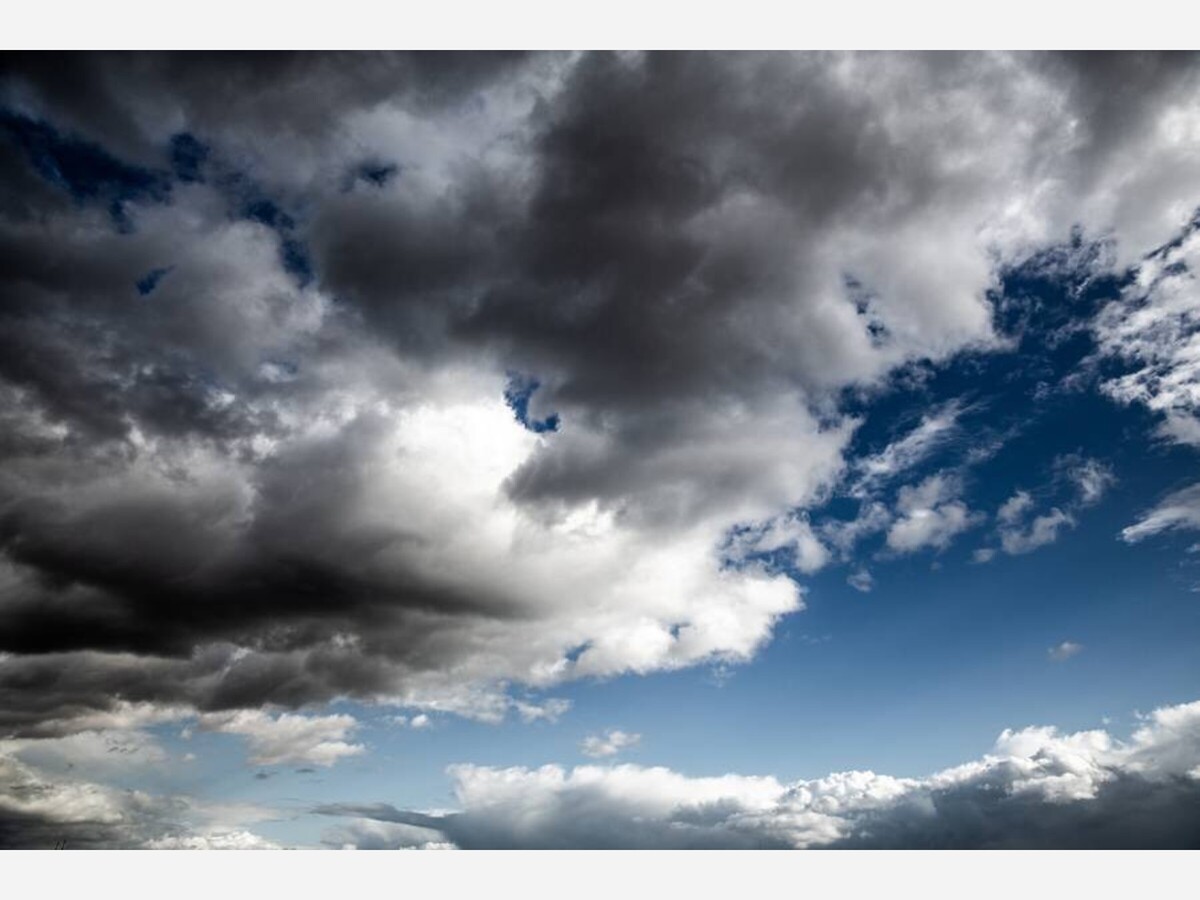
There are days when the sky seems to have something to say.
William Shakespeare understood that feeling well.
Throughout Shakespeare’s plays, the natural world is rarely just scenery. Storms, darkness, strange animal behavior, eclipses and other disturbances often seem to respond to what human beings are doing below. When characters commit terrible acts, nature can appear to rebel. When order, love or justice are restored, nature can seem to settle back into its proper rhythm.
Shakespeare was not writing science. He was using a powerful dramatic idea: when human beings violate the natural order, the natural world itself seems to protest.
That makes tomorrow, Wednesday, August 12, an especially interesting day to look upward. The sky over our area will feature two very different celestial events: a partial solar eclipse during the afternoon and the peak of the annual Perseid meteor shower during the night.
Shakespeare might have enjoyed the symbolism.
Consider Macbeth.
After Macbeth murders King Duncan, Shakespeare doesn't just tell us that something terrible has happened. He makes the world around Macbeth seem disturbed as well. Darkness overwhelms daylight, animals behave unnaturally and the natural order appears to have been turned upside down.
Ross describes the darkness as: “dark night strangles the traveling lamp”
The “traveling lamp” is the sun, and the image is striking: daylight itself seems to have been murdered along with Duncan.
Then comes news that the murdered King Duncan's horses broke loose and turned on one another. Ross reports that they have: “Turned wild in nature” and, astonishingly, that they “eat each other.”
Horses do not normally behave that way. That is precisely Shakespeare's point. Macbeth has done something unnatural—killing his king and relative—and the world around him seems to become unnatural too.
King Lear offers another familiar example.
Lear has surrendered his kingdom, alienated the daughter who truly loves him, and been rejected by the daughters who have flattered him. As his personal world falls apart, he finds himself wandering in a violent storm.
Lear cries out: “Blow winds, and crack your cheeks! Rage, blow!”
The storm is both real weather and a reflection of Lear's shattered mind and the disorder within his family and kingdom.
Shakespeare uses the same idea in Julius Caesar. On the eve of Caesar's assassination, Rome is visited by an extraordinary storm. Animals behave strangely, fires appear and an owl is seen during the daytime. The heavens, in other words, seem to be warning Rome that something is terribly wrong.
These examples illustrate Shakespeare's larger dramatic pattern. Nature becomes a kind of mirror. A troubled world produces a troubled sky. A crime against the natural order is accompanied by a disturbance in the natural world.
It is a poetic idea rather than a scientific one. Which brings us to tomorrow, August 12.
Wednesday afternoon, August 12, residents of the Boyertown area will have an opportunity to see something always worth watching: the Moon passing directly between Earth and the Sun.
That is a solar eclipse.
The Moon does not block the Sun's light from the entire Earth. Its shadow falls across only part of our planet. Within the darkest portion of that shadow, observers can experience a total eclipse. Outside that narrow path, observers may see only part of the Sun covered.
That is what will happen here. It will be a total solar eclipse somewhere in the world, but Pennsylvania lies outside the narrow path of totality. Here in the Boyertown area, we will see only a partial eclipse.
For the Boyertown area, the eclipse is expected to begin at approximately 1:08 p.m., reach its maximum at about 1:52 p.m., and conclude around 2:34 p.m. Eastern Daylight Time. Exact times and the amount of coverage vary slightly by location.
Imagine the Moon taking a small bite out of the Sun.
REMEMBER: never look directly at the Sun without proper solar viewing protection. Regular sunglasses are not enough. Use certified eclipse glasses or another device specifically designed for safe solar viewing.
Then, several hours later, the show changes completely.
As Wednesday night gives way to Thursday morning, another celestial event will be unfolding overhead: the Perseid meteor shower.
The Perseids are caused by Earth moving through a trail of tiny pieces of debris left behind by Comet 109P/Swift-Tuttle. As those particles slam into Earth's atmosphere at tremendous speeds, they heat up and produce the bright streaks we call meteors—or, in everyday language, shooting stars.
The Perseids are one of the year's best-known meteor showers, particularly in the Northern Hemisphere. Under good conditions, they can produce dozens of meteors per hour, with ideal conditions sometimes producing considerably more.
This year's Perseids have an especially attractive feature: there will be essentially no moonlight to compete with them.
The shower's strongest activity occurs around August 12-13. For those of us in the Boyertown area, the best strategy is simple: go outside late Wednesday night and stay up into the early morning hours of Thursday.
After midnight is generally better than early evening, with the hours before dawn offering especially good conditions as the Perseid radiant—the point in the constellation Perseus from which the meteors appear to originate—rises higher in the northeastern sky.
Find the darkest location you reasonably can, get away from streetlights and other sources of artificial light, give your eyes 20 or 30 minutes to adjust to the darkness, and simply look up.
So what would Shakespeare make of all this?
Probably quite a bit.
Imagine the playwright standing in a Pennsylvania field tomorrow afternoon.
First, the Moon crosses the face of the Sun, temporarily altering the familiar appearance of the daytime sky.
Then, hours later, darkness arrives and the sky fills with streaks of light from particles left behind by a comet traveling through the solar system.
To a modern astronomer, these are understandable results of celestial mechanics.
There is no supernatural warning in either event.
But Shakespeare would have appreciated the poetry of it and made much of it.
In his plays, nature often seems to cry out when human beings have lost their way. The storm in King Lear, the unnatural darkness and animals in Macbeth, and the bizarre signs in Julius Caesar all turn the natural world into a dramatic participant in human affairs.
Tomorrow's sky gives us a different kind of reminder.
The heavens don't need to be sending us a message for us to stop and pay attention.
The eclipse invites us to look at the Sun—and, for a brief time, see it differently.
The Perseids invite us to look into the darkness and see that it is not empty at all.
Shakespeare understood that the natural world could make us pause, wonder, and reconsider our place within it.
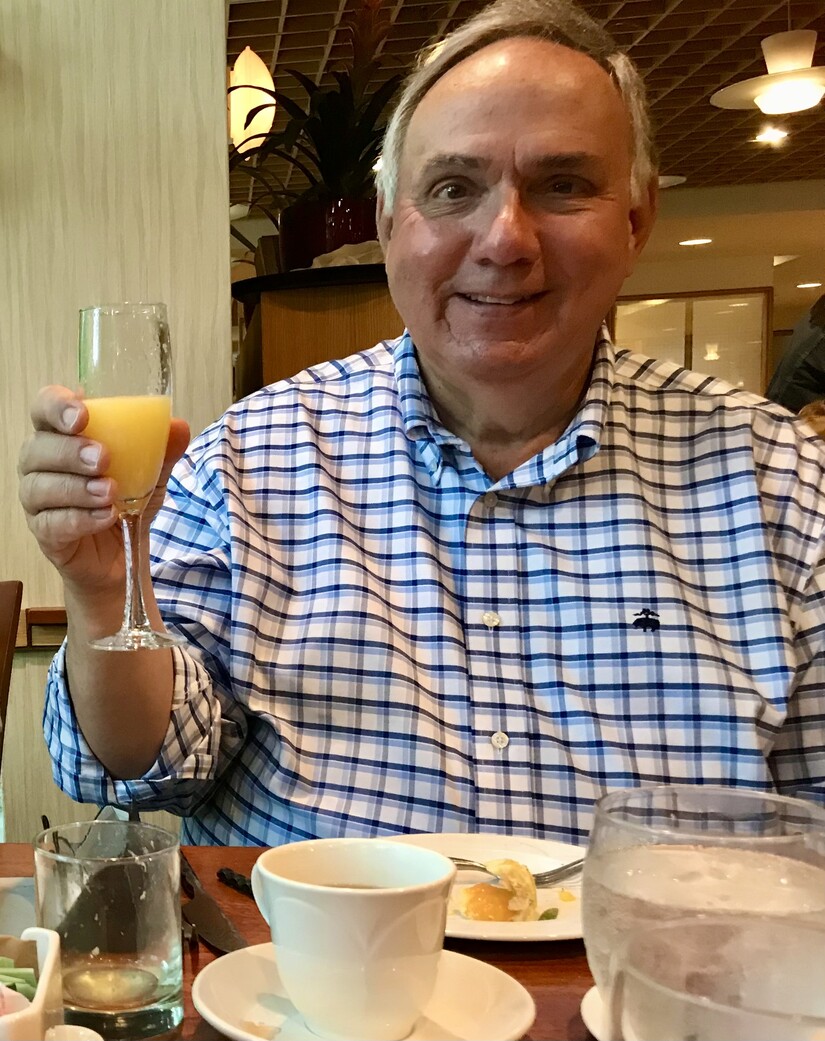
Tomorrow, August 12, 2026, it will be five years since my husband took his last breath. His illness was brief and seemingly came from nowhere. My husband was not a king like Macbeth. He was just an ordinary man. But he was a good man, someone who cared about people and would help anyone he could. I can't help but wonder if the Heavens are putting on a bit of a show for him.
Maybe August 12 is a special date in your life too.


Overcast, with a high of 61 and low of 57 degrees. Light rain in the morning, moderate rain in the afternoon, light drizzle in the evening, overcast overnight.