64° and Fog



Image
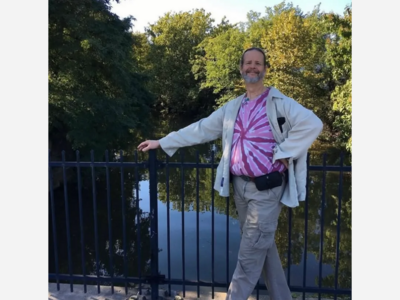
by Mike Strzelecki
I’ve read that we live in a country of eroding organized religion, but increasing spirituality. We see people moving towards inward-facing activities like yoga and meditation. Seeking life meaning beyond materialism. Reconciling and communing more with nature, or finding peace in communities with shared interests and ethics.
Along with the rise in spirituality comes an elevated interest in undertaking pilgrimages.
Defining what constitutes an official pilgrimage is challenging. Some consider it simply to be an extended walk with a purpose. Pilgrimages typically end up at shrines or other places of religious significance. Some pilgrims are simply looking to “find themselves,” while others are atoning for misdeeds, or seeking help from a higher spirit. Many pilgrims just want to experience the culture of a foreign land.
It’s generally thought that three elements are required to turn a walk into a pilgrimage. First, the pilgrimage must be a journey of movement that sets aside what is comfortable and known. It must push the pilgrims’ limits - physically, emotionally, and spiritually. Pilgrims must experience vulnerability. Second, a pilgrimage requires a destination of significance. This could mean a grand religious landmark of importance to your particular religion,or merely a place of poignancy significant to the personal pilgrim. Journeying from your current home to, say, your childhood home would constitute a pilgrimage Lastly, a pilgrimage requires intention and personal transformation. Pilgrims seek spiritual growth, penance, or connection with the divine.
The interesting aspect of the pilgrimage is that it presents a paradox: a specific destination is required to make a journey a pilgrimage, but the primary purpose of the journey is not to reach that destination. It’s the personal transformation and spiritual growth revealed along the way.
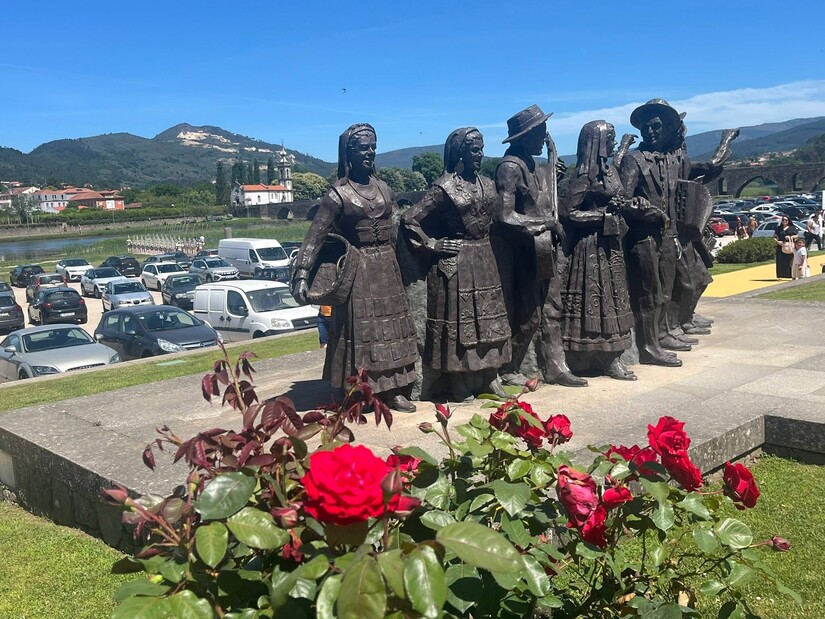
“The object of pilgrimage is not rest and relaxation - to get away from it all,” explains religious writer Huston Smith. “To set out on a pilgrimage is to throw down a challenge to everyday life. Nothing matters now but this adventure.”
So how popular are pilgrimages? The numbers are astonishing. Each year about 18.5 million Muslims undertake the Hajj or Umrah pilgrimage to Mecca. In 2025, India’s Maha Kumbh Mela attracted an incredible 663 million pilgrims to the sacred confluence of the Ganges and Yamuna Rivers. 330,000 pilgrims circle Shikoku Island, in Japan, each year visiting 88 Buddhist temples tucked into mountain crevices.
A pilgrimage popular with Americans is the Camino de Santiago de Compostela. This camino attracts over half a million trekkers each year. The Camino de Santiago is actually a network of various pilgrimage routes, all ending at the Cathedral de Santiago del Compostela, in downtown Santiago, Spain. The camino has four main pilgrimage routes. Two of them cross northern Spain beginning in France, one travels northward from southern Spain, and one crosses the nation of Portugal before inching towards Santiago.
The latter is the pilgrimage we chose to undertake. This pilgrimage is known as the Camino Portuguese, and runs 173 miles from Porto, Portugal to Santiago. Years back, we originally planned to trek the entire Camino Portuguese over two weeks, but our plans were derailed by Covid (the airlines shut down literally the day before we were to depart for Portugal). We put the idea on the backburner for a few years, and recently revived it in an abbreviated form. We worked with a company called Backroads to spend 6 days trekking the Camino Portugues through its most interesting sections.
The Camino Portugues begins at the Cathedral de Porto, in the historic district of Porto, and that is where our journey began. Porto is Portugal’s second largest city. It clings to the steep banks of the Douro River, just upstream from where it enters the Atlantic Ocean. The city rightfully and regularly earns the moniker Best European Destination by a European travel organization.
The outskirts of Porto resemble other progressive European cities, with splashy street art, eclectic architecture marrying the classical and modern styles, and hip outdoor cafes. Aromas from Thai and Indian and Mediterranean food waft through the narrow streets. Porto’s historic area, however, is a sight to behold. Centuries-old stone structures with red terra cotta roofs cascade off the hillsides into the river. The earlier buildings date to the 12th century. The entire expansive historic district of Porto is an official UNESCO heritage site.
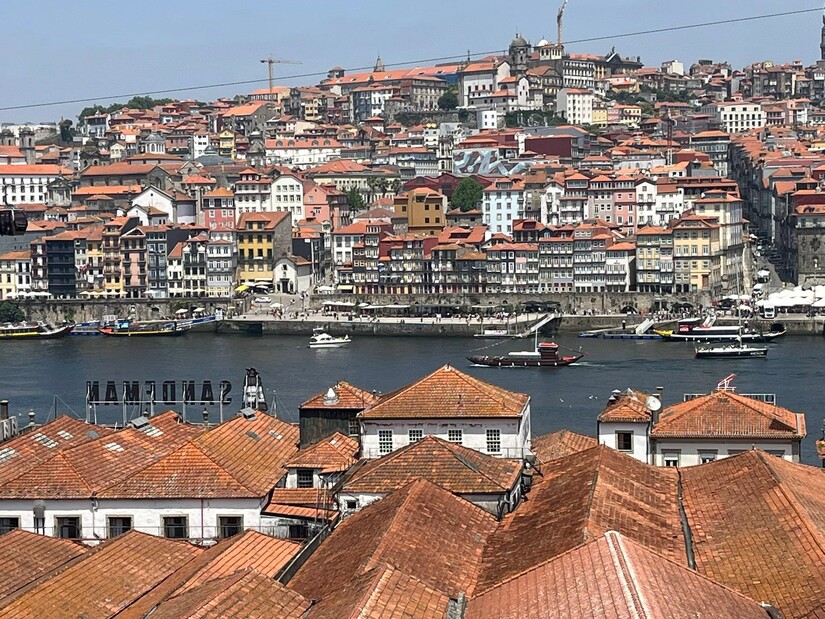
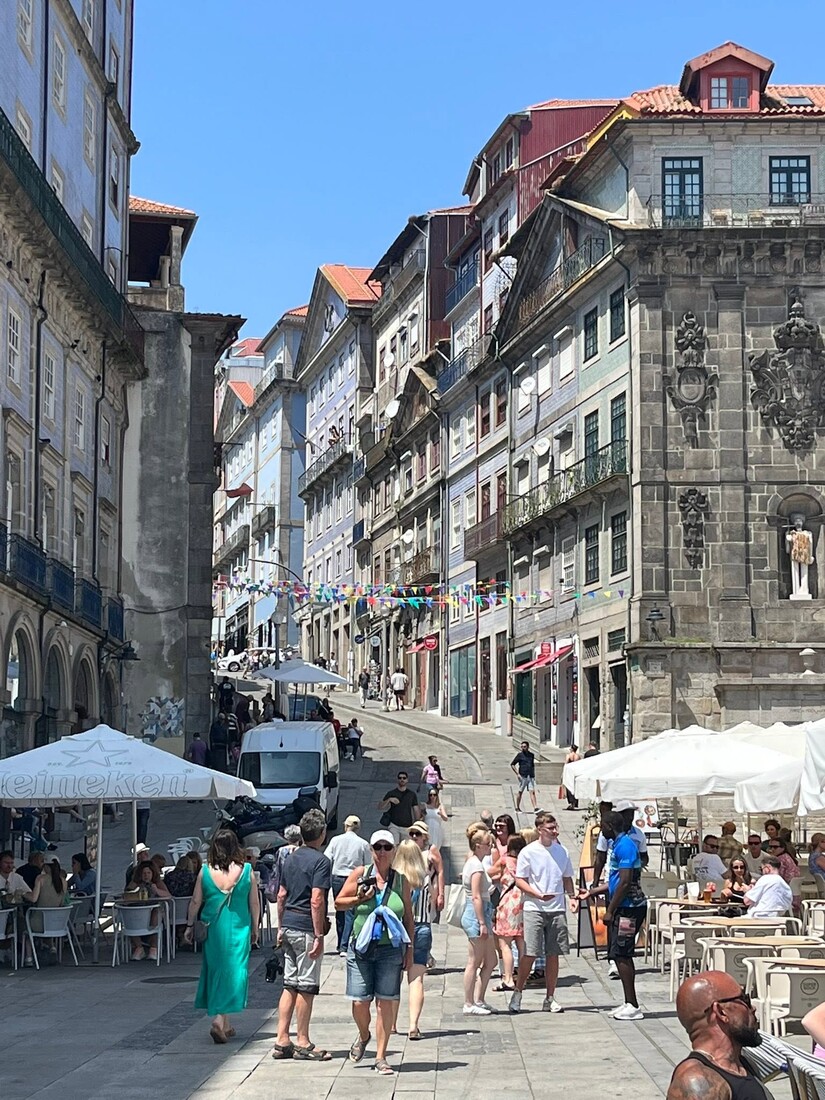
Before we began our pilgrimage, we spent a few days urban hiking Porto. We crawled down narrow alley streets looking for baked goods.
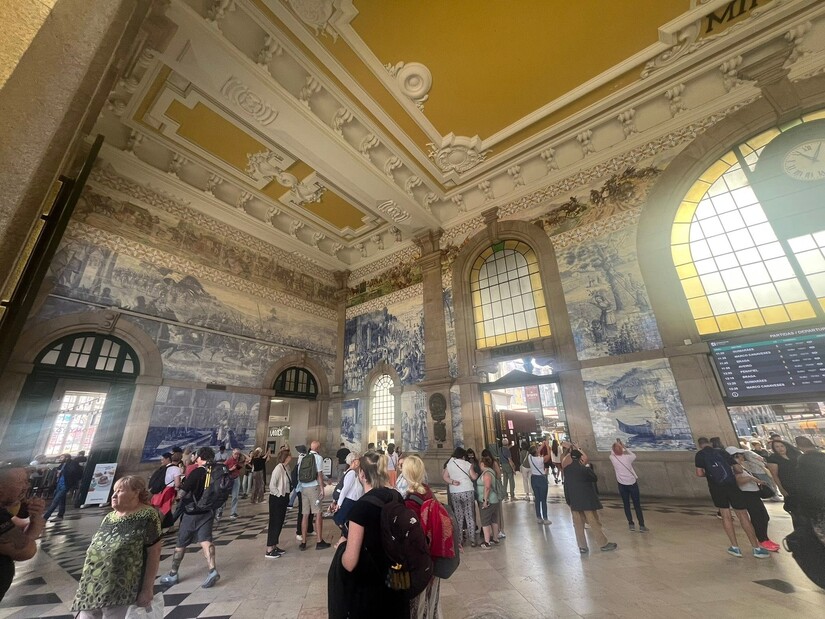
We explored the Sao Bento train station, which features wall after wall of blue-and-white-tiled artwork revealing the city’s abundant history. It’s considered one of the finest and most impressive train stations in the world.
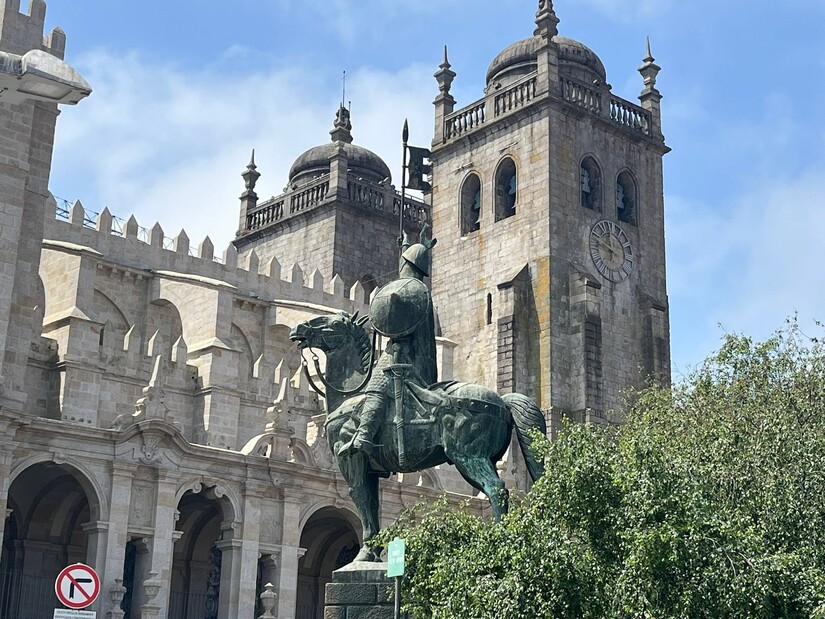
We explored the Cathedral de Porto, the official start of the Camino Portuguese. Construction of this massive cathedral began in 1110 and was not completed until 1737. From its high perch, the entire historic district sprawled before us.
We also strode past the oldest continuously operating bookstore in the world, used as a set location on several Harry Potter films. We crossed lush green parks that gave way to partying teens later in the day. And we crossed various bridges over the Douro River. The most famous is the Dom Luis I Bridge, designed by a student of Gustave Eiffel, designer of the Eiffel Tower. (Eiffel himself designed a bridge farther upstream that we crossed by bus,)
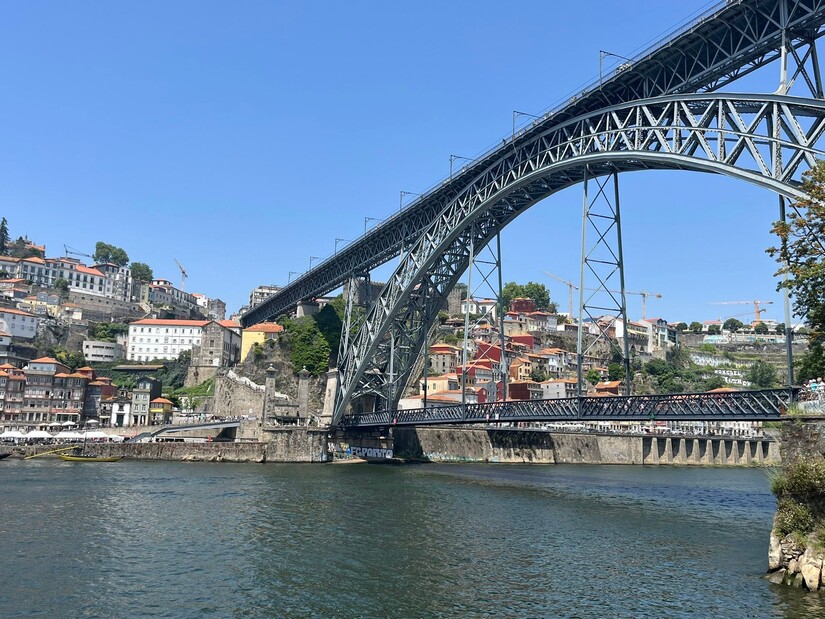
Porto is known primarily as the birthplace and beating heart of the port industry. Port is a sweet and heavy wine that, due to its unique processing, has an elevated alcohol content over typical wines. All port wines in the world are processed in the Douro River Valley, around Porto. In our wanderings, we passed more than a dozen port cellars and port tasting facilities on the banks of the Douro River, in the town of Vila Nova de Gaia, immediately across the river from Porto.
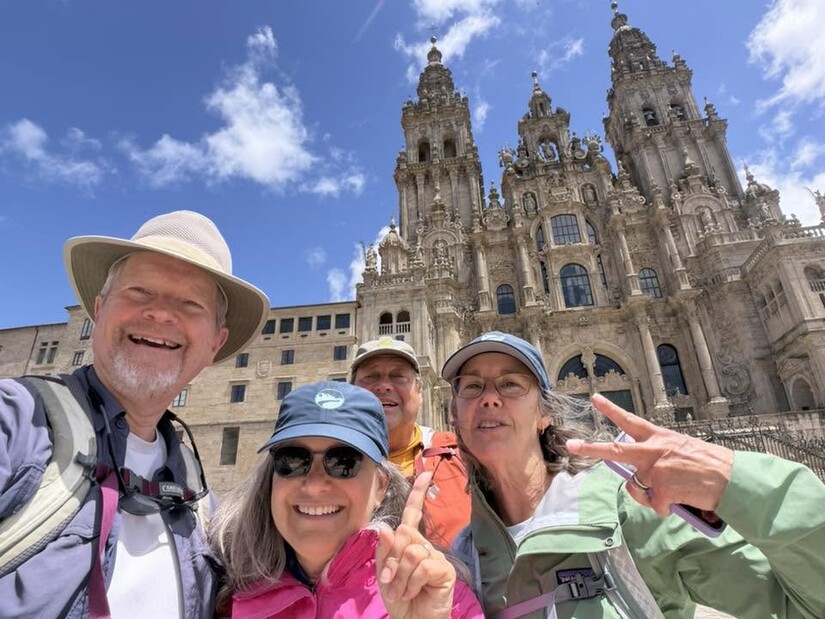
Our official pilgrimage began the following day. Kelly and I were joined by some friends who share our adventurous nature.
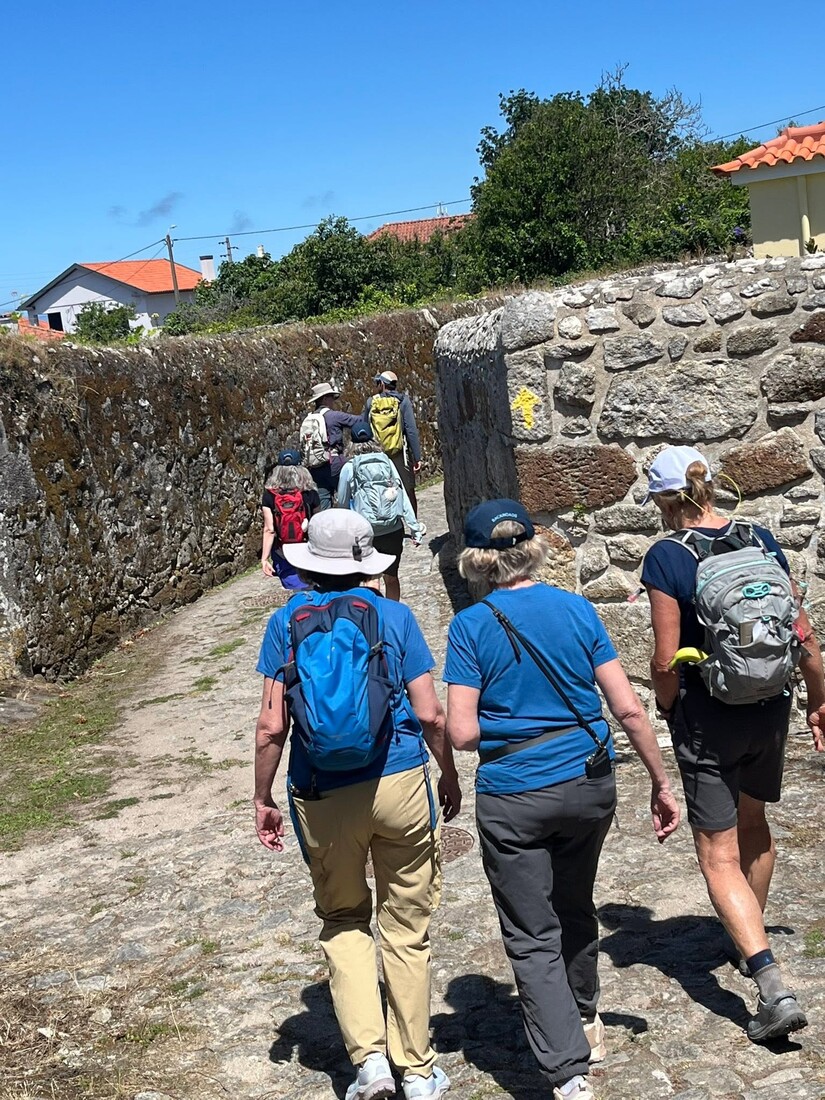
Day one was an 8.5-mile meander across the rural outskirts of Porto. We passed through vineyards, farmland, and forgotten stone villages, intermixed with short stretches of modern incursion.
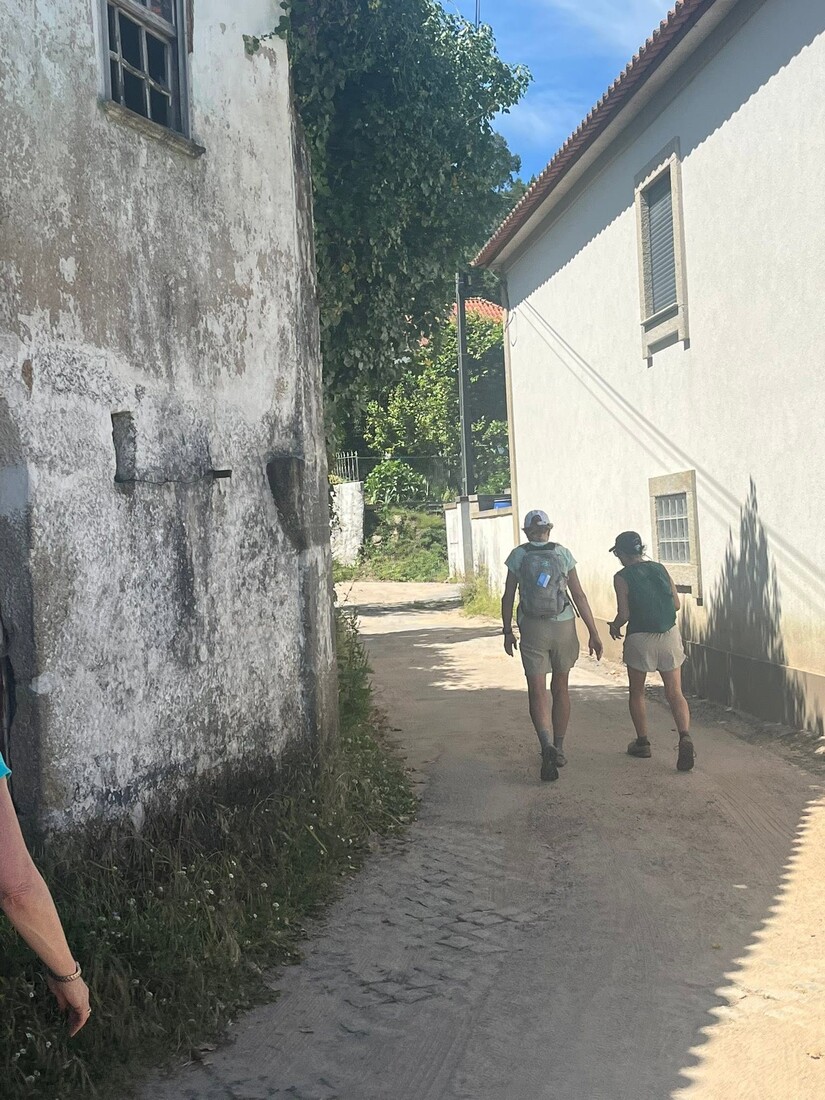
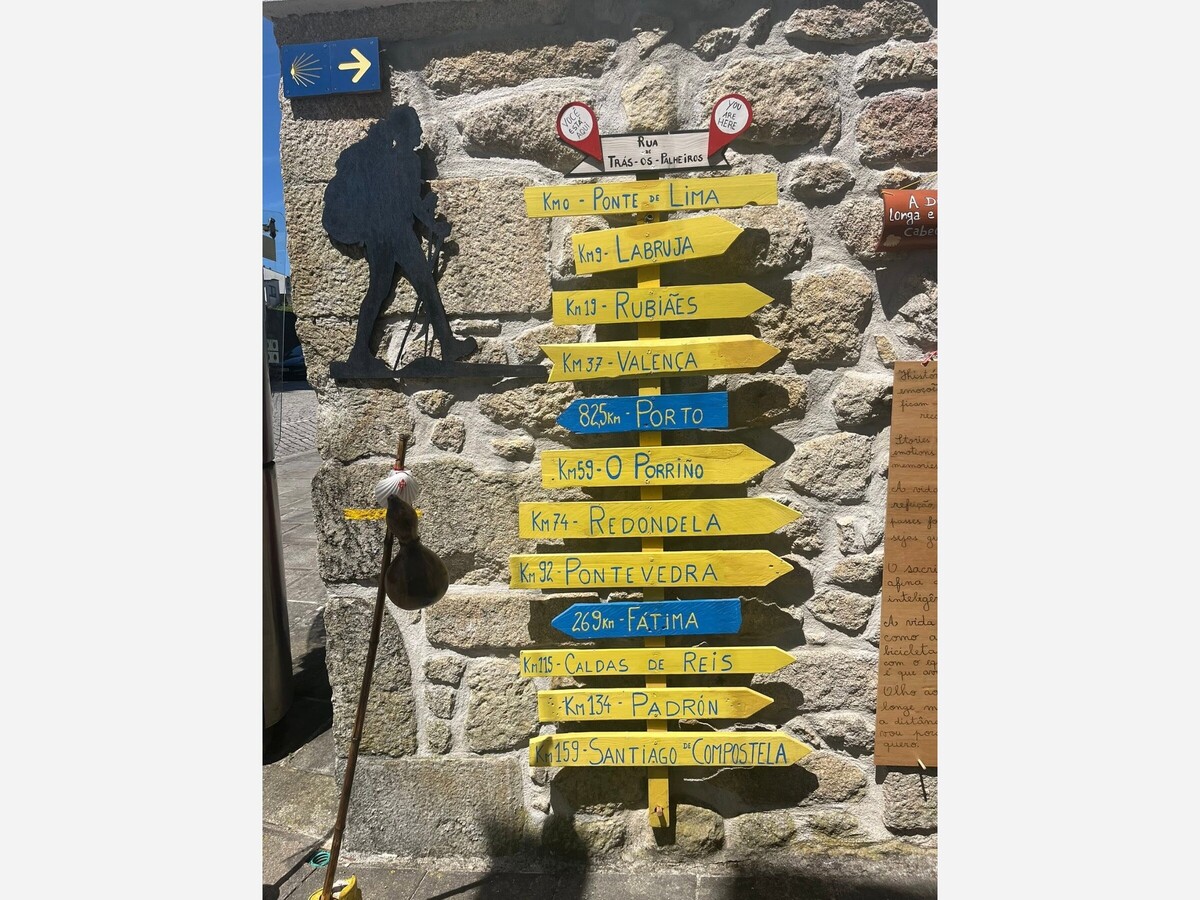
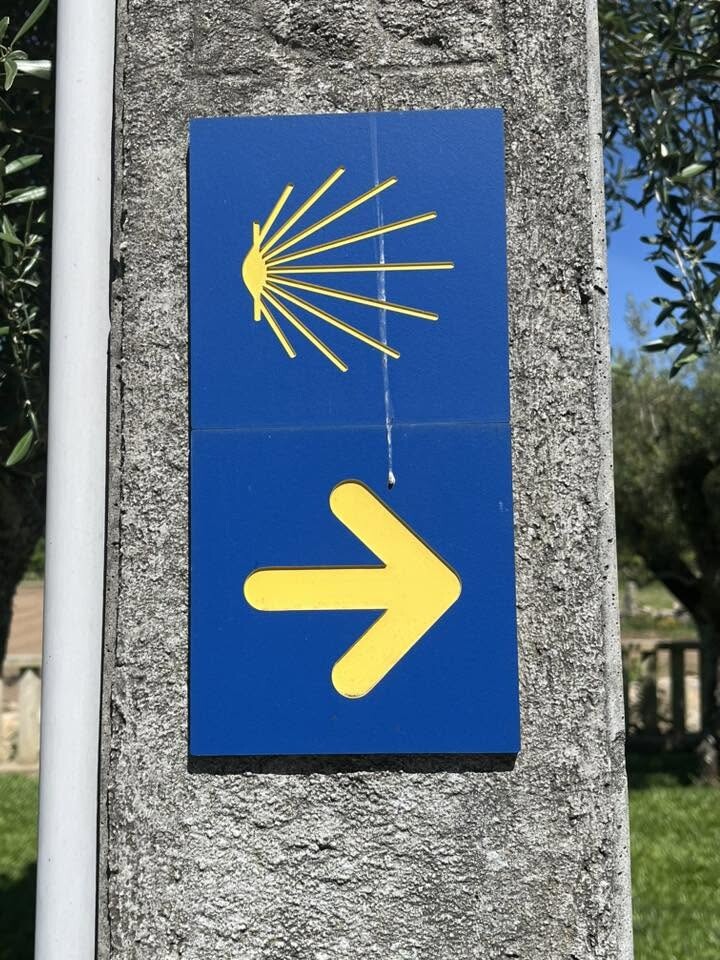
For our remaining camino, we would follow the scallop shells directing us to Santiago. Scallops became the symbol of the Camino de Santiago centuries ago, when pilgrims would carry scallop shells, which were abundant in that region of Spain, as proof of their pilgrimage.
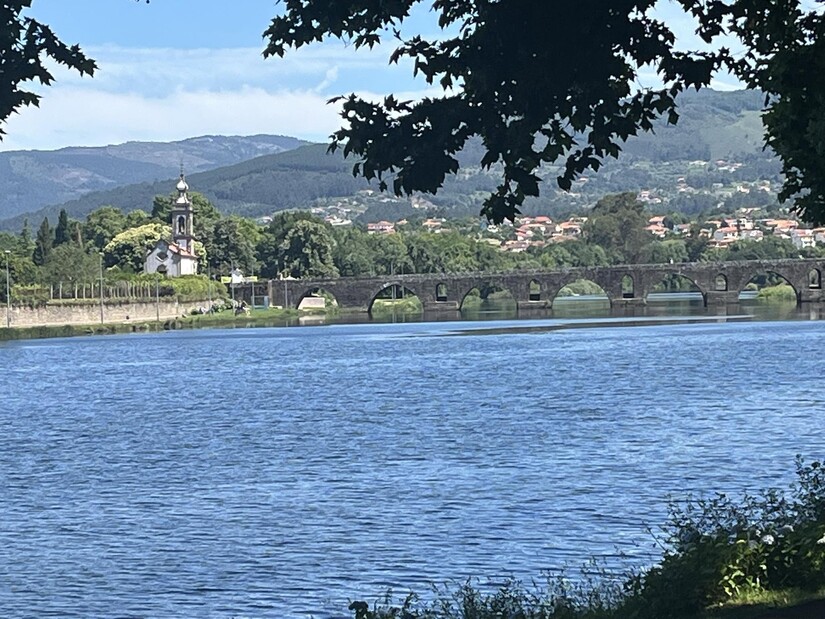
The leg began in Ponte de Lima, the oldest town in Portugal, and included a crossing of a Roman bridge that dates to the first century.
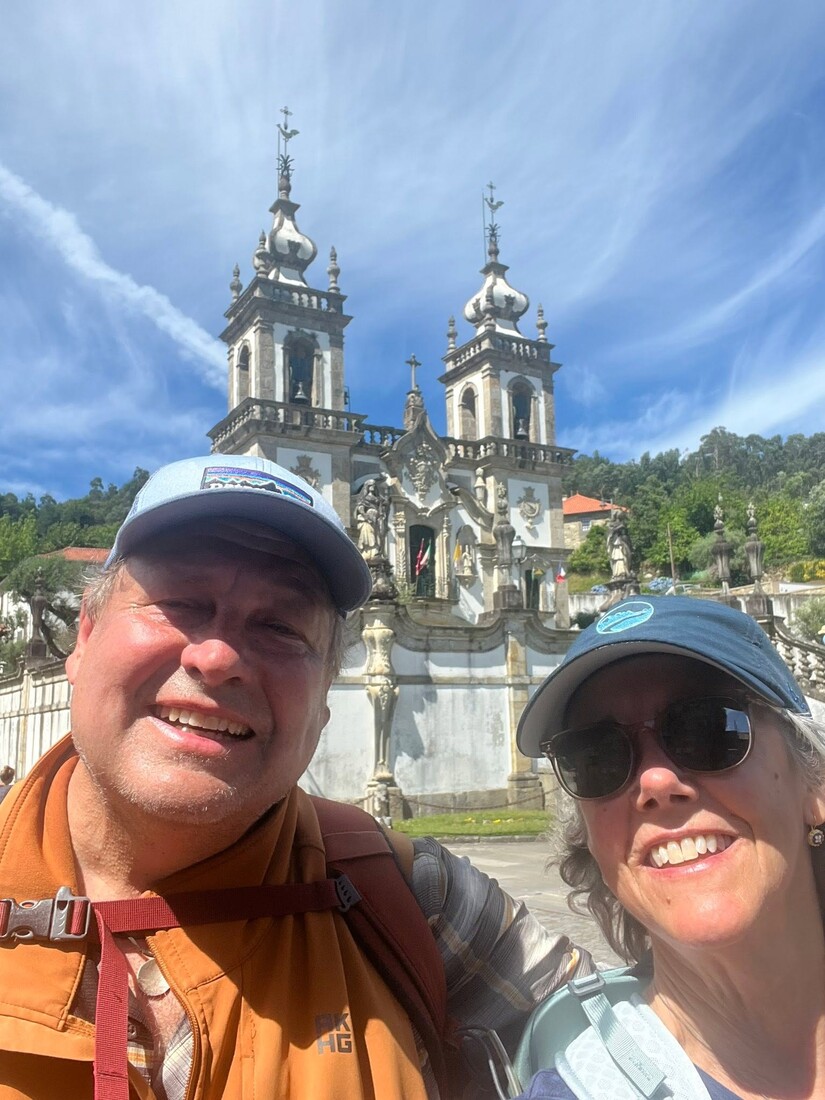
All pilgrims carry a special “passport” which you can get stamped at facilities all along the camino. At the day’s tail-end, we sauntered beside streams with lovely waterfalls and climbed a steep wooded hill to reach a cathedral that seemed too large for the rural environment, but stunningly beautiful. This is where our day one camino ended.
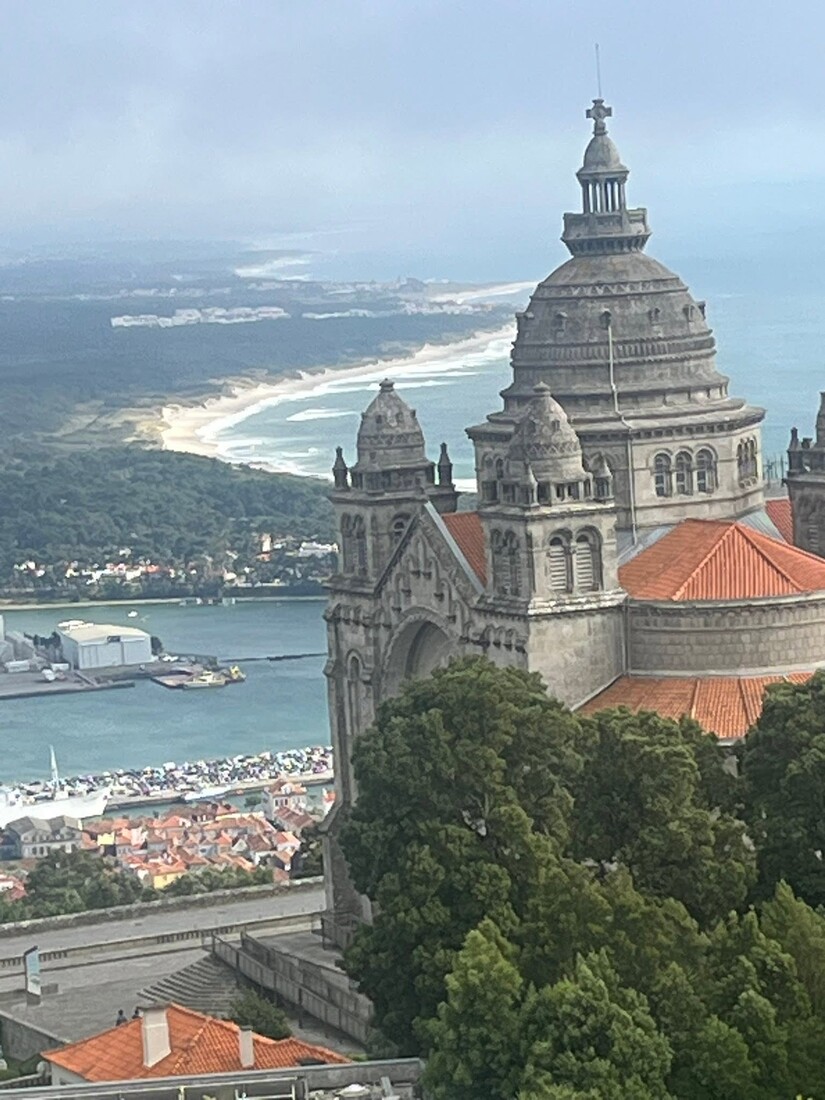
Our lodging for the first two nights was the grand Hotel Pousada Viana de Castelo. It was the nicest lodging of all my travels. It resembles a grand palace atop a mountain, and was built in the last century by a wealthy inhabitant as a gift to the town of Viana de Castelo. It perches in woodland high on a mountain, and looks down on the byzantine Bascilia de Santa Luzia, and the confluence of the Lima River with the sandy shores of the Atlantic Ocean. National Geographic Traveller magazine named it the third best hotel view in the world. This was the view from our room.
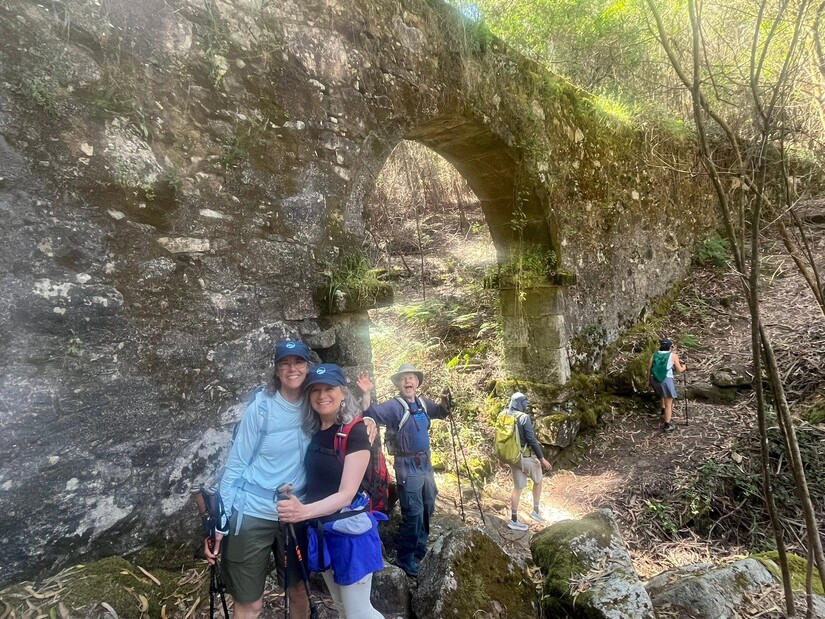
The second day of our pilgrimage featured 10 miles of scrambling across some of Portugal’s most attractive scenery. We hiked ancient single-track trails across mountaintops. We clambered off the mountain alongside an ancient 16th century conveyance system used to bring water from the high mountain springs to the coastal towns below. It was essentially a low-slung rock wall with a hollow pipe carved out inside descending steep slopes. We could hear water still flowing through it five centuries later.
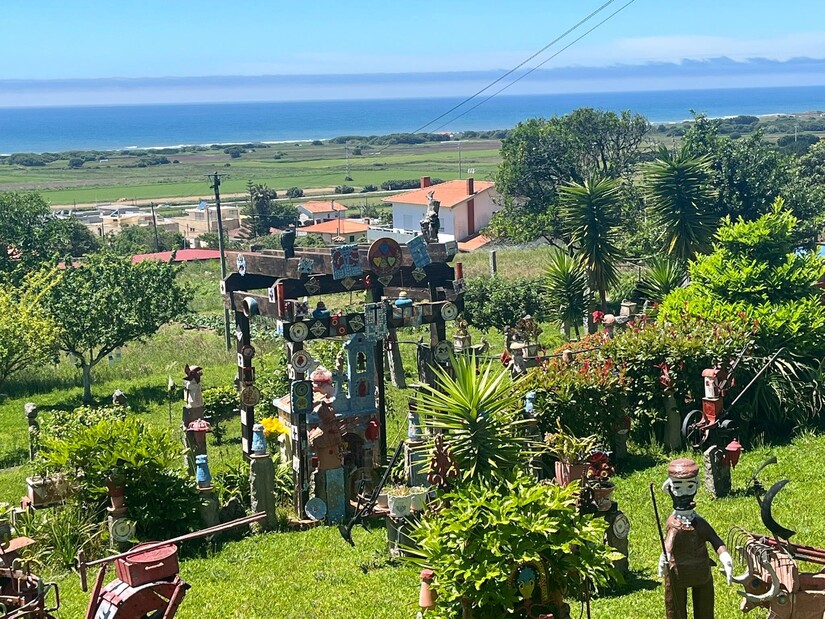
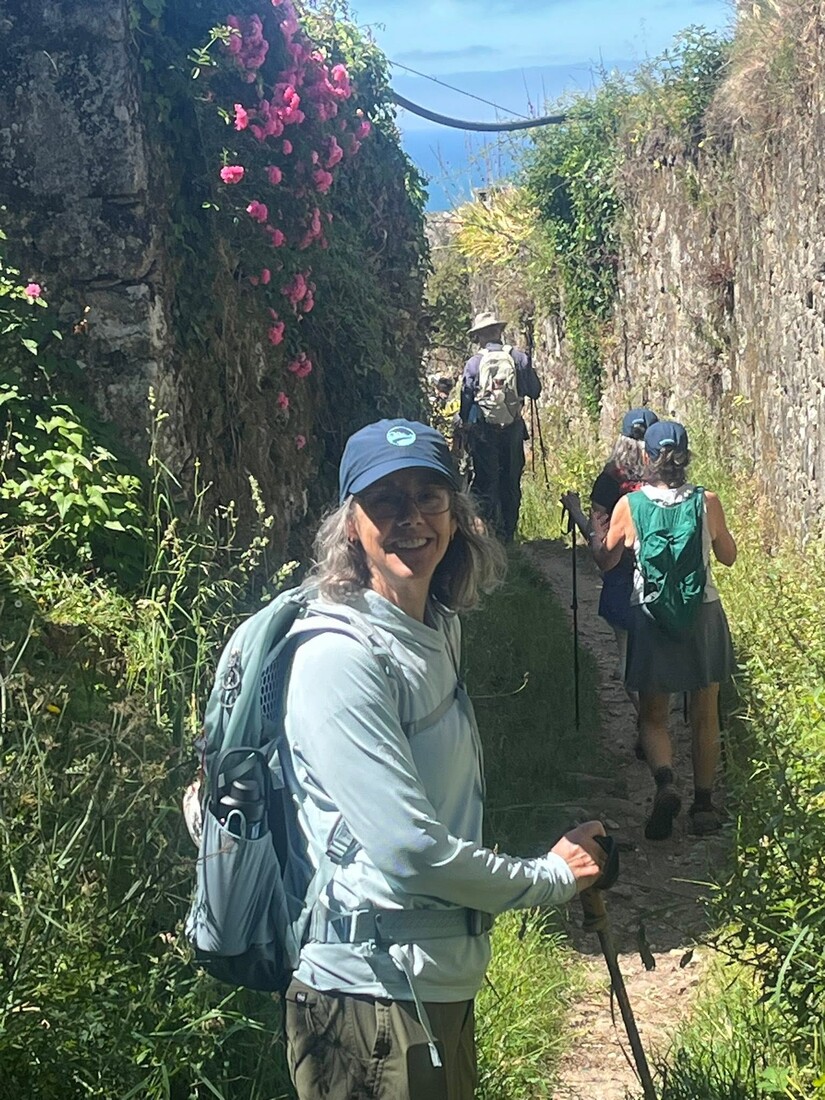
The afternoon section of the camino had us weaving through historic coastal villages, winding down alleyways lined with high stone walls and past homes that continue to resist modernization. The afternoon was sunny and we were exposed. Two stops at local cafes that cater to pilgrims provided beer and coca cola refreshment. Every block or two of walking would reveal lovely ocean views peeking between century-old homes.
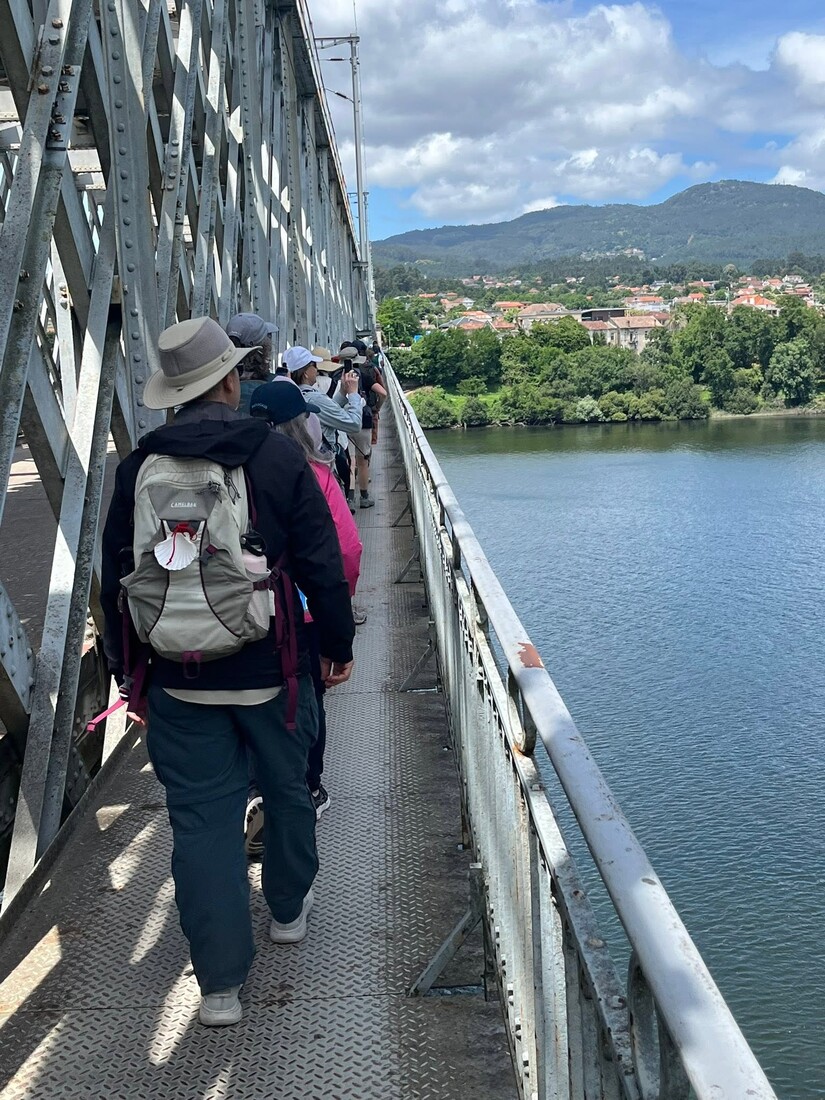
On the third day of our pilgrimage, we crossed from Portugal into Spain. The 8-mile day started with a leisurely stroll along the banks of the Minho River, a chance to find unusual birds with names like wagtails and tits and hoopoes. We lunched in a historic fortressed village where we did some window shopping and watched falcons and kites feeding in the nearby fields.
We crossed the Av. de Espanha into Spain, getting our first taste of the infamous Galician region of the country.
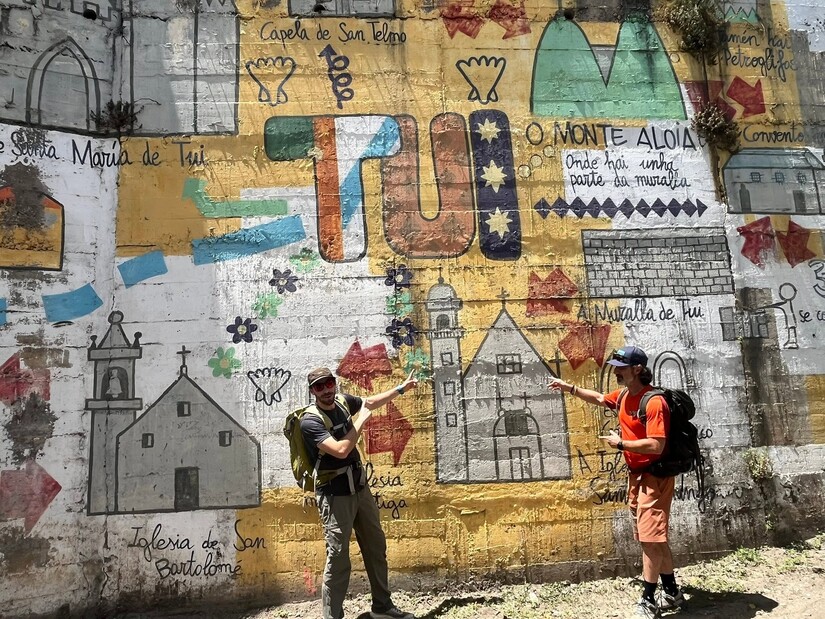
We continued on the narrow roadways through the town of Valencia, stopping to absorb yet another stunning cathedral. We passed generous numbers of statues and other street arts, and struggled to absorb the profuse number of cultural elements we were passing through.
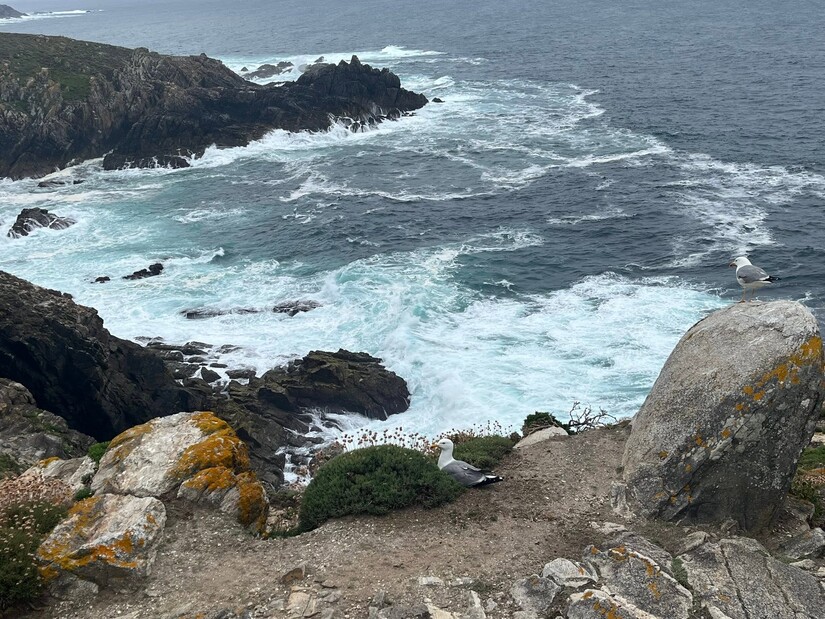
Day four of our Camino Portuguese took us off the mainland route and diverted us onto an island reached by passenger ferry. It was the island of Ons, which was part of the Maritime-Terrestrial National Park. There, we hiked over 8 miles of high coastal trails. The island was generally devoid of trees, offering near continuous views of the Atlantic Ocean. The island banks were steep and we watched crashing waves throwing hard punches on the land. Rugged shoreline views were constant.
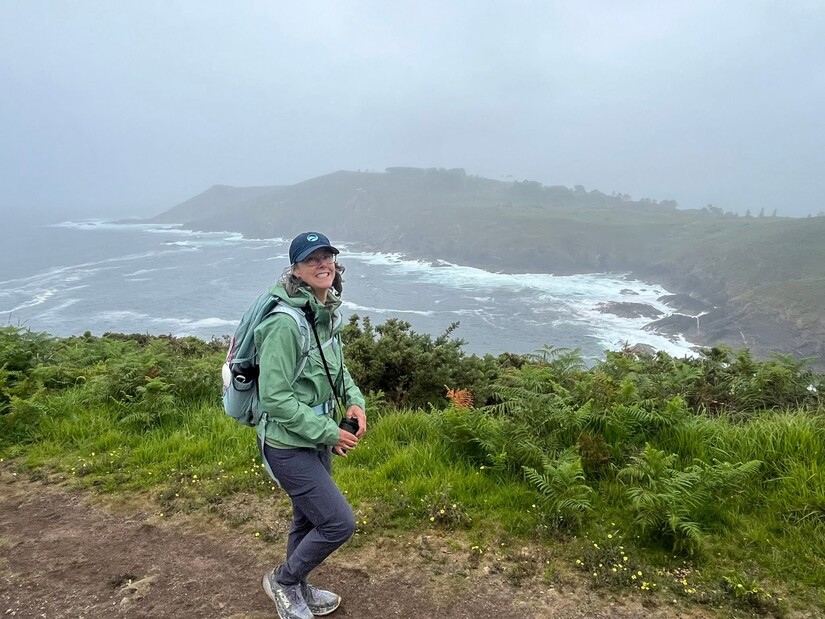
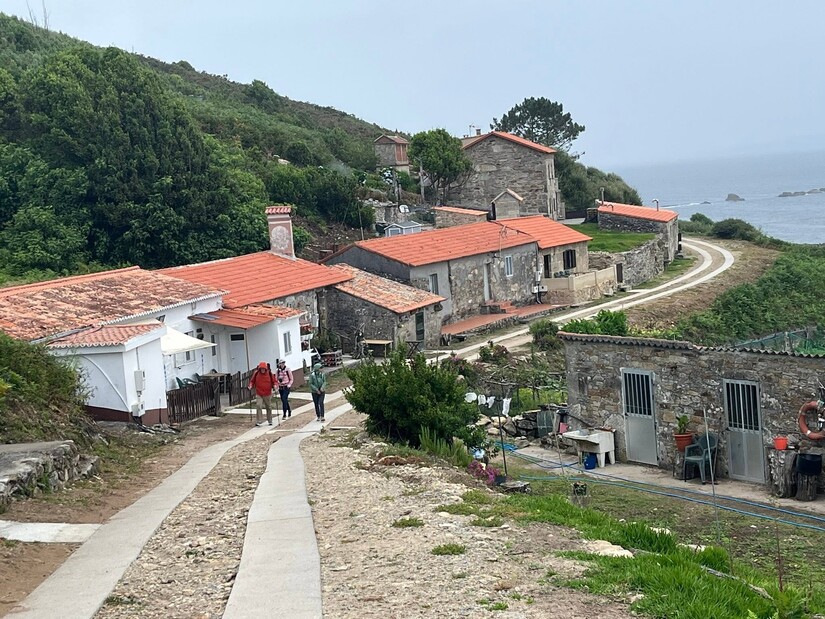
Ons Island was once privately owned. We passed through clusters of homes still lived in, and visited a historic lighthouse still in use.
A naturalist guide shared tales of the island’s past and present with us. At the hike’s end, we dined at the only restaurant on the island, famous for its pulpo de Ons - fresh octopus hand-caught off the island’s shores prepared with olive oil, garlic, and paprika. For less adventurous eaters, such as myself, the egg tortillas and fresh fruit were fabulous.
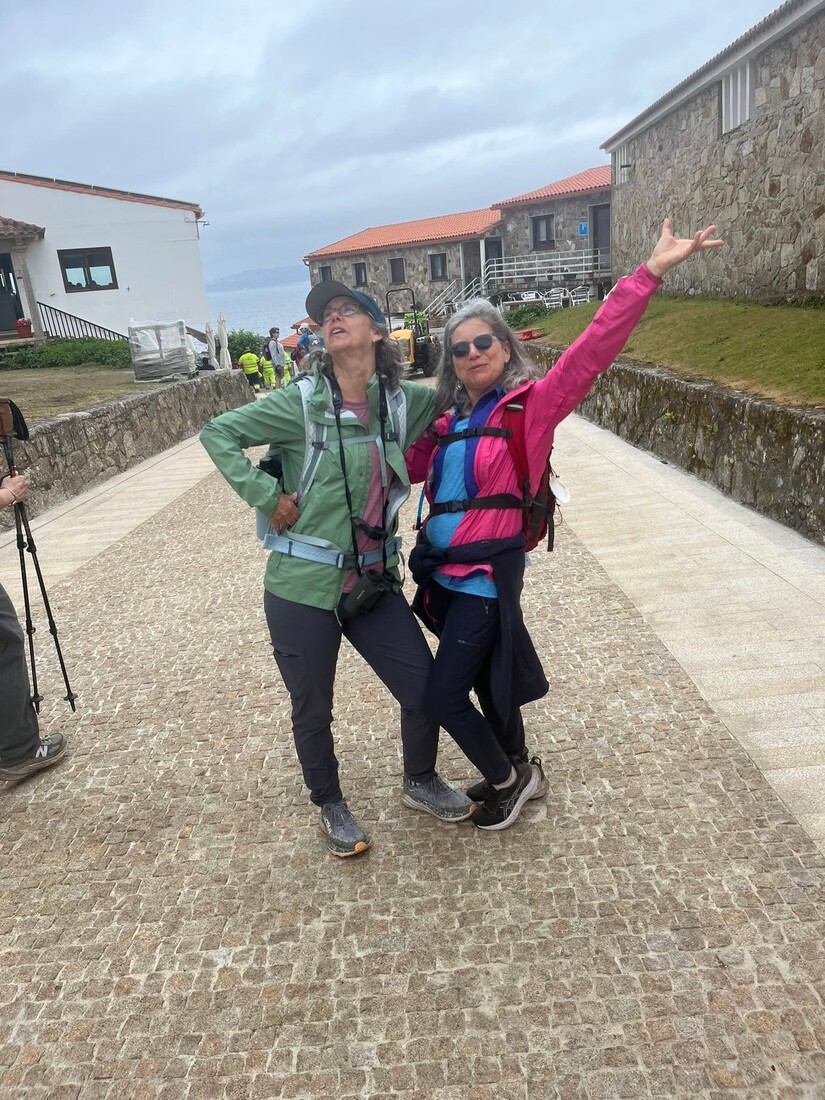
Part of the beauty of the Camino Portuguese is the diversity of terrain you cross en route to Santiago. In our explorations, we crossed urban areas, farming communities, historic villages, parkland, rolling vineyards, rugged mountains, pastoral footpaths, and islands. In keeping this interesting mix alive, on day five, we switched camino routes. We hiked the last five miles of the French Way. This is the most popular camino route and runs 500 miles from the French Pyrenees to Santiago.
It provided a valuable pilgrimage experience. Until that day, we crossed paths with few other pilgrims. Our group was mainly insular, with the culture and the environment we were passing through being our main companions. The French Way featured crowds of pilgrims, some walking shoulder-to-shoulder across the camino path. The French Way is set up for mass pilgriming with food stops every mile or two and frequent sleeping inns called auberges.
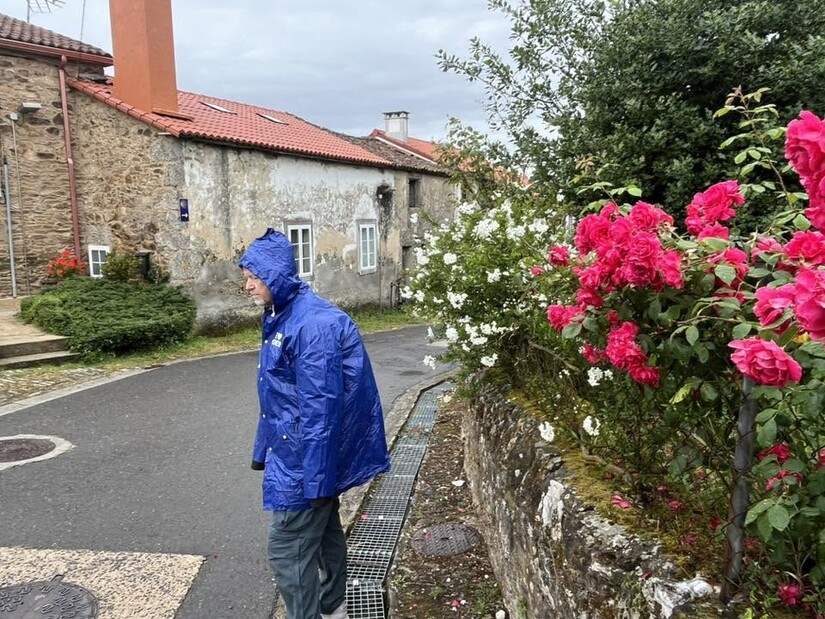
While the last five-mile stretch of the French Way began in a rural area - and for us, in a downpour - it soon gave way to a more suburban feel, and quickly to the urban milieu that is Santiago. We shared the sidewalks with hundreds of other exhausted pilgrims. We passed beckoning restaurants and bakeries, and crossed urban parks. We were excited to see the end point.
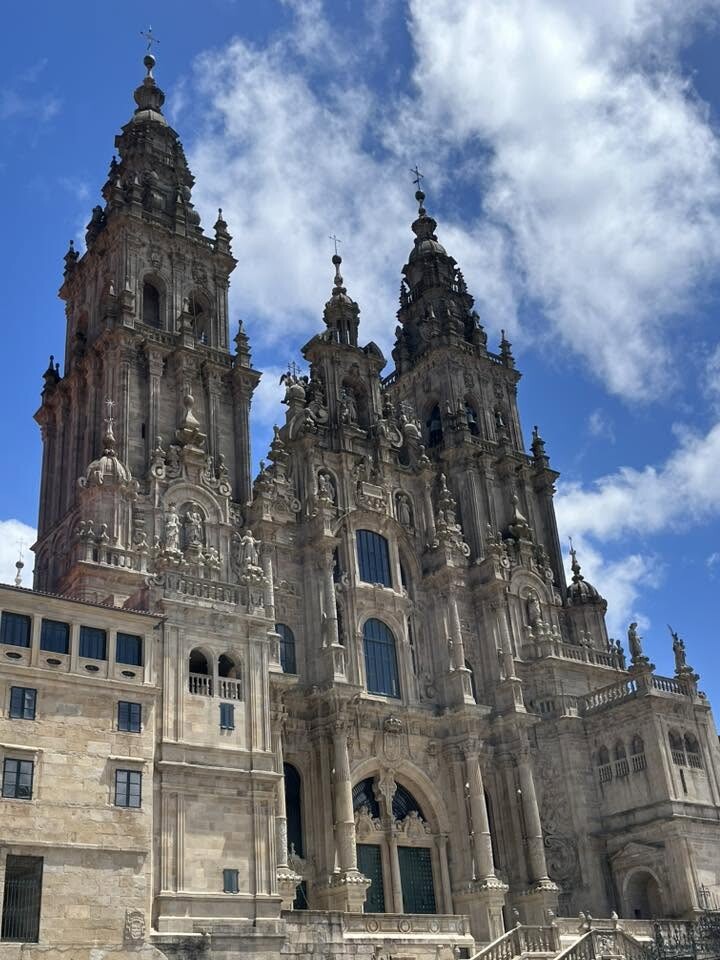
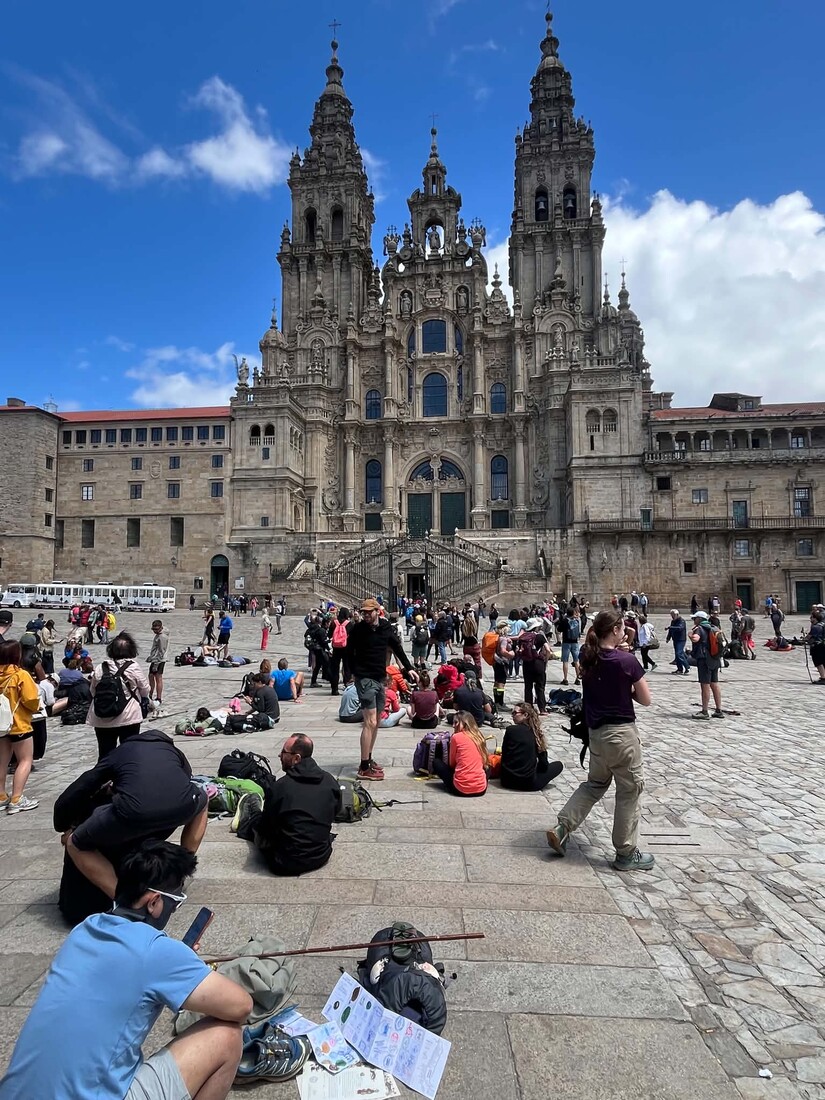
At last, we moved under an ancient arch, walked past several troubadour musicians, and entered the wide plaza in front of the Cathedral de Santiago de Compostela. Before us, hundreds of pilgrims were strewn across the plaza in various states of exhaustion and elation. Some napping with their heads on their backpacks, others snapping selfies and celebrating with friends. The stunning cathedral loomed large, casting its cooling shadow across our over-heated bodies. No, we did not walk the 500 miles that many of the other pilgrims just completed. But our 75 miles trekked over the course of the week provided a satisfying level of exhaustion, where we felt like we belonged.
Our lodging was at the Parador de Santiago de Compostela, located immediately on the plaza. The hotel was the most culturally curious place I have ever stayed. It was renovated from an ancient hospital that was built in 1499 to accommodate pilgrims of that era. It was commissioned by Queen Isabella I and King Ferdinand II. Walking through the corridors was chilling, as the unique history of the building was palpable. There were four courtyards strewn with stone-carved statues that were showing wear, and the interior woodwork still played well today.
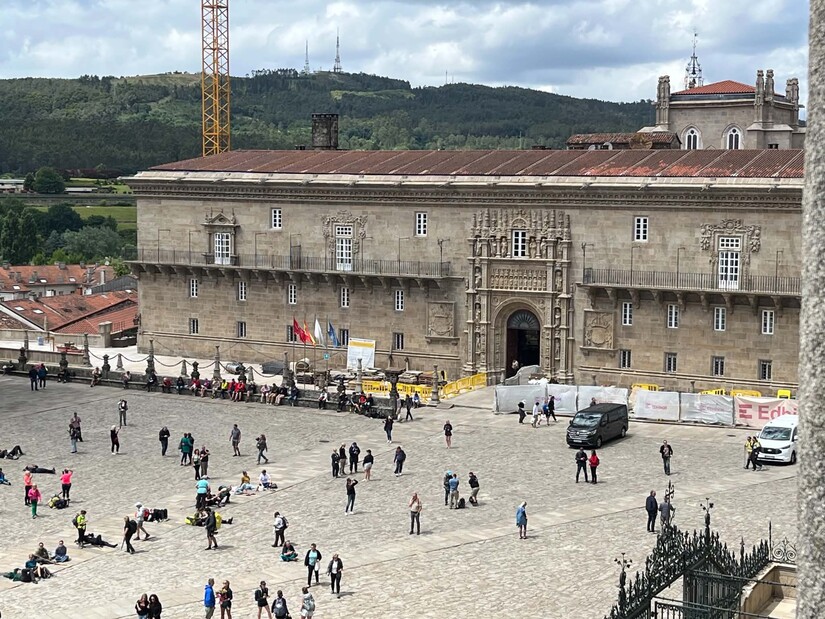
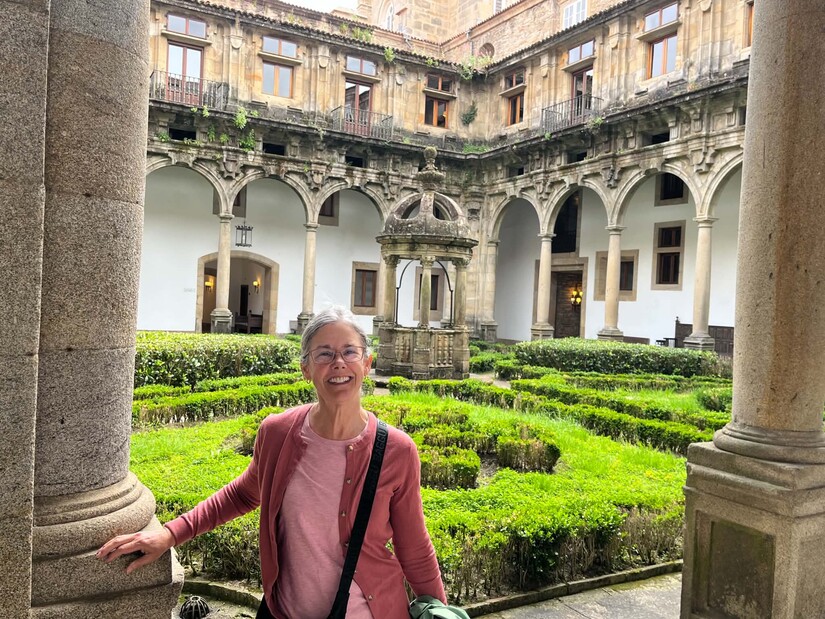
Interestingly, the hospital did not only treat pilgrims that required medical attention; it also provided other services to exhausted trekkers. Simply, a room to stay, meals, a place to rejuvenate. It was a place for anyone seeking a hand. In fact the word “hospital” derives from the term hospitality.
That afternoon, we toured the Cathedral, which is thought to be built atop the remains of the apostle St. James. He is the reason for the camino pilgrimages. He is said to be one of the three primary disciples to Jesus, and is the patron saint of Spain. Hundreds of thousands of pilgrims each year, moving towards one of the world’s most beautiful cathedrals, all to feel the aura of one of Jesus’s disciples.
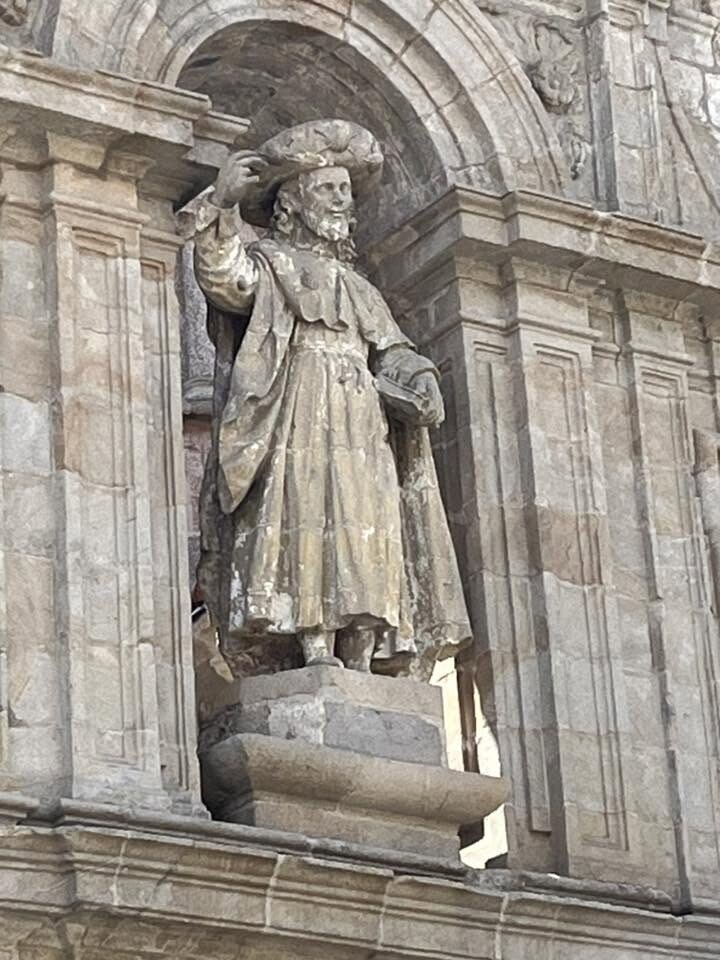
That evening we celebrated with a fancy Galician seafood dinner, what the region is most noted for. We danced alongside other pilgrims in the plaza until midnight and heard live music streaming through our room into early morning.
Even though our official pilgrimage reached its endpoint in Santiago, we chose to walk five miles the following morning. While all of the various Spanish caminos end at the plaza of the Cathedral de Santiago, some pilgrims choose to continue on for another 70 or so miles to the Atlantic Ocean, to honor St. James, the fisherman. For our final day, we did a much truncated version of that distance and explored tiny farming communities on the outside of town that were strung across a gin-clear brook. We considered it a cool-down.
Throughout our entire journey, our group contemplated and discussed what constitutes a pilgrimage. We examined different definitions of pilgrimages and parsed various philosophies. While camino pilgrimages have been going on for thousands of years, pilgrims of this newer age seem to be more about exploring the cultures they are passing through, meeting interesting people, tasting local cuisine. All are valid reasons to partake in the camino. An axiom that follows all pilgrims across France, Portugal, and Spain is “Everybody does their own camino.”
But on our final day in Santiago, while strolling across the plaza, we met a gentleman from Denmark who clearly just finished the camino and was in a state of utter exhaustion. He was with an older woman we took to be his mother, who, based on her fresh appearance, was not a pilgrim. The gentleman told us he just finished the 500 miles of the French Way. We congratulated him and peppered him with a few routine questions, which he gladly answered.
I then noticed he had a rubber brace on his knee. I asked him if his knee was ok. He replied, “No, not at all. I had an aneurysm last year and have lost all use of that leg.” Clearly stunned by this divulgence, we then listened to him say how he wanted to complete the entire 500-mile Camino de Santiago to reclaim his greatly impaired life and prove that, despite losing all use of that leg, he could still do extraordinary physical feats.
He turned and walked away with a shocking limp, placing all his weight on his good leg, shuffling off the bad leg. We were pained to contemplate that he just walked 500 miles with only one usable leg, dragging the other behind. Every step a painful lumber.
Our interaction with this tall, muscular, Danish man, however, was a valuable pilgrimage moment for us. We were relieved to know that the Camino de Santiago, for many pilgrims, remains, after thousands and thousands of years, a conduit to find higher purpose in their lives, and seek spiritual and emotional uplift. As long as humanity exists, there will be caminos and other pilgrimages.
* Mike Strzelecki is a freelance travel and outdoor writer, and 1981 graduate of Boyertown Area Senior High School. He writes from his house in Baltimore, Maryland. In his spare time, he joins his wife on adventures around the country observing and photographing birds.


Light rain shower, with a high of 68 and low of 53 degrees. Light rain shower in the morning, overcast for the afternoon, clear during the evening, fog overnight.