31° and Clear



Image
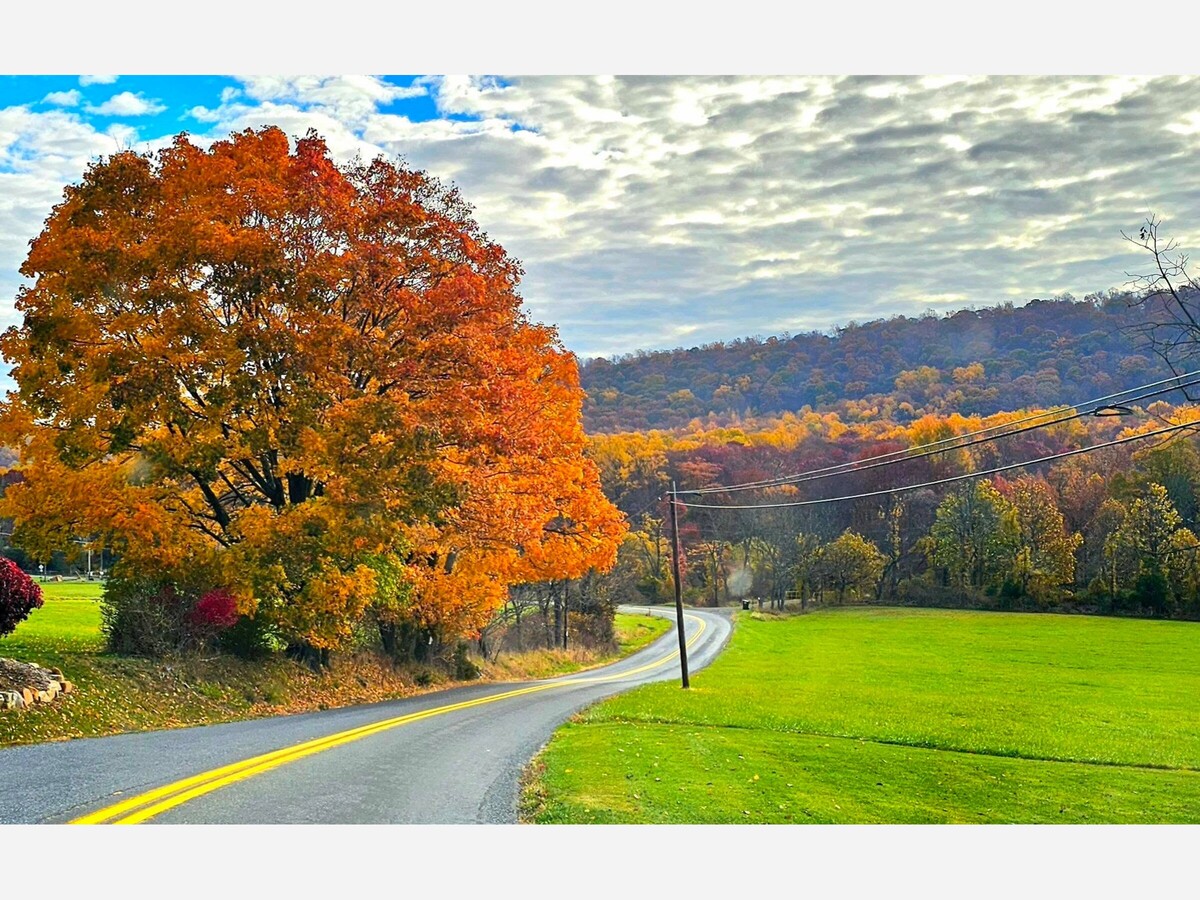
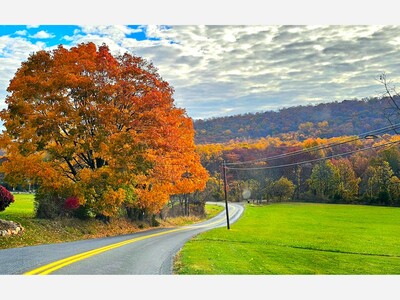
photo by Beth Glick
by Craig Bennett
The Thanksgiving holiday is nearly upon us, and it marks a few significant beginnings and endings. The beginning of the Christmas shopping season is the most obvious, although in recent years, retailers have pushed that a lot closer to Halloween. And it marks the end of football season, at least for the local high school teams, since professional sports has pushed that all the way into February with the Super Bowl. But, it’s also the real beginning of autumn, when the leaves of trees all over New England and the Mid-Atlantic states reach their most spectacular colors, and the hills and mountains become visions of ineffable beauty.
For some of us, at least, the sight of that riot of color gracing the landscape, the welcome change toward cooler, drier air throughout the day, the fall of evening earlier and earlier with every sunset, and the renewed awareness of the cycle of the seasons may inspire a kind of awe and wonder: what a miraculous creation is this world in which we’re privileged to live! Whether it’s here as the result of a Big Bang or the exercise of some creative consciousness well beyond our understanding, its contemplation is enough to inspire a kind of gratitude and reverence for its mere existence.
Awe can indeed inspire wonder, and wonder may account for the origin of the religious impulse, according to Thomas Moore, author of Care of the Soul and A Religion of One’s Own, a former monk, and a psychotherapist for thirty-five years. All we need, according to Dr. Moore, is a “sense of otherness in creation, an opening to the transcendent.” Or, perhaps, simply to recognize the possible truth in Ken Wilber’s suggestion that there’s “something else going on here.” Even the most ordinary person may experience a mystical moment now and then, Dr. Moore claims. It may not be on a par with Apollo astronaut Edgar Mitchell’s sudden sense of total connectedness with the cosmos; but we’re all capable of losing ourselves, at least momentarily, in a beautiful piece of music, a deeply moving poem or passage of prose, or a breathtaking view of some natural wonder. Or even, perhaps, a forested mountainside in mid-November or thereabout, alive with a thousand different shades of brown, orange, red, and yellow, brightened by the waning autumn sun.
To experience such awe and reverence, there is no need for elaborate ritual and ceremony, richly attired priests swinging censers, or magnificent cathedrals bedecked with stained glass, intricately carved stonework, and holy relics, Dr. Moore says. We all know what awe is; and if we were to recall those times in our lives when we felt it most deeply and powerfully, we would most likely be recalling times when we were confronted with some aspect of the natural world. It could conceivably happen while we’re peering through a microscope at one-celled creatures reproducing and creating more of themselves as we watch, or as we observe a lowly spider patiently building an intricate and complex web. But most likely it will be when we are confronted with vastness—a vastness that we somehow realize includes us.
Katherine Ozment cites the work of psychology professor Dacher Keltner, who found that we experience awe “when we sense vastness, which makes us feel like part of a greater whole.” There is even evidence that exposure to experiences that produce a sense of awe tend to incline people toward more positive kinds of behavior, like generosity, compassion, and honesty. And it also tends to deepen their sense of spirituality.
Looking up at a sky full of stars from the total darkness of a wilderness mountainside, we realize that the Earth on which we stand, from a more distant perspective, is just another point of light in the void. We are of the same origin, the same substance, and the same ultimate destiny as everything we behold to the farthest reaches of the universe. Peering over the ledge above a deep canyon, carved out over eons by the same river that still flows along its bottom, we realize the immensity of time required to wash away soil, rock, and mineral, bit by miniscule bit, until the ceaseless flow of that river has produced what we behold. And we realize at the same time that it will continue to flow indefinitely, carving that canyon deeper and deeper as the centuries pass. Likewise will our lives and the lives of all those who follow us be carried away, along with our hopes, our dreams, our successes, and our failures, as if they, too, were nothing more than miniscule bits of soil, rock, and mineral washed toward a distant sea by the ceaseless flow of time’s river. And it is the spiritual impulse that assures us that it will carry every one of us to a distant, vast, and immeasurable sea beyond the reach of time or human understanding.
With the Thanksgiving holiday’s current orientation around food, football, and family, it’s easy to forget about many of the familiar, everyday experiences that we appreciate without giving them any further thought. Living in a natural world full of such ever-changing beauty is one that I referred to above as a “privilege”—and that it is. And I am grateful for that every time I become aware that the season is changing, the moon is full, the sky is clear with many stars visible, a summer storm is approaching that will leave my world freshly cleansed by a warm summer rain… or I look in wonder at an autumn hillside ablaze with color.
* Craig H. Bennett, author of Nights on the Mountain and More Things in Heaven and Earth, available at amazon.com, barnesandnoble.com, and most book stores
SOUORCES:
Moore, Thomas. A Religion of One’s Own. New York: Avery 2014
Ozment, Katherine. Grace Without God. New York: Harper 2016
Wilber, Ken. Sex, Ecology, Spirituality. 2nd ed. (revised). Boston: Shambhala. 2000


Overcast, with a high of 45 and low of 29 degrees. Sunny in the morning, overcast in the afternoon, clear overnight.