53° and Light drizzle



Image
by Phil Repko
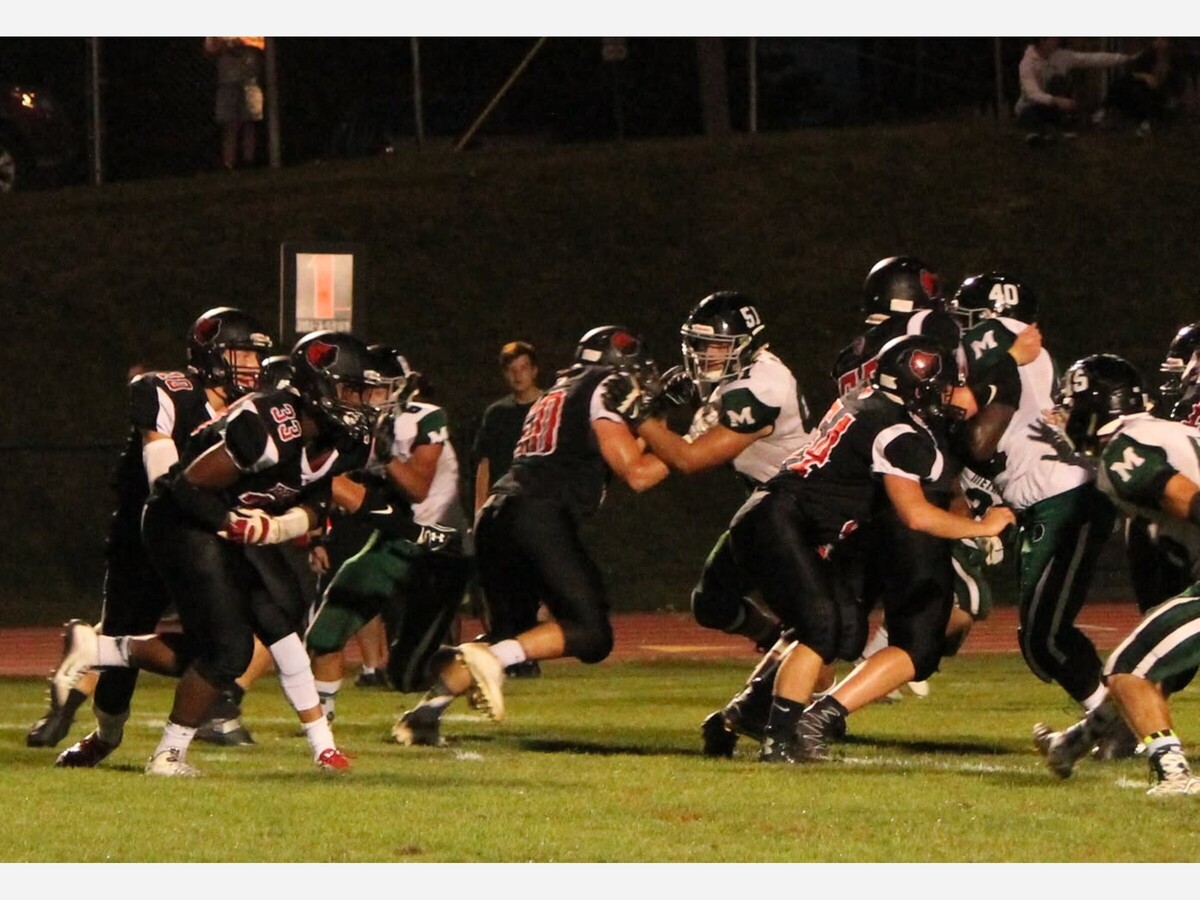
When the hometown Bears of Boyertown High won a football game in the late 60s through the mid-70s, and when that victory coincided with a Friday night, a sharp but sweet fever overtook the small town. It smelled of Dallas’ vinegar-laced French fries, and Breezy Bakery’s powdered pumpkin donuts.
For you see, for a few years, when the baby boomers were hitting their stride and the children of the early boomers joined the ranks, the world in Boyertown stayed in the throes of puppy love - with life and high school football. Oh, they didn’t know and appreciate it entirely, because mere humans faced with the first pangs of infatuation never realize how much they are under the spell.
As the sun sat down on the horizon on a late summer or early autumn evening, the steady arrival and procession began: of parents, grandparents, brothers and sisters, wide swaths of people with no direct attachments to the participants. Many of the earliest arrivals carried blankets. The prime real estate was the southeastern hill, a reminder that the stadium had been dug out of a clay pit, at least that was the story back in the day. This was long before the high school had been erected adjacent, in the first decades of the 1900s. On the hill, families owned their spots without a ticket. Habit is an effective strategy.
“Hey, I’m sorry. The Hoffmans always lay their blanket there.”
“I’m sorry. Is there a spot that hasn’t been taken?” The question was ironic, as it was 6:15 pm. Gametime in those days was 7:30 pm. The hill was usually filled by 7:00 pm, but at this early juncture, with the crowd in its earliest arrival, most of the spots were open.
“Not really,” came the reply. “You are welcome to share this spot next to us. Only two of you?”
“Yes.”
“We have room. Do you plan to come to all the games?” Without reaching out a hand, she continued, “I’m Sarah. This is my husband, Jim. We’re the Millers.”
The middle-aged couple were dressed in dungarees and flannel. “We’re the Oesterlings,” she said. “We’re just visiting.” The woman smiled and spread their blanket on the open space. “I’m Greta, and this is Derrick.”
After the couple sat down, he with some difficulty, the couples shared pleasantries. The Oesterlings were relatives of the Moyers, a family with a lineage that dated to the 1700s, when the town was founded. The couple had been invited to visit the wonder of Friday night lights, Boyertown style. They had been forewarned that there may be no space on the magic hill, but they had also been advised that the best way to enjoy the game might be where the spirit of the town gathered, in a colorful, quilted checkerboard of blankets - on the hill to the left of the scoreboard.
By 7:00 pm. The two couples had abandoned the courteous exchange of information, and each sat back comfortably.
By 7:15 pm. the visitors noticed what struck them as an oddity. The teenagers never sat. They clustered together in groups of 5 to 10, in the grassy area beyond the endzone, on the same side of the field as the hill, the scoreboard, and the main entrance. From the hill, the Oesterlings marveled at the unique sights.
“There are kids standing right on the boundary of the endzone!” Derrick said. “I have never seen anything like it”
“How about the bands?” Greta asked? The visiting team’s marching unit had played for about 15 minutes before exiting to the visitors’ grandstand. There must have been 70 – 100 students in the unit.
“Look at the home stands!” Derrick added. Dressed in the formal military style uniforms, the home team band took up a high percentage of the home bleachers. Their section had been marked off, as they would provide musical accompaniment to celebrate touchdowns, defensive plays, and to provide motivation to the crowd to cheer their boys. The band was an integral part of the experience for everyone within four blocks of the stadium. Without hours of practice, and planning, the games would not go on the same.
“They easily have 100 kids in that group,” Greta said in wonder.
“I haven’t been to a high school football game back home in years. I don’t think we have this much going on.”
“It is something,” Greta said. “I’m glad that Dave suggested we come.”
At halftime, the Boyertown Area Senior High Marching Unit demonstrated their award-winning presentation. The Oesterlings were impressed at the quality and the skill of the musicians, and perhaps even more impressed at the intricacies and discipline evident in the choreography of the marchers. On this evening, the unit performed a tribute to the Beatles, adapting some of the most popular tunes of the Fab Four to their intricate show.
As they had been invited to do, the Oesterlings left the hill after the half time show. They had been urged to walk the track sometime during the 3rd quarter, or perhaps the 4th.
At a small booth opposite the hill, a local business offered French fries. Dallas’ Fries were popular, and deservedly so. In an unusual delicacy for the Oesterlings, they learned that patrons here enjoyed their fries doused in white vinegar, to the point where that sharp aroma overtook the ‘bowl’ that comprised the southern half of the stadium. Though they didn’t partake, the couple also saw that there was a conventional concession stand, with hotdogs, candy, and drinks at tables in the area near the home bleachers. Another table manned by a booster booster club, sold sweet treats like cakes and cookies to support one club, organization, or another.
During this foray, the Oesterlings noticed another thing. The middle school kids truly never stopped walking. They joined friends in the endzone or at the concession stands for brief moments. The brunt of their time at the game seemed to be spent in perpetual motion. They were allowed to walk the cinder track that surrounded the field. A rope prevented them from walking where the group of 15-20 cheerleaders kept up the team spirit, on both sides of the playing field. Otherwise, the track was like a hamster wheel, compelling the 12-14 year-olds to be moving, social targets.
Once or twice, Derrick noticed a couple of younger kids, early teens most likely, duck out from behind a storage shed in the endzone to the northside, a perch that overlooked the ‘dust bowl,’ a lower level field where all of the teams practiced. Of course, Derrick couldn’t see the fields below, only a vague notion that the terrain below dropped off into darkness. It was the darkness that enticed the young couples emerging from the shadows behind the shed. Derrick smirked to himself, aware of the motives and the opportunity that Friday Night lights - and darknesses - provided.
In the 4th quarter, Greta suggested that they take off before the crowd exit made the return home more congested. However, Derrick shook his head. “Dave said we should hang around until the end if the Bears are winning.” He nodded his head toward the scoreboard. “It’s tied with three minutes to go. Let’s wait and see.”
Fortuitously, the Bears scored on their opponent, the team from Pottsgrove, with just a minute to go, and held on for the win.
Greta and Derrick stood in the near endzone, at the main gate, as Dave had directed. What happened next was unexpected and simply charming. The marching unit lined up and marched to a lower parking area. In the parking lot that emptied onto Fourth Street, the marching unit assembled and did what marching units do: they marched, in precise time and impeccable form. The Oesterlings had no idea where this exodus led, but they smiled at one another and watched what seemed like a retreat.
What the visiting couple couldn’t see, was the staging point at the top of the town, a bit mare than a half-mile away. By the time the Unit had reached this destination, the police had cordoned off the two-three block stretch from the State Theater, past St. John’s Luteran Church, to the corner of Reading and Philadelphia Avenues. The boisterous fans knew better than to impede the marchers, but they were also opportunists and revelers.
The assemblage by this point might include ‘civilian’ marchers, a few classic muscle cars that the officers would allow to sneak in behind, and the hardiest football players, the ones who had changed – and possibly showered – and who wanted a cameo part in the best 16-millimeter reel of small-town culture.
By this time, the Oesterlings were in their vehicle. They did not know exactly what they were witnessing, but they trusted their friends not to steer them wrong. The followed the caravan out of the parking lot, but then separated to find a spot to park near Franklin St., about seven blocks away. From there they walked out to Philadelphia Avenue and waited, as they had been advised.
At about the ten-minute mark, police cars, lights ablaze, hurried by, to the west and the top of town. Derrick noticed that traffic quickly became sparse. It was almost 10:00 pm. From where they stood just east of Franklin Street, Greta could see that police had blocked traffic with the cruisers and with barricades. The couple looked at one another, not sure what came next, though they were each making quiet guesses.
At 10:20 pm. on a Friday night in Boyertown, at the highest elevation of the borough, the Boyertown Area Senior High Marching Unit, a unit under the direction of Arlen R. Saylor, shared furtive displays of great affection with everyone else who lived and breathed within the confines of the district, 100 square miles of rolling fields and family farms surrounding the tiny borough.
And so, the parade proceeded from the State Theater, a town monument even back then, down Reading Avenue to the center of town, where the National Bank of Boyertown stood on the consequential corner at the top, opposite the Boyertown Inn, a landmark building dating back to the earliest years of inhabitants. On some occasions, Breezy Ruppert opened up his bakery to sell donuts to the onlookers, and sometimes he simply gave them away.
The band made a hard left, and continued to the eastern end of the borough, past the railroad tracks near the Mansion House and Schmoyer’s lumber. The band played fight songs, and hype tunes, and sometimes the Alma Mater. “We long to pay thee tribute on lofty songs of praise/ To thee our Alma Mater, our grateful voices raise.”
Marches and patriotic hymns filled out the dance card, as the parade route on a lazy, but earnest Friday night was maybe a little more than a mile long. But the streets were remarkably lined with people. On a Friday night outside of football season, there were few cars on any of the streets. Tonight, and on many nights after a home win by the Bears in the late1960s and early 70s, more than a thousand people came out, or stayed around, to revel in the excitement, to sing and cry and cheer the majesty of a victory that put the team, at least for this week, on the top of the mountain.
Derrick and Greta were there, but as outsiders, not as participants. They smiled at one another, giddy with the quaintness of the experience. They realized there were far more people enjoying the impromptu, but tentatively-scheduled, village parade, than had attended the game. The streets were full. The patrons at Iezzi’s, a local watering hole, and the Mansion House, and The Rathskeller as well, put down their lagers and their cocktails long enough to cheer and clap for the hometown boys, who were earning their way to heaven because they won a high school football game. Such victories were important beyond the scoreboard that the HS kept lit until the next morning.
Between 10:30 pm. and 11:00 pm. the local police removed the barricades and opened the streets for non-existent traffic to make their way down the thoroughfare. However, most spectators parked in a spot that allowed them to make their way home, and few needed to use Philadelphia Avenue, or Reading Avenue, anywhere near the center of town.
Of course, the commotion that overtook Boyertown on such magical Friday nights was peculiar to Boyertown in the particulars, but across the United States, such traditions and outbursts were common in their joyousness. Even better, in the morning, it was not as if no one remembered what had happened. The Pottstown Mercury, a local paper with a soft spot for the sports of Boyertown Area School District, was certain to have covered the story. In fact, it covered all HS football games with earnest respect; celebrating the youth, their sports, and their accomplishments. While it is true that sports received some preferential treatment, papers in those days also covered concerts, recitals, dance competitions, spelling bees, science fairs, and myriad community festivities with seriousness and comprehensive clarity.
The Oesterlings carried the story and the recollection with them, and spoke often of the kind people of Boyertown.
* Phil Repko is a career educator in the PA public school system who has been writing for fun and no profit since he was a teenager. Phil lives with his wife Julie in Gilbertsville and is the father of three outstanding children, two of whom are also poets and writers. He vacillates between poetry and prose, as the spirit beckons, and has published two boosk of poetry “Pieces of April” and “Homestretch,” both available on Amazon.

Patchy rain nearby, with a high of 53 and low of 41 degrees. Patchy rain nearby for the morning, cloudy in the afternoon and evening, light drizzle overnight.