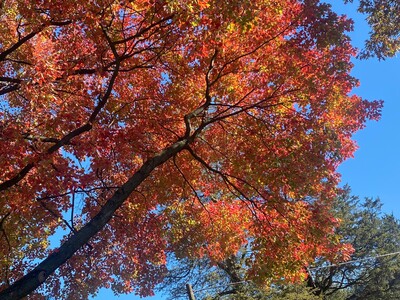
53° and Clear
Image
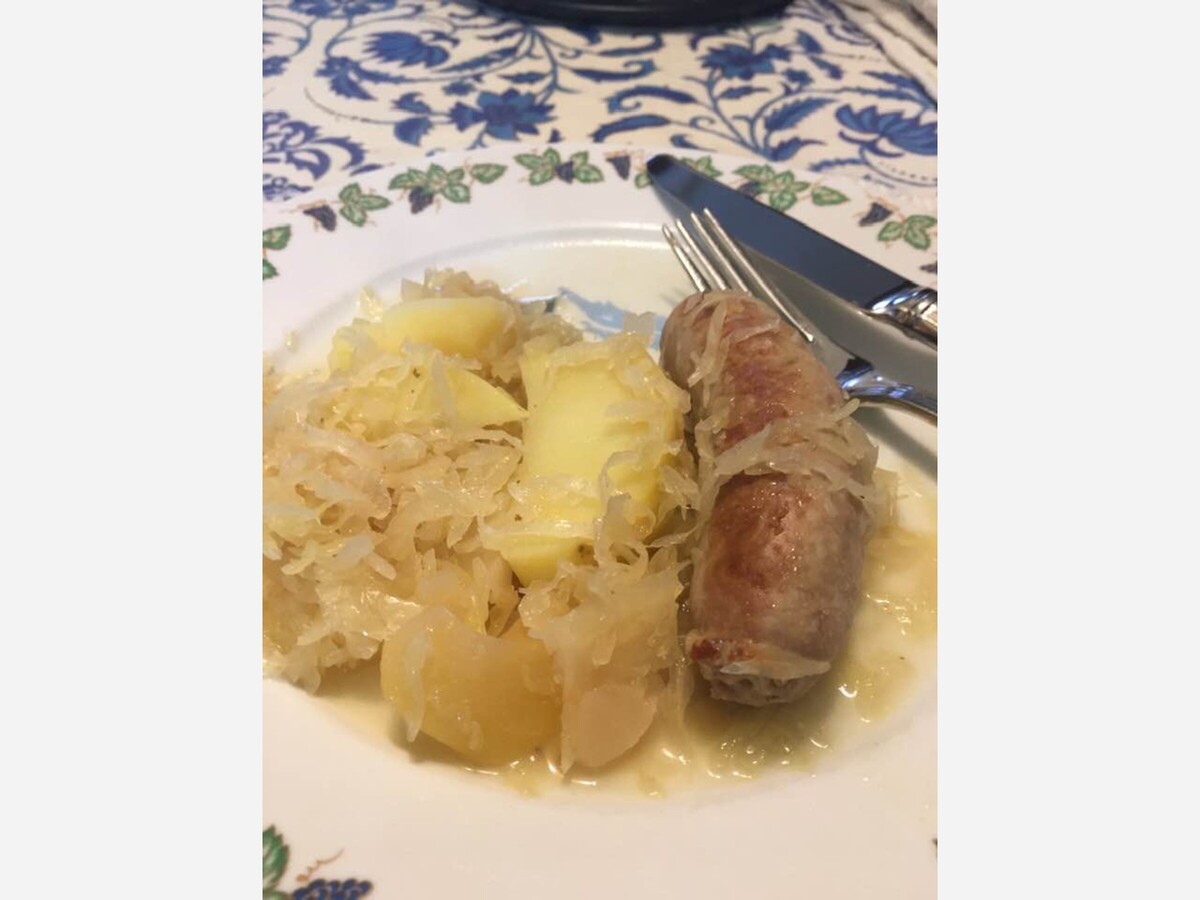



Bratwursts in the Alsatian style. This is a very nice dinner that comes together quickly and is absolutely perfect for a cold and wet spring evening.
Sausage has a long and delicious history dating back as far 3000 BCE in Mesopotamia and ancient China – and then more recently in 228 AD Greece and Rome.
The word sausage derives from the Roman word “salsus” meaning salted or preserved. (You may even remember that a blood sausage was mentioned in Homer’s “Odyssey”).
Bratwurst, in particular, is a staple German sausage that has been documented as far back as the 14th century in Nuremberg. The term is derived from “brat,” meaning finely chopped meat, and “wurst” meaning sausage. Traditionally made from finely minced raw pork, veal, or beef in natural casings, it contains no nitrites or preservatives. Some regional varieties might be seasoned with salt, pepper, and marjoram, while others might contain onion, garlic, or caraway seeds.
Naturally, Germans immigrating to America in the 17th century brought their marvelous sausage crafting along with them, but it wasn’t until the 1920’s that sausages became famous in this country. Today, Sheboygan, Wisconsin holds the honor of being the “bratwurst capital” of America by virtue of its famous “Brat Day” proudly celebrated yearly since 1953 and to be held this year on July 31.
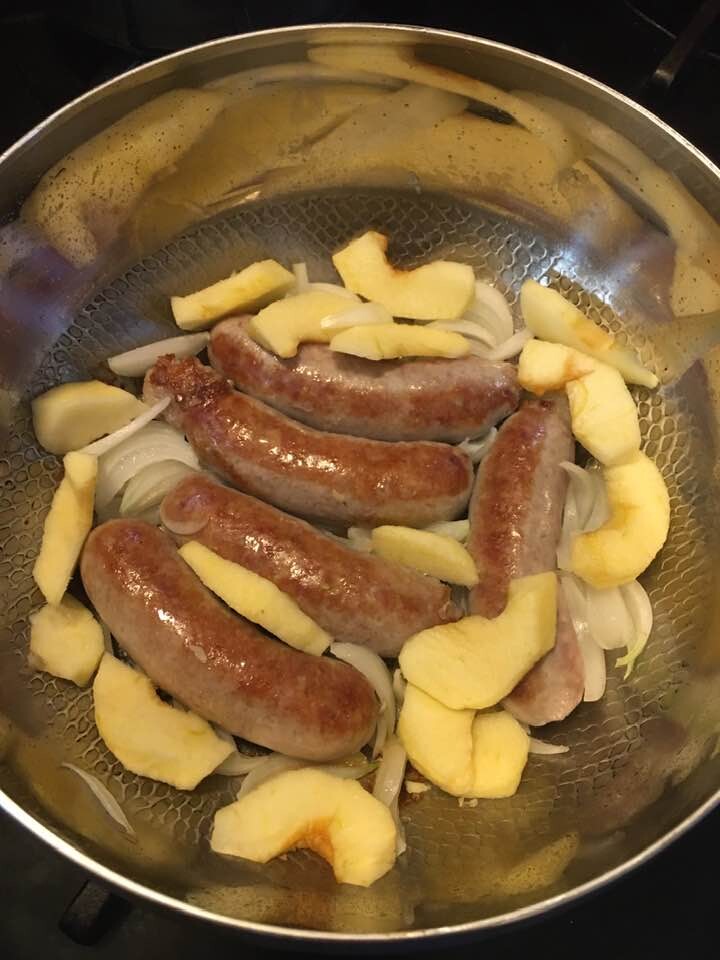
We were fortunate to find some excellent brats made of pork and veal, lightly seasoned with salt marjoram and onion. I browned them with onions and apples, then simmered them in chicken broth with the addition of German sauerkraut and Yukon gold potatoes.
We’ll definitely be making this again!
High in the mountains above Bally, where the dense groves of treetops seem to touch the sky, is Francine Black, Boyertown’s own version of chef Julia Child. Her daily activities reflect the things she most values: family and friends, music, and lovingly prepared food.

Interesting, Bob. Thanks, but I wonder how that related to people’s probably very strong religiously beliefs back then —-not the fact that there’s evil, but that there’s some kind of symbol that can stop it; that sounds more like witchcraft.


Sunny, with a high of 65 and low of 41 degrees. Sunny for the morning, clear for the afternoon and evening, overcast overnight.