
Image
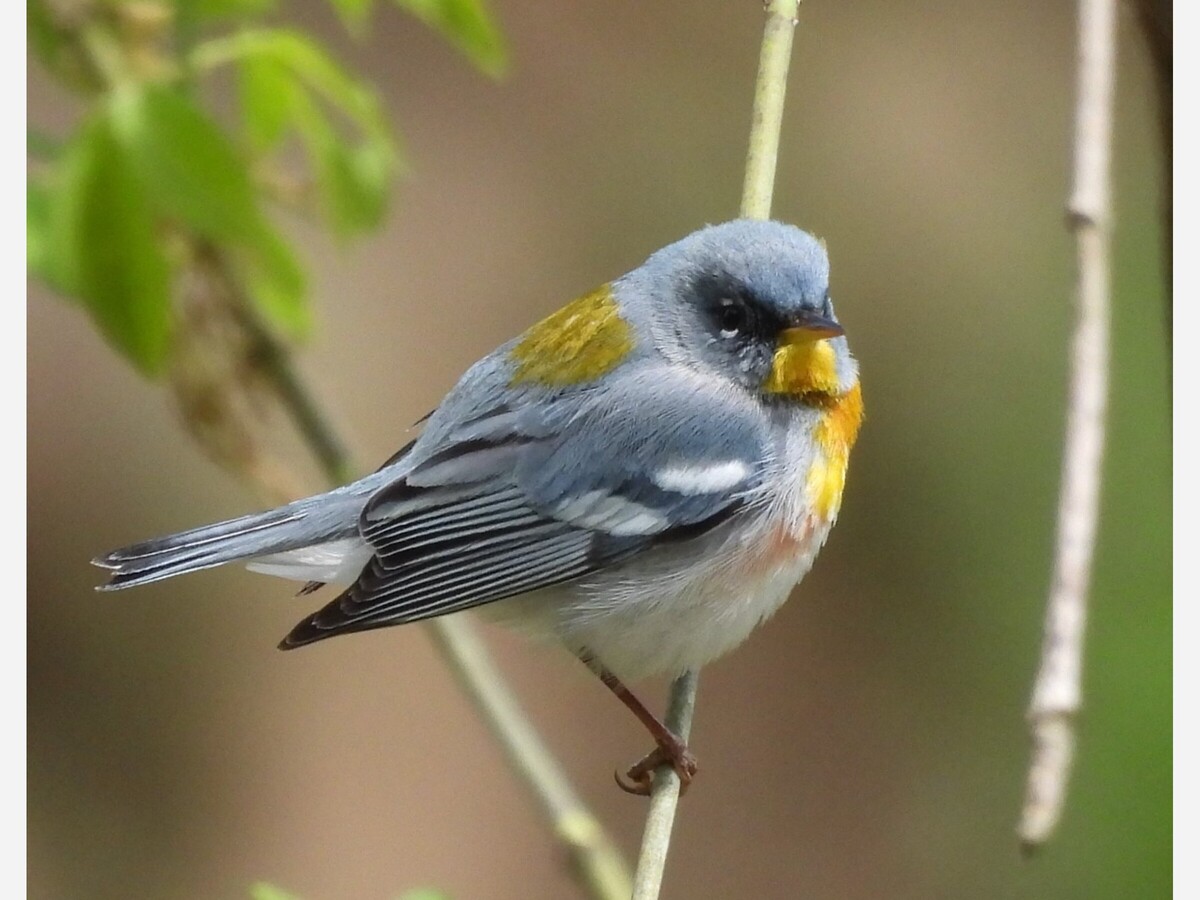



by Michael Strzelecki*
April is the start of the spring bird migration. 38 species of migrating warblers either stop in Pennsylvania to breed or pass through the state en route to northern breeding grounds. All warblers are colorful, but few have such a wide palette of hues as the northern parula. They are a favorite species of many birders (my wife, Kelly, included) and their cuteness can make your heart skip.
Here is the problem. While northern parulas are reasonably abundant in the Boyertown area, they are also difficult to see. They are diminutive in size and spend most of their time flitting about high in tree canopies. They may be the most beautiful local bird you will never see, but just knowing that they are there is important. But if you are motivated to see one for yourself, I will explain how later.
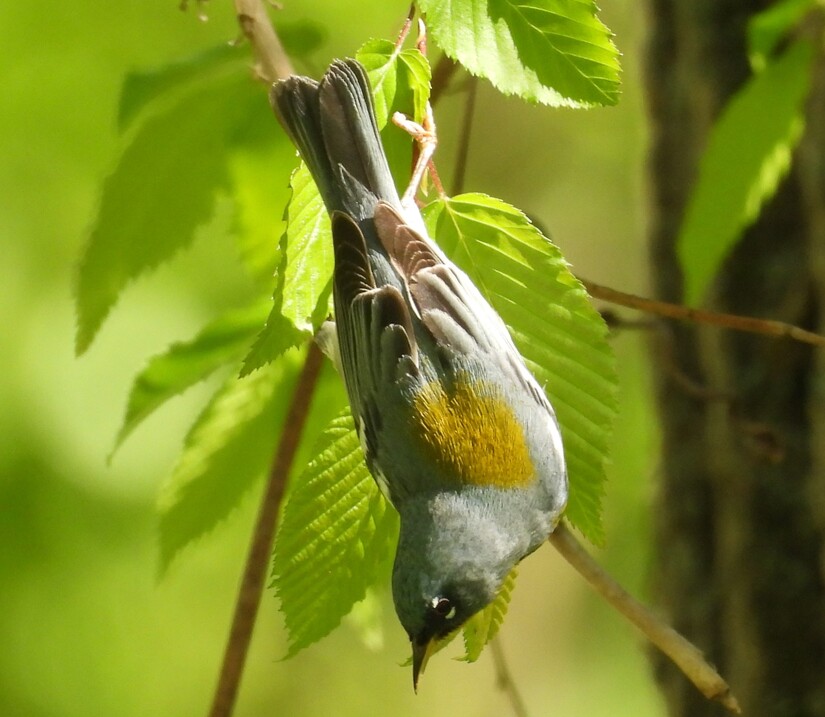
First, some background information: The northern parula is monogamous. A single pair will breed and remain together for life. During breeding, the female’s job is to build the nest and incubate the eggs. They build nests by carving out tiny cavities in hanging moss - namely Spanish moss to the south and bearded moss (a kind of lichen) to the north. They line the cavity with animal hair, grass, and pine needles. The male will stand sentinel, protecting the nest, and warding off predators. He will also be the one out looking for food, which is why male northern parulas are commonly the ones observed.
Northern parulas are opportunistic eaters, going with the buffet approach to dining. They take in a wide variety of terrestrial invertebrates like flies, spiders, caterpillars, moths, grasshoppers, bees, and cicadas. Essentially any tiny thing alive that moves. In the absence of meat, they will gladly partake in berries, seeds, or nectar.
The northern parula has an unusual migratory pattern. They generally winter-over in Mexico and the Caribbean. They move north in spring for breeding. Many northern parulas will settle in the southeast United States to breed, up to and into Pennsylvania. Others will continue well north to northern New England or Canada to breed.
For some unknown reason, there is a swatch of territory in the mid-Atlantic up through coastal New England where northern parulas no longer breed. As a result, while Pennsylvania does have breeding northern parulas, it is also a fly-over state for many more. Ornithologists are unsure why northern parulas stopped breeding in certain mid-Atlantic states but speculate that it is because air pollution in that area killed off much of the moss and lichens that northern parulas need to nest.
While the northern parula’s breeding grounds may be diminishing, their numbers are growing. Studies vary, but they show that the number of northern parulas have increased by as much as 50 percent over the past 50 years. There are an estimated 18 million of them migrating through the United States each year.
If you have patience and are set to see the beauty of a northern parula for yourself, here are three steps to follow. Keep in mind that northern parulas tend to be high in canopies, perpetually in motion, and are camera-shy. First, get a good pair of binoculars that draw in lots of light. Second, find northern parula habitat in the area. Look for less-developed areas that have a high canopy, like in parks. Concentrate particularly on plots of ground near waterways like Manatawny Creek and the Schuylkill River, or around ponds and lakes. The waterways provide lots of insect life for feeding the northern parulas.
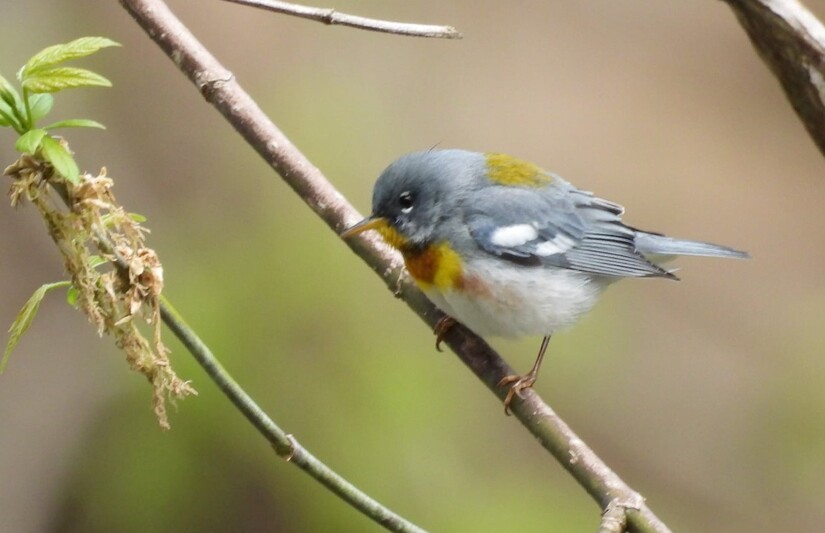
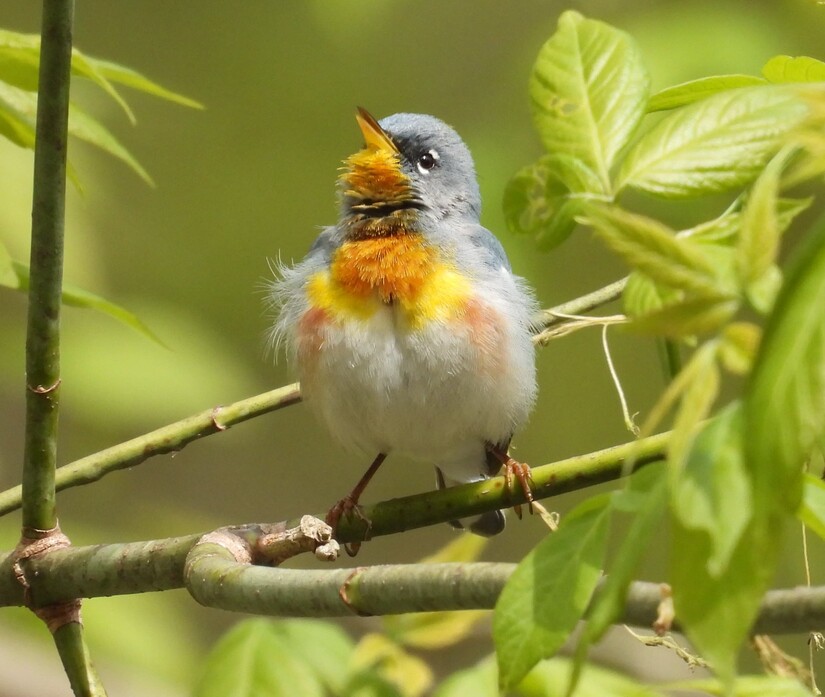
Third, and most importantly, learn their call, and then listen for it emanating from the treetops. Their sound is an upward trill that ends abruptly. Some liken it to a zipper being pulled quickly. Males sing throughout the April and May nesting period. Kelly and I can usually find northern parulas in spring when we are specifically looking for them. They may be confused with other colorful warblers, but the chestnut coloration around the chest is the defining field mark
You can learn the northern parula call here:
https://www.allaboutbirds.org/guide/Northern_Parula/sounds
* Mike Strzelecki is a freelance travel and outdoor writer and 1981 graduate of Boyertown Area Senior High School He writes from his house in Baltimore, Maryland. In his spare time, he joins his wife on adventures around the country observing and photographing birds.



Sunny, with a high of 82 and low of 52 degrees. Sunny in the morning, clear overnight.




Thanks Francine! I discovered clafoutis last year and love making it for get-togethers. It’s always a hit. I usually use blueberries. I’ve never tried cherries, much less unpitted ones! That is worth a try!