

Image
Annually, Jewish communities world-wide celebrate Purim, a lively holiday that commemorates an ancient story of courage, survival and faith. The events behind the celebration are recorded in the Book of Esther, which tells how the Jewish people living in ancient Persia were saved from destruction. This year the celebration was March 2-3.
According to the story, a royal advisor named Haman plotted to destroy the Jewish population of the Persian Empire. The plan was ultimately thwarted through the bravery of Queen Esther and her cousin and guardian Mordecai, who revealed the plot to the king. Haman’s plan failed, the Jewish people were saved, and the day became one of celebration.
Purim is traditionally marked with festive customs. Synagogues hold public readings of the Book of Esther, and whenever Haman’s name is spoken, listeners often respond with loud noisemakers called “groggers” to symbolically drown out the villain’s name. Many people wear costumes, give gifts of food to friends and neighbors, and donate to those in need. It’s a joyful holiday, often compared to a community carnival.
But as with many holidays, one of the most anticipated parts of Purim happens in the kitchen.
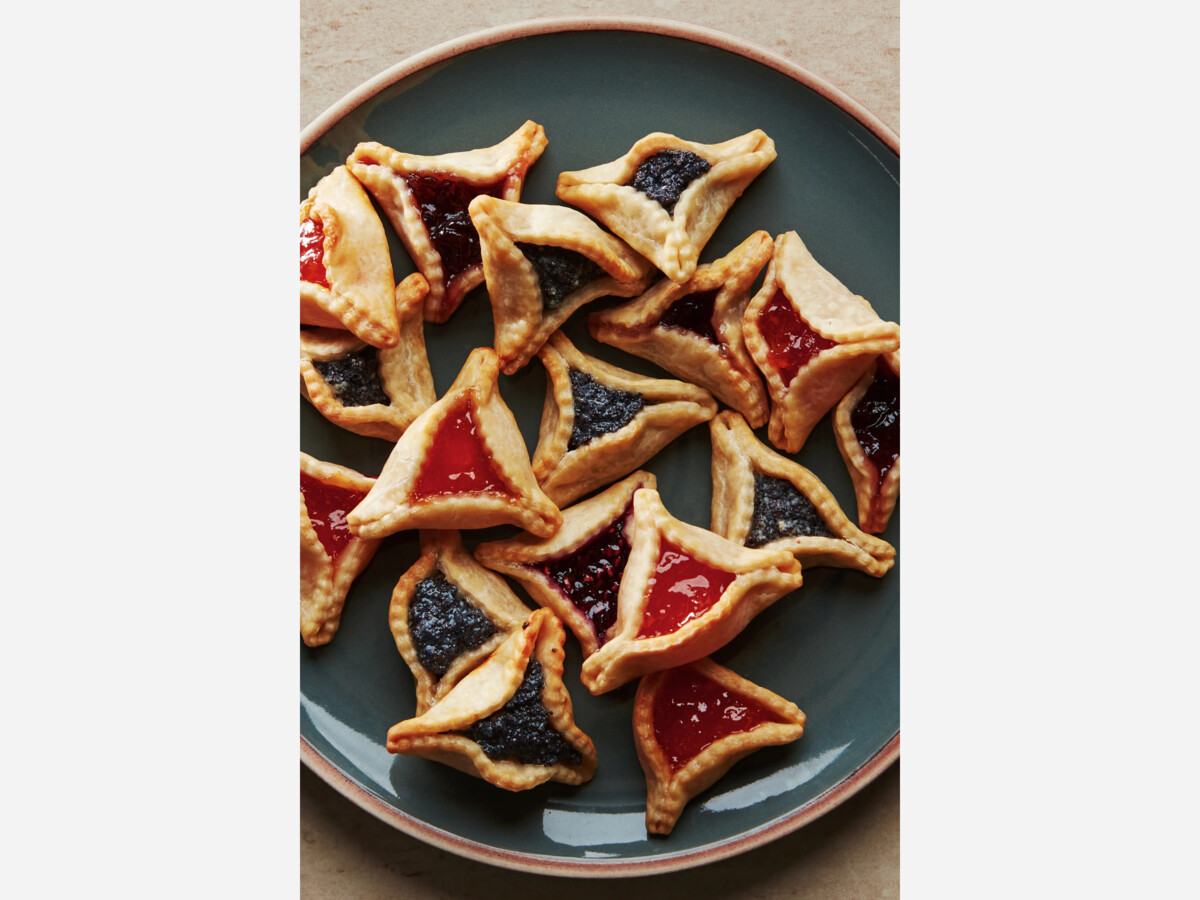
The signature food of Purim is hamantaschen, a triangular pastry that appears in bakeries and home kitchens as the holiday approaches.
Hamantaschen look like small folded cookies with three corners and a bit of filling visible in the center. Their name comes from a mix of languages. “Haman” refers to the villain of the Purim story, while “taschen” is a German-Yiddish word meaning pockets. The name is often interpreted as “Haman’s pockets.”
Another popular explanation is that the triangular shape resembles Haman’s hat, though historians debate whether the historical figure actually wore such a hat. Either way, the pastry became a symbolic—and delicious—way to celebrate the downfall of the villain in the Purim story.
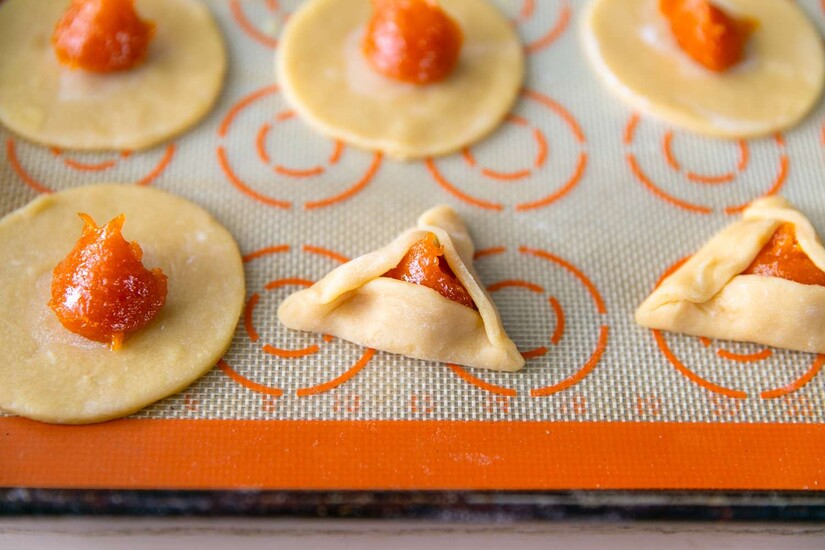
The three-cornered shape is created by folding a circle of dough around a spoonful of filling, leaving the center exposed. When baked, the edges firm up into the distinctive triangular form.
Hamantaschen recipes vary widely. While many people think of them as cookies, the dough can take several different forms, depending on cultural tradition.
Common dough styles include:
The fillings are just as diverse. Traditional fillings often include:
In recent decades, creative bakers have introduced a wide range of new flavors. Today’s hamantaschen might feature chocolate, Nutella, caramel, peanut butter, lemon curd, or even savory ingredients. Some bakeries experiment with combinations such as chocolate-espresso, salted caramel, or cheesecake filling.
Despite the new variations, the traditional fruit and poppy seed fillings remain favorites for many families.
For those who want to try baking hamantaschen at home, the process is surprisingly straightforward.
Basic Hamantaschen Dough
Ingredients
Directions
For a detailed version with photos and tips, many cooks recommend the recipe from King Arthur Baking Company.
Purim is a holiday filled with laughter, costumes, storytelling and generosity. Yet for many people, the taste of hamantaschen is inseparable from the celebration.
Each triangular pastry is more than just a dessert. It is a small, sweet reminder of an ancient story—one that has been retold, celebrated and baked into family traditions for generations.
Though the holiday is over, these often remain available through March. Try Wegman's, Whole Foods, Trader Joes, Kibbutz Room (Jewish style deli in King of Prussia), Giant.



Overcast, with a high of 69 and low of 51 degrees. Overcast in the morning,