53° and Clear


Image
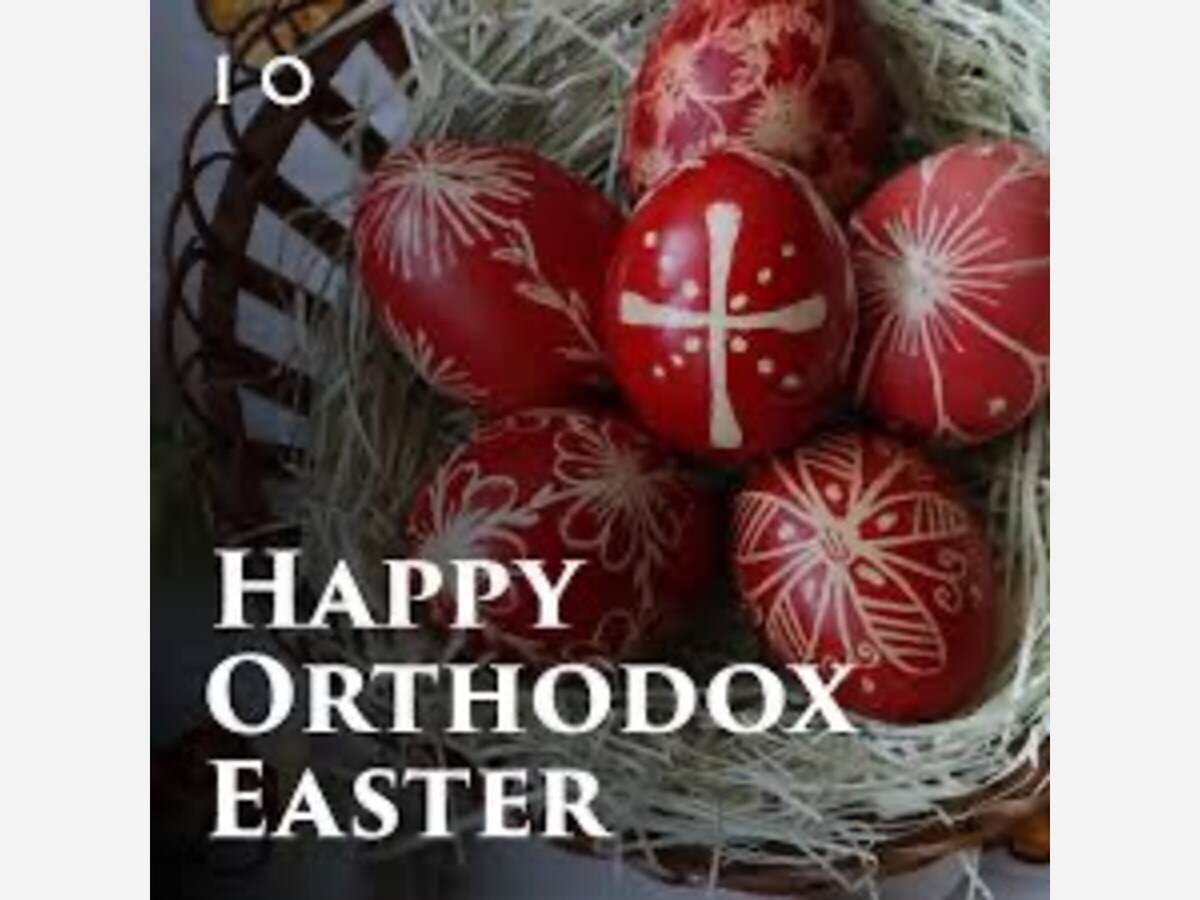
Image from Facebook.
This past Sunday, Easter was celebrated by millions but it should be noted that this upcoming Sunday, there will be another. Easter, or Pascha as it more commonly known, will be observed by the Eastern Orthodox faithful.
Sometimes the two Easters, referred to as East and West, fall on the same day, as was the case in 2025. But more often than not, Orthodox (the Eastern version) comes after traditional Christian (Western) Easter; sometimes a week; sometimes as long as month.
What Happened To Start the Date Discrepancy?
Certain Bible passages contributed to the confusion. The Gospels of Matthew, Mark, and Luke state that Jesus’s Last Supper was a Passover meal, which means He died and was resurrected after Passover. It made sense that Easter was then observed on the following Sunday.
Ah, not so according to the Gospel of John which wrote that Jesus’ death occurred on Passover itself. So, it was argued that Easter should be celebrated on that exact day, which could fall on any day of the week; it didn’t matter.
Emperor Constantine I (b 306AD) was the most prominent to voice his displeasure at having multiple Easters. He wanted everyone to agree to a date, or at least agree to an algorithmic formula that would lead to that yearly perfect date, where all Christians would celebrate the Risen Lord at the same time. To that end, The Council Nicaea, held in 325, decided that Easter would be the Sunday that follows the first full moon after the vernal equinox (first day of Spring or March 21st). Something to note here: there was no mention of Passover. It didn’t happen often, but just enough to cause a stir: there were times that Passover came before March 21.
Glossing Over a Whole Bunch of Calculations Here
Suffice it say, that as well-meaning as the Council was, whenever religion is involved, and it is most kindly stated here with the utmost respect, the resultant outcome did not solve the conundrum – and should be noted that it hasn’t been solved in more than 2000 years. There have been numerous attempts at deciding when Easter should happen and perhaps there could have been a fighting chance at winning that argument until…
Gregorian vs. Julian Calendar
… the Western church, in the 1582, decided that they would follow the new and improved Gregorian Calendar (founder Pope Gregory VIII) which was more accurate to the solar year. The Eastern Church, however, continued to use the Julien Calendar (founder Julius Caesar) which dates back to 45 BC. Since its inception, this time piece was adequate for the first 1600 years, but it became apparent that due to leap year calculations, three days were being added every fourth century.
So…returning to the original decree… Easter would be the Sunday, that follows the first full moon after the vernal equinox (first day of Spring that being March 21st). Between the Julien and Gregorian Calendars, the date of the vernal equinox differs by 13 days. It is this difference which is the reason for two Easters.
Unless the Julian Calendar is deemed too old and/or out of date…
Easter
Gregorian (West) Julien (East)


Interesting, Bob. Thanks, but I wonder how that related to people’s probably very strong religiously beliefs back then —-not the fact that there’s evil, but that there’s some kind of symbol that can stop it; that sounds more like witchcraft.


Sunny, with a high of 65 and low of 40 degrees. Sunny in the morning, clear for the afternoon and evening, overcast overnight.