Image
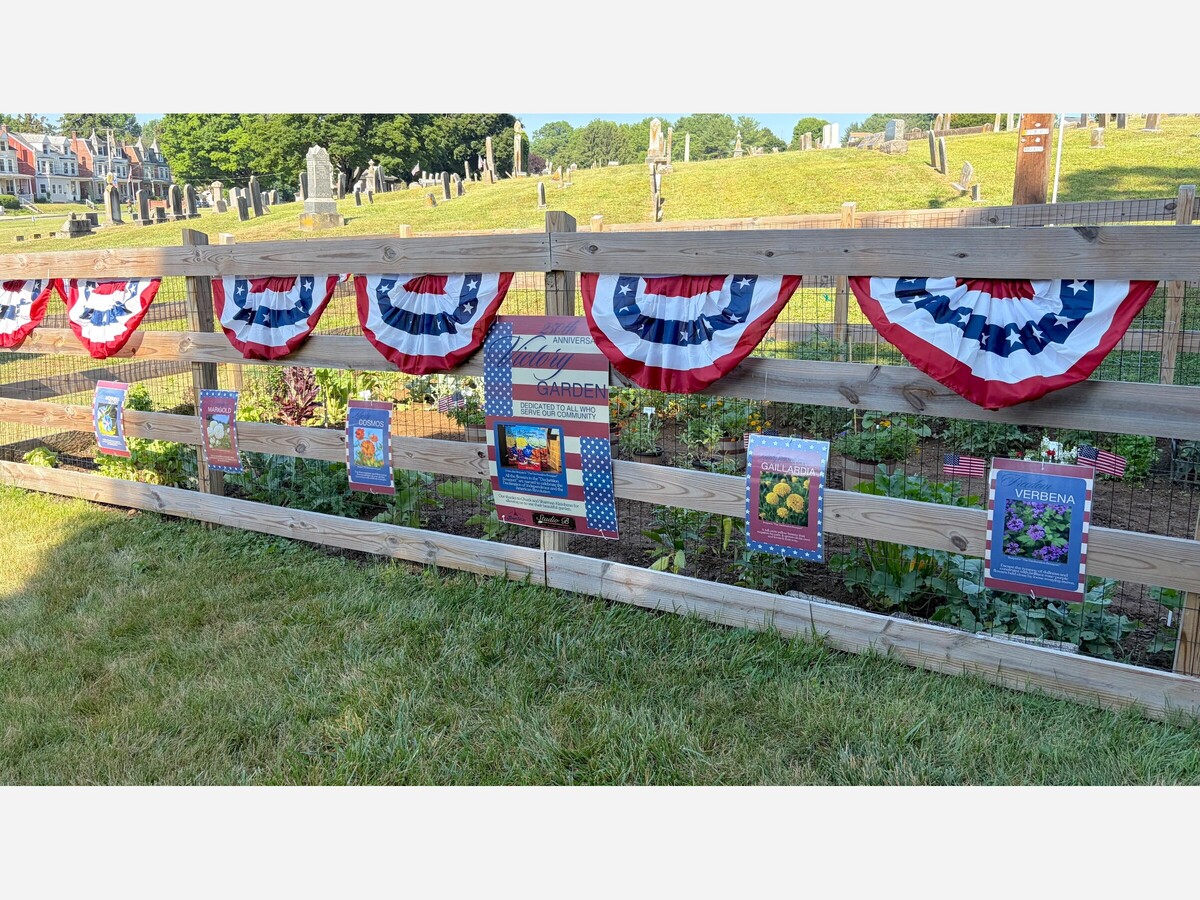



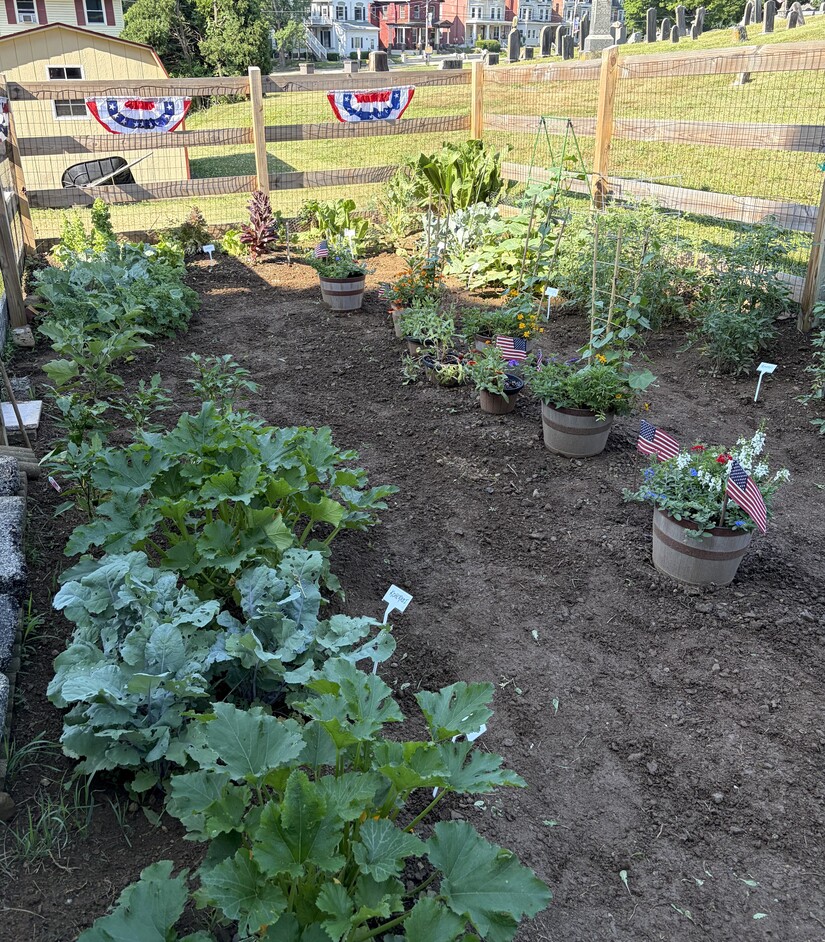
Behind Boyertown’s former Lincoln School, a 20-by-30-foot patch of ground has spent this summer producing tomatoes, cucumbers, zucchini, eggplant, beans and other vegetables.
But the people tending it hoped to grow something more.
Boyertown’s 2026 community Victory Garden was conceived with two purposes: to look back at the role ordinary Americans played in the nation’s history as the United States celebrates its 250th birthday, and to demonstrate what can happen when neighbors work together “In Service” to their community.
For organizers Theresa Heist and Katie Emslie, those ideas turned out to be natural companions.
“This year, they decided to take a break from their garden,” Heist explained during a “B Inspired” podcast hosted by Jane Stahl. “And I thought that maybe since it was the 250th anniversary of the U.S., that we should have something along the lines of a Victory Garden — a community garden … to celebrate both the 250th, as well as involve the community as a whole in something.”
An Opportunity Takes Root
The garden occupies private property belonging to Chuck and Sharman Kleinhenn near the Lincoln School. The couple had gardened the fenced plot for years and occasionally shared surplus produce with Heist.
This summer the large space became too much and the Kleinhenns decided to take a year off, Heist saw an opportunity. She asked whether the property could be used for a one-year 250th anniversary Victory Garden, connecting the anniversary with Stahl’s summer “In Service” theme and local organizations.
The answer was yes. Heist enlisted Emslie and neighbor Tracy Mackey, and the group began planning.
Their original vision called for a four-square, raised-bed design, but the property already contained horseradish, strawberries and lettuce that needed to remain. So instead, they planted around the perimeter of a large rectangle and left an open area in the center.
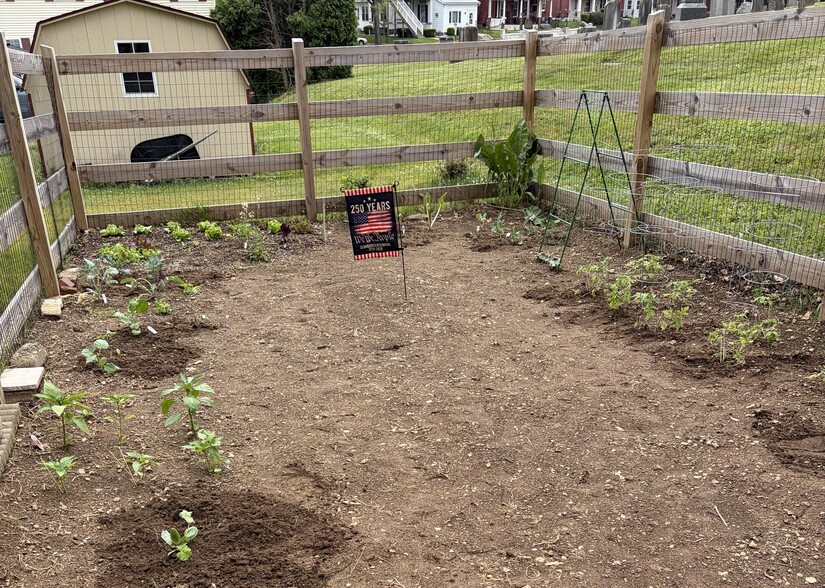
That center became an important part of the garden’s historical message.
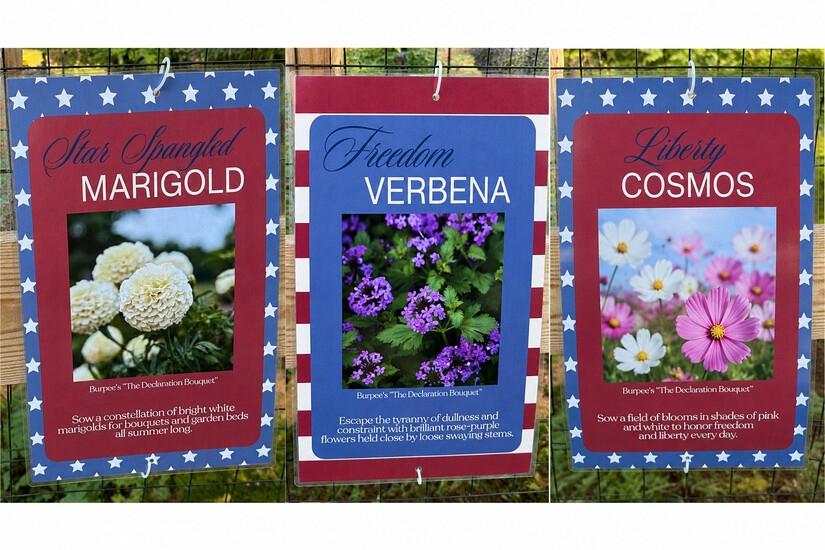
During a visit to the Museum of the American Revolution in Philadelphia, Emslie — who said she loves both gardening and history — discovered a collection of seeds created around themes associated with America’s 250th anniversary.
“I love gardening, I love history,” Emslie said. “This is the perfect combination.”
The flowers gave the garden a colorful vocabulary of American ideals: white Star-Spangled Marigolds evoke the stars of the flag; morning glories represent happiness and the Declaration of Independence’s “pursuit of happiness”; orange Liberty Cosmos — which Emslie described as growing almost “like a firework” — symbolize liberty. Gaillardia represents independence, while purple Freedom Verbena adds another patriotic note.
The flowers were meant not for picking, but for visitors to enjoy and consider what they symbolize.
Around them, the vegetables make another connection to American history.
Recalling the Victory Gardens of the Past
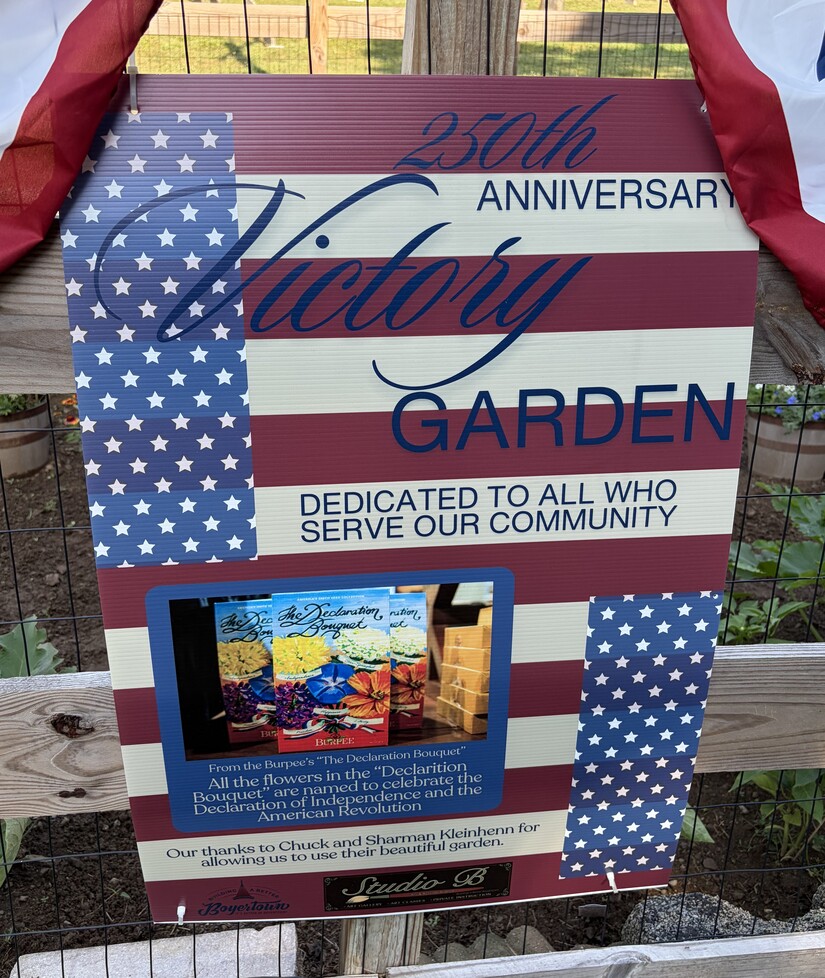
Heist researched the Victory Garden movement and discovered its roots reach back to World War I, when Americans were encouraged to grow food at home so farms could concentrate on supplying troops overseas.
Children were recruited as “soldiers of the soil,” Heist explained, and the gardens were known at different points as Liberty Gardens and Victory Gardens. The concept returned during World War II, when government publications gave Americans practical guidance on everything from testing soil to deciding what to plant.
What interested Heist was not simply the food the gardens produced, but the way they mobilized ordinary people around a common purpose.
“It got the communities together,” she said. “And when you mentioned service — as your topic of this summer’s program — I thought, well, this is a really good way to recreate this and get people interested.”
That makes the Boyertown garden more than a decorative nod to the semi quincentennial. The Victory Gardens it recalls were built on the idea that individual acts — planting, tending, harvesting and sharing — could collectively serve something larger.
The same principle has played out, on a smaller scale, in Boyertown.
Many Hands Make a Garden
There is no single gardener behind the project.
Heist and Emslie have been its principal organizers, with Mackey helping plan and maintain the plot. Emslie typically watered Monday, Wednesday and Friday evenings, while Mackey took Tuesdays and Thursdays.
Others joined in. Mark Heist tilled the ground. Emslie’s husband, Charlie, was among those good-naturedly “volunteered” into the effort. Chris Mackey helped, as did Chuck and Sharman Kleinhenn. Janet, a vendor at the Boyertown Farmers Market, became an informal gardening consultant when the group encountered problems and also supplied bean plants.
The Kleinhenns provided access to water. The gardeners supplied the labor, hoses and tools.
Heist jokingly called herself the “idea person” and Emslie the “workhorse.” Emslie recalled that early in the project she loaded hoes, shovels and other tools into a little wagon and walked them to the plot, imagining passing motorists wondering, “Who are these people?”
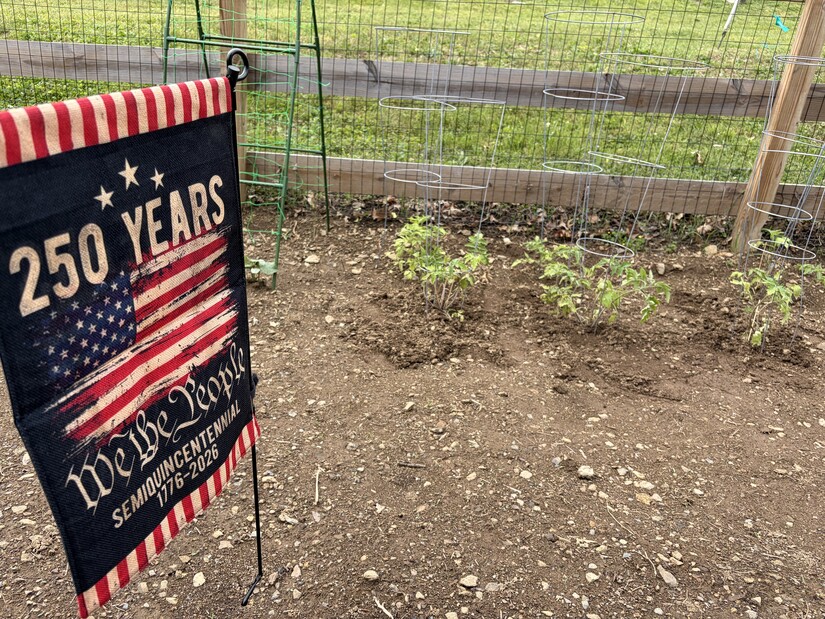
The ground did not always cooperate. The soil was dense and rocky, and some plants were slow to establish. But by mid-June and early July, Emslie said, the garden began “growing like crazy.”
The transformation went from little “baby plants” to something that finally looked like a real garden.
“By the time we actually hit July 4th,” she said, “we were really proud of what we had made.”
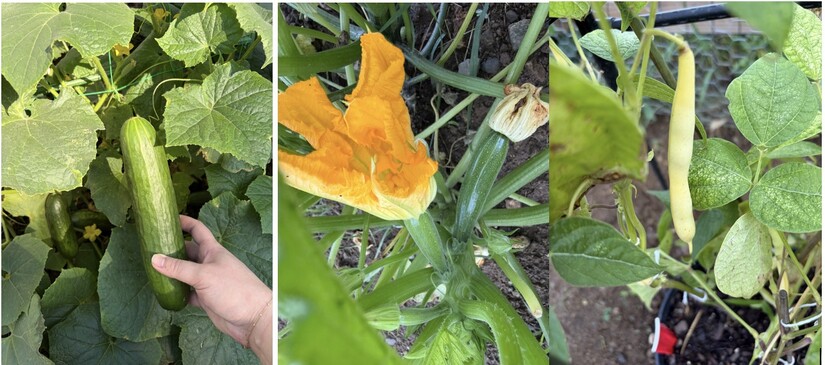
Among the crops were Swiss chard, kohlrabi, cauliflower, cucumbers, tomatoes, strawberries and beans. Later, tomatoes, zucchini, eggplant and green beans continued producing.
The harvest has made its way into the kitchens of those who helped. Emslie has made cucumber salads; Heist has experimented with dishes using the produce; and the Kleinhenns have enjoyed vegetables from their property.
Emslie said homegrown food has something extra.
“You taste the love that went into it and the care that went into it,” she said.
“Four Neighbors … One Project Together”
For all that the garden produced, however, one of its most important results cannot be harvested.
During her follow-up interview with The Expression, Emslie recalled occasions when she, Heist, Mackey, and Sharman Kleinhenn were all working in the garden at the same time.
“That puts a smile on your face,” she said, “having four neighbors all doing … one project together.”
The garden even created a friendship. Emslie knew of Mackey before the project but had never formally met her.
“I call her a friend now,” she said.
That experience goes to the heart of the project’s “In Service” theme.
Heist, president of Building a Better Boyertown, said the organization’s work is deliberately focused on the community.
“We have one question to answer,” she said: “How do we make this better for everybody and include everybody? That’s all.”
For the garden, Heist drew together connections with Building a Better Boyertown, Studio B and the General Carl Spaatz National USAAF Museum.
“My goal is to just get everybody united in terms of connected with each other,” she said. The project gave the neighborhood “the ability to participate, and that was the big thing.”
Emslie described service in equally local terms.
“Be proud of your community,” she said. “The best way to be proud of your community is to be involved.”
She encourages people to volunteer and find ways to engage with their neighbors, calling Boyertown “truly a special place.” For Emslie, who lived in Atlanta for eight years before returning to the area, working on the garden has been “a point of pride to serve our community.”
A One-Year Garden — For Now
The Victory Garden was conceived as a one-year experiment. The Kleinhenns are expected to resume using their garden, and no future location has been identified.
Heist calls this year a “trial balloon.” Even if the experiment ends with this growing season, she said, those involved now know more about what works and what they might do differently — and the neighborhood had an opportunity to participate.
Emslie believes there may be interest in a community garden in an area where some residents already grow their own food and others might like to but lack the space.
Whatever comes next, the small plot near the Lincoln School has already accomplished much of what its organizers hoped.
It has made a piece of American history tangible during the nation’s 250th anniversary. And in doing so, it recreated something fundamental about the Victory Gardens it honors: people contributing land, labor, knowledge and time toward a shared purpose.
A garden planted to remember America’s past ultimately became something very much about Boyertown’s present — neighbors working side by side, In Service to their community.

Sunny, with a high of 67 and low of 46 degrees. Sunny in the morning, clear during the afternoon and evening,