

Image
by Mike Strzelecki*
I was walking through Baltimore city last week, moving through an industrialized waterfront area. I passed a secure holding lot used to store large ingots of aluminum imported from Russia, each the size of a twin mattress. Hundreds of them stacked in high piles. They are picked up by large flatbed trucks and transported to Alcoa plants to become aluminum foil.
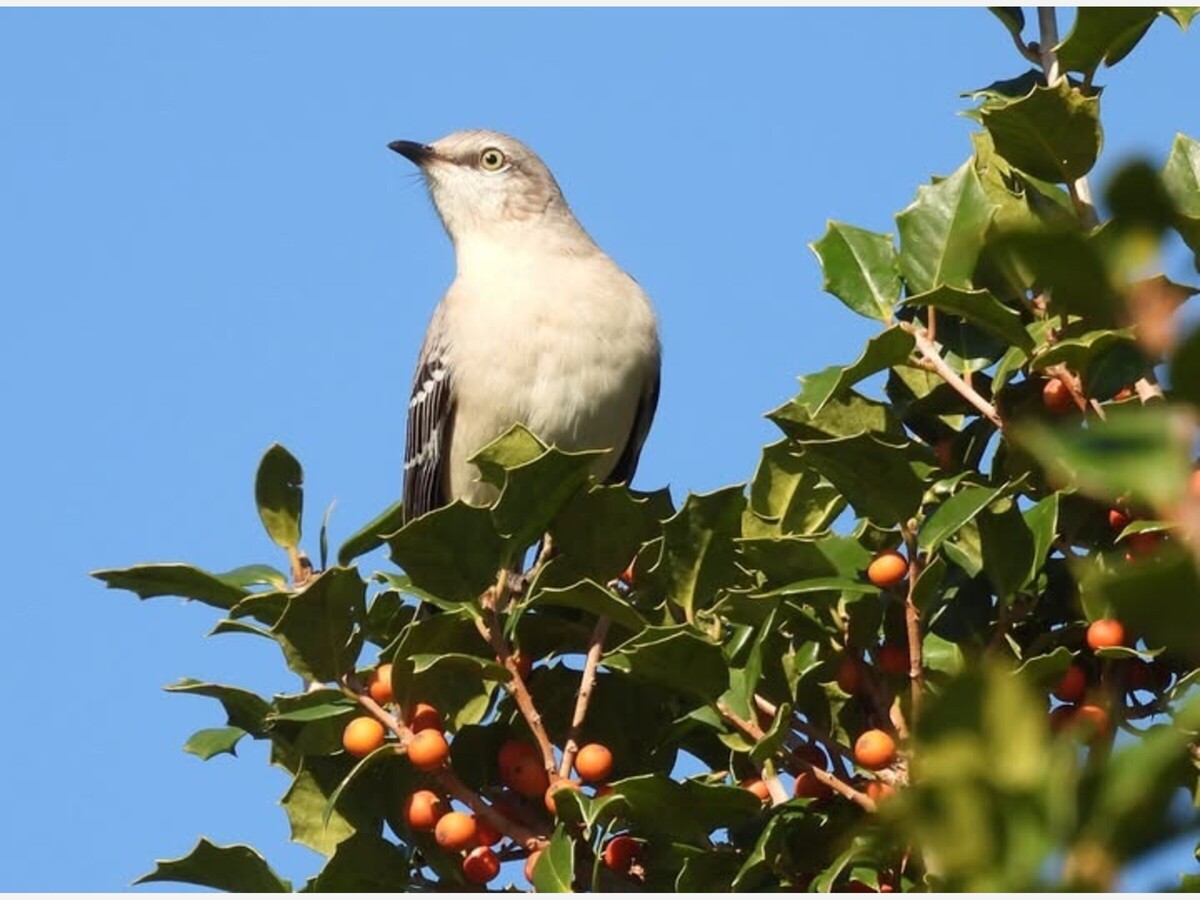
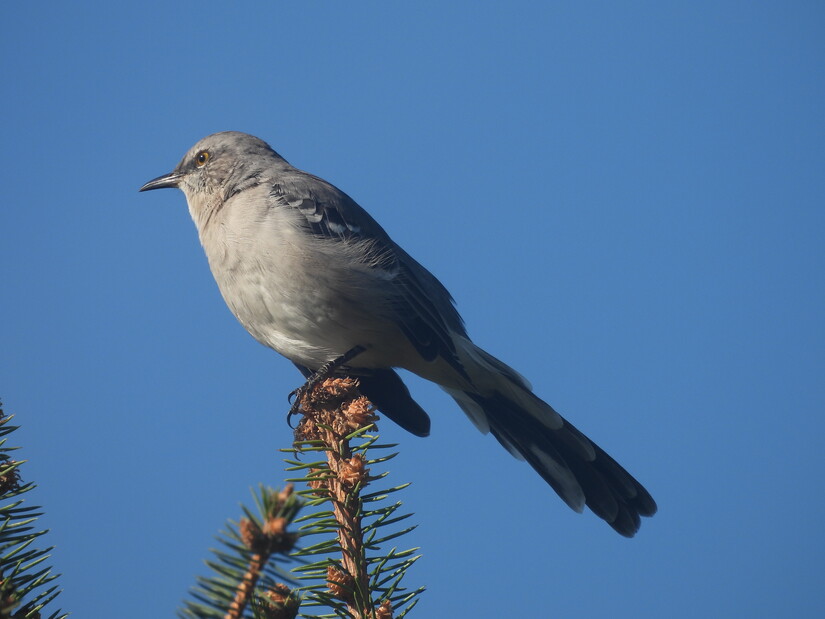
As I crossed an intersection in front of this holding yard, from immediately behind me, I heard the shrilling BEEP BEEP BEEP of one of the flatbeds backing up. Panicking, I sprinted for the curb. When I looked around to see if the driver ever saw me, there was no truck. But sitting on the post of a partially torn chicken-wire fence, looking straight at me, was a northern mockingbird.
“BEEP BEEP BEEP!!!” it said again. It held its stare on me, and for a third time replicated perfectly the sound and loudness of a flatbed truck backing up.
Mockingbirds are mimic birds. They imitate the calls of other birds to a near-perfect degree. From the sweet and sonorous warblings of songbirds to the harsh renderings of raptors. But they imitate industrial noises as well. In my urban meanderings I have seen mockingbirds perform ambulances, garbage trucks, and police cars. They can mimic frogs, car alarms, and even some elements of human speech. This particular mockingbird lives year-round near this intersection and has become a master at reproducing the delivery truck calls.
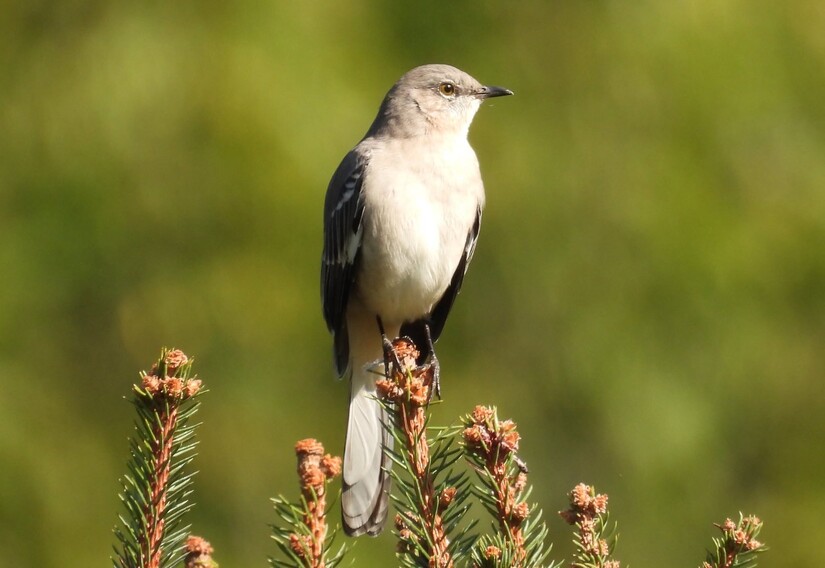
The musical repertoire of the mockingbird is large. The more accomplished mockingbirds have over 200 different songs and sounds in their quiver, and they will move from one to another quickly. They sing profusely from early spring through fall, sometimes spending hours at a time sharing with us their special talent. Their beautiful calls are so highly valued, that in the 19th century, admirers of the mockingbird would pay well over $1,000 (in today’s money) for a captured mockingbird to keep as a pet.
The nice thing about mockingbirds in our area is that they are easy to see. They are abundant, they are well-habituated to human presence, and they like to perch prominently on the tops of short trees and bushes. You can see them everywhere. It’s more common to see them around housing developments, schools, and office parks, than in woodland.
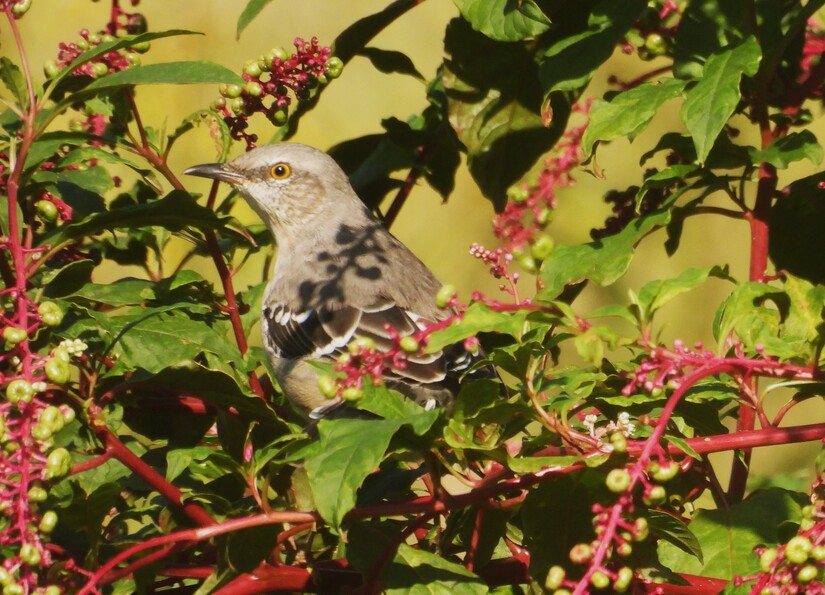
Mockingbirds are easy to identify. They are larger than most songbirds. They are dark gray with a light gray chest and have white bars on their wings (easily seen when in flight). Some have the faint hint of a black eye bar. Mockingbirds are mostly a residential species in our area - they do not migrate. In summer, they eat bugs and in winter they switch to berries. Most songbirds do not have the ability to digest berries, and as such, must migrate to warmer climates in winter to find bugs. Mockingbirds have the privilege of being able to process berries and they feast all winter long on holly berries and others.
I would be doing a disservice if I did not issue one warning about mockingbirds: they are fiercely territorial. Other residential birds you often see in flocks sifting through fields for seeds and insects, or perched in clusters atop trees. You will only see mockingbirds alone or with a mate. And when I say they are "fiercely territorial,” heed this warning. If you get near a mockingbird nest in spring, they will attack you. They squak loudly and flap their wings frantically. They will dive-bomb your head. I’ve been attacked by mockingbirds on several occasions. Never while birding; always when I least expected it - when entering an office building or a store.
Mockingbirds have become a symbol of youth and innocence, mostly because of the joy they seemingly find in their hour-after-hour songs. Think about the novel To Kill a Mockingbird, by Harper Lee. There, the mockingbird is a metaphor for innocence, goodness, and youthful vulnerability. In it, Miss Maudie explains that “mockingbirds don’t do one thing but make music for us to enjoy - that’s why it’s a sin to kill a mockingbird.” She clarifies that mockingbirds are but harmless creatures that only bring beauty into the world.
With all that said, I will admit that the reason I chose to do this column on mockingbirds has nothing to actually do with mockingbirds. It’s because I wanted to share with readers one of the most amazing viral bird videos I have ever seen. The lyrebird, of southern Australia, is also a mimic, perhaps the best of all. It’s a true virtuoso of imitating any and all sounds it hears in the forest. Watch this three-minute Youtube video from a BBC Earth episode, hosted by David Attenborough, to hear this lyrebird do impeccable impressions of motor-drive cameras and chainsaws.
Attenborough: the amazing Lyre Bird sings like a chainsaw! Now in high quality | BBC Earth - YouTube
* Mike Strzelecki is a freelance travel and outdoor writer, and 1981 graduate of Boyertown Area Senior High School. He writes from his house in Baltimore, Maryland. In his spare time, he joins his wife on adventures around the country observing and photographing birds.


Sunny, with a high of 71 and low of 51 degrees. Sunny in the morning, clear during the afternoon and evening,