

Image
by Bob Wood*
In his two-volume work published in 1953, The Journals and Papers of David Schultze, Andrew S. Berkey, then director of the Schwenkfelder Library in Pennsburg, wrote: “Of the several primary source materials available to historians, none is more valuable than the diary. The diary connects the personality of the individual with the larger processes of history as nothing else can. It humanizes the past, but what is perhaps more important, it provides us with a vivid reproduction of the atmosphere of the fleeting moment. …we can best understand the spirit of the age through the eyes of contemporary observers.”
Colonial era diaries and journals of the Goschenhoppen Region are more than rare. Although almost universally literate to some degree, the Pennsylvania Dutch were usually not writers. Their everyday dialect was not a written one, and their schooling was in High German. I know of two early diary/journals which describe conditions locally: The Journals of Rev. Henry Melchior Muhlenberg and the Almanac Diaries of David Schultz. Schultz, like most everyone, was a farmer; but he also was a surveyor and prepared documents related to surveying.
David Schultz, b. 1717, was a Schwenkfelder who arrived in Philadelphia on the ship Pennsylvania Merchant in 1733. There were only a total of 219 Schwenkfelder immigrants to America between 1731 and 1737, all settling in Montgomery County. Today there are only five active Schwenkfelder churches in the world: four in Montgomery County and one in Philadelphia. The closest is in Palm. The Schwenkfelders are named for Casper Schwenkfeld (1489-1561) a theologian and friend of Martin Luther.
University-trained in the humanities, Schwenkfeld was a prolific writer whose work was praised for its elegance and beauty of style. Like Luther and the other protestant reformers, Schwenkfeld rejected most aspects of the Roman church, but additionally he held and preached a message of Christianity as a personal relationship with God and an inward-looking spiritual belief. Schwenkfeld held himself above most of the theological fights of the day while stressing a tolerance for differing views and a freedom of conscience in religious matters. Nevertheless, the sect was banned in most of Europe, often on pain of death.
As a group, The Schwenkfelders tended to be theologically sophisticated and interested in education, music, arts, and crafts. In this country they were respected as humble, hard-working, honorable farmers and tradesmen. Having been persecuted almost out of existence in Europe, the Schwenkfelders there met clandestinely in homes and so continued the practice of home meetings in this country. Later, in the 19th century they built meeting-houses and in 1909 the first church.
There were early Schwenkfelders in the Swamp Creek Valley as Reformed churchman Henry Antes and his Schwenkfelder partner George Heebner who operated a mill on the Swamp Creek in the 1730s. Heebner’s father, Melchior, a medical doctor, also lived here for a few years.
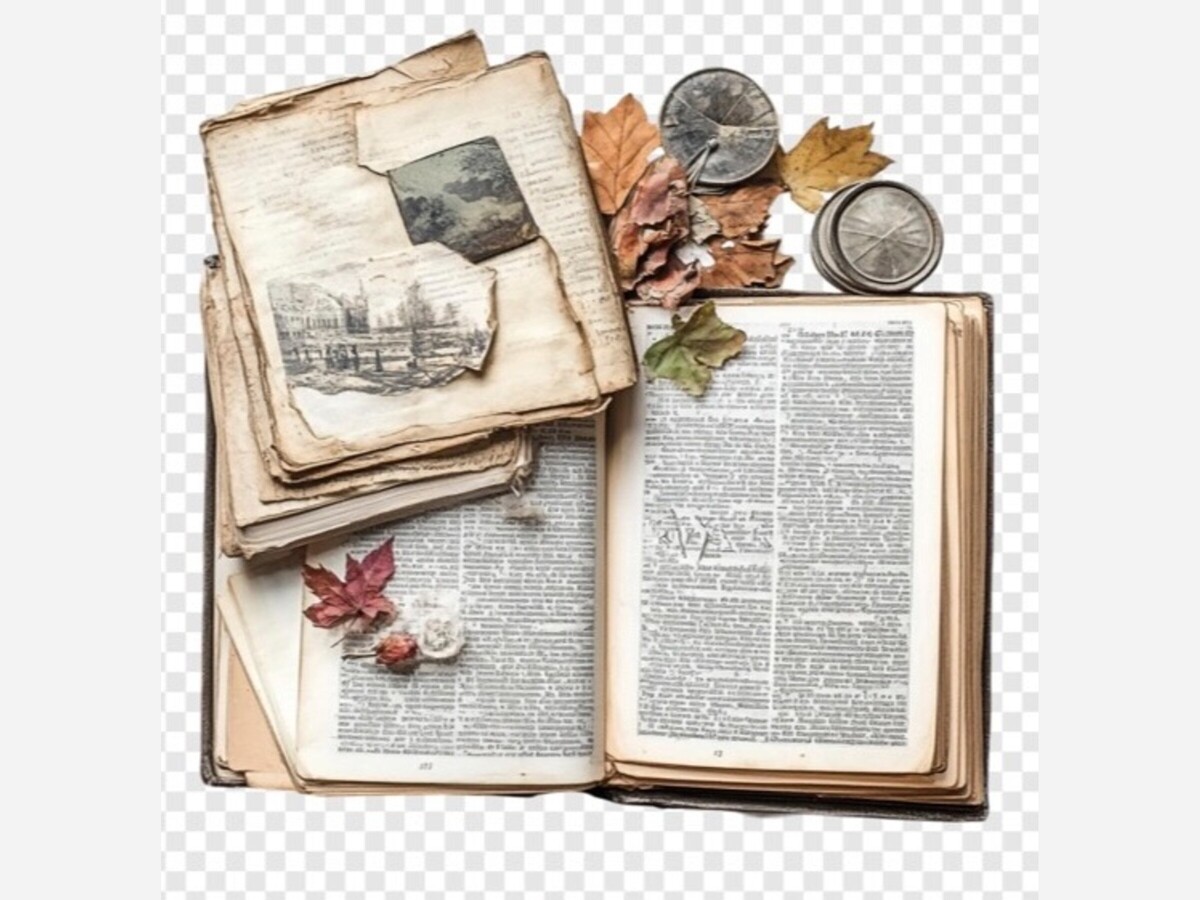
David Schultz kept his diaries on blank pages in his annual almanacs. Aside from the Bible for the well-to-do families, the yearly almanac was the one book found in most farmhouses. It’s hard to overstate the importance the German farmers placed on the almanac. Printed in German, they were a compendium of astronomical and astrological data for each day of the calendar year. Astronomical observations such as conjunctions of members of the solar system were thought to have a profound effect on weather and the growth of crops. Also, to many Dutchmen matters of health, weather, timing of certain farm chores, planting, harvest and much else were astrologically based. Great importance was placed on lunar cycles. Usually there were strong religious overtones to articles and advice.
There are twenty-two known almanac diaries of David Schultz scattered through the years 1733 to 1790. We would like to think that he kept a diary every year and that more can still be discovered. Indeed, as late as 1989 East Greenville resident Alan Keyser discovered two in the collection of the American Antiquarian Society in Worcester, Massachusetts. Keyser recognized Schultz’ handwriting along the edge of a photocopy of another document he was examining and so tracked them down.
Aside from the 1733 almanac, which he brought with him, all of Schultz’ almanacs until 1777 were printed in the Saur print shop in Germantown. In that year the Patriots destroyed Saur’s print shop, so Schultz used other similar German Almanacs, of which there were many to choose from. All had blank pages for notes after the monthly calendar pages, and it was on these that Schultz made his notes.
Much of the information in this article is gleaned from the lecture notes generously provided by Dr. Allen Viehmeyer from his monthly noonday seminars devoted to topics of interest to Schwenkfelders and others interested in local history. Viehmeyer is Associate Director of Research at the Schwenkfelder Library and Heritage Center, Pennsburg, which has custody of most of the diaries.
He notes that even with the blank pages there is very little space for notes in the diaries and that there isn’t an entry for every day. In addition to recording the work he was doing, crammed into every available space, Schultz notes miscellaneous information about world events, remedies and “cures” learned from friends, local deaths, and so on.
A curious feature of the diaries is that he wrote them in a mixture of German, Latin and English; sometimes in the same sentence: “Terrible cold days frigidissime, der kaltest tag in many years.”
In November of 1743 his future wife, Anna Rosina Beyer, “came up for spinning wool,” and in December he notes “from November 28 until December 10 had wool spun.” This implies she stayed in the house, but the diaries for the wedding and subsequent years are missing
In the area that later became Germany, the Schultz family had found brief sanctuary in a small province, but they came to America because they were being pressured by Jesuit authorities to convert to Catholicism. However, the existing diaries make scant mention of attending Schwenkfelder meeting or of religion in general. From time to time, he makes mention of meetings but not whether he attended. In 1744 he notes a Schwenkfelder celebration: “Arrival day [was] celebrated in Skippack,” but once again he doesn’t say that he went to it. By the 1770s and 80s he mentions attending church as often as meetings, and he, his first wife Rosina, and second wife Elisabeth are buried in the New Goschenhoppen Reformed Church cemetery.
The most poignant diary entries are in the month of June, 1750, and many months thereafter when Schultz expresses his grief over the murder of his wife of five years, Rosina. She was stabbed as she slept by an eighteen-year-old redemption that they had taken on as a laborer and who nursed some grudge against her. “[in German] Oh misfortune and misery! My dearly loved and faithful wife, Anna Rosina, was cruelly stabbed and murdered by our servant Hans Ulrich Seiler in the night towards morning of June 14. How insignificant is man who yet dwells so securely. Her sorrowful burial took place on June 15.”
According to later testimony, earlier on the day of the murder, they were making hay and Rosina had scolded him and told him to keep to his work. Seiler was heard to remark, “Wait, and I will show you something.” Seiler was captured later on the day of the murder, taken to Philadelphia, tried, and condemned on Oct. 22. He was hanged November 14, 1750. Some years later Schultz remarried, a non-Schwenkfelder, Elisabeth Lahr.
The murderer, Seiler, was a “redemption.” Shipping companies at that time would send drummers and advertisers all throughout the German-speaking provinces to coax aboard penniless unfortunates desiring to try their luck in America. Packed almost like slave ships, often with insufficient food and water, those that survived the journey were held aboard ship in Philadelphia until someone here paid their passage. For a few pounds, often less than a workman here made in a year, the immigrant was bound from four to seven years to his master. Families were often split up never to see each other again, children separated from parents and suffering every sort of abuse. It was a harder age and it seems the whole system was not seen as particularly evil at the time.
Schultz’ farm lay in the southwest edge of present-day East Greenville. It is possible that the Schwenkfelder Library and Heritage Center lies on the northern part of the Schultz farm and that it abutted the New Goschenhoppen Church grounds on the farm’s southern border.
Since crops and farming practice were similar throughout the immediate region, Schultz’ diaries can tell us about local farmsteads at this very early time. I will be quoting now from the notes generously provided by Dr. Allen Viehmeyer, Associate Director of Research at the Schwenkfelder Library, Pennsburg. His talk about Schultz was presented as a recent noon day [event].
“In the early diaries it is difficult to decide if he had any sort of crop rotation plan. In April 1769, Schultz mentions sowing flaxseed in the turnip field. Only once is there mention of a fallow field, and that in connection with the comment that Rosina had finished plowing it. A garden is mentioned specifically only twice, although references to cabbage and other vegetables doubtlessly imply a garden for family consumption. …Excess wheat, rye, and flax seed were taken to Germantown and Philadelphia for sale. David also harvested large crops of turnips, which were fed to animals for the most part.”
In 1744 he planted 10 acres of oats, 1 ½ acres of barley, 1 1/8 acre flax, 1/8 peas, 1/8 Indian corn, 2 buckwheat, 2 1/2 turnips, 6 acres rye, and 8 wheat for a total of 31.375 acres. He records his grain harvest by counting numbers of sheaves, so it’s hard for us to calculate the yield. He took in 26 loads of hay, but what constitutes a “load”? He recorded 1180 sheaves rye, 2890 sheaves wheat, 140 bundles flax, 212 sheaves barley, 2000 sheaves oats, 8 ½ bushels flax seed, 1 ½ bushels peas, 23 loads aftermath (second cutting of hay) and 34 bushels buckwheat. One thing is sure: the harvest represents a lot of work. Grain at that time was cut with a sickle.
“In addition to the crops mentioned above, Schultz noted in 1750 and twice in 1774 hemp being pulled, broken, and combed. He mentions in 1744, ‘52, and ‘74 that rope was made (from hemp?) and notes in 1769 that rope was twisted from 24 pounds of hemp at Meyer’s, a grist and hemp mill just south of present-day Palm….”
“There is a single entry on October 14, 1780: ‘Got tobacco home.’ Another solitary entry three days later: ‘Got chestnuts and hickory nuts.’
“David often mentions bees and the number of swarms in a season, implying pollinating of his crops, but he never mentions honey or other bee products.”
“The animals mentioned are cows, pigs, and sheep. The cows and pigs seem to have been for family consumption. [As one would expect] the instances of pig butchering are much more frequent than the mention of butchering cattle…Sheep are mentioned seven times….In April 1743 he mentions 12 sheep sheared yielding 26 pounds of wool: in 1774, 16 sheep produced just 26 pounds of wool. In May 1750 four white sheep were sheared yielding 14 pounds of wool…”
“There is no real mention of poultry or eggs. Ducks laying was mentioned once in 1743, but not a single mention of milk or related products such as butter and cheese. These were probably not mentioned because they were normally women’s or children’s work.”
On a single occasion in 1769 David noted, “Got shad fish from Bethlehem”--the only mention of fish.
Horses are mentioned frequently. Schultz mentioned buying horses, taking horses to the smith and having them bled.
“While dogs are mentioned twice, there are no entries about cats. On the other hand, he mentions making rat traps in 1780.”
“On March 15, 1744 he mentions that he spent the whole day planting apple trees. …Apple is the fruit most often mentioned, but other tree yields were cherries, peaches, and pears. David mentions planting 20 peach trees on March 12, 1744, but the other fruits may have been planted later, since they are not mentioned before 1780.
“Making cider was a frequent activity…Making apple butter is mentioned twice. Schultz mentions having a cider press made in August 1752; getting an apple mill in 1759; and making an apple mill tree on August 27-28, 1782. On October 25, 1768, he mentions that a wagon full of winter apples was pressed.”
This column is a mere sampling of the material found in the almanac diaries as the full translation runs over 500 pages.
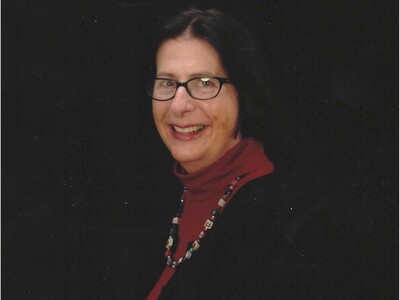
* An inspiring Jack of all trades, master of many, Bob Wood serves as Studio B's Gallery Adjunct when he's not busy doing everything else! Writer, artist, potter, historian, and volunteer. Bob began his career as an artist following his retirement from teaching Language Arts. Bob is a popular speaker; local history is his niche. Bob has published four books on local history.


Overcast, with a high of 69 and low of 51 degrees. Overcast in the morning,