53° and Clear


Image
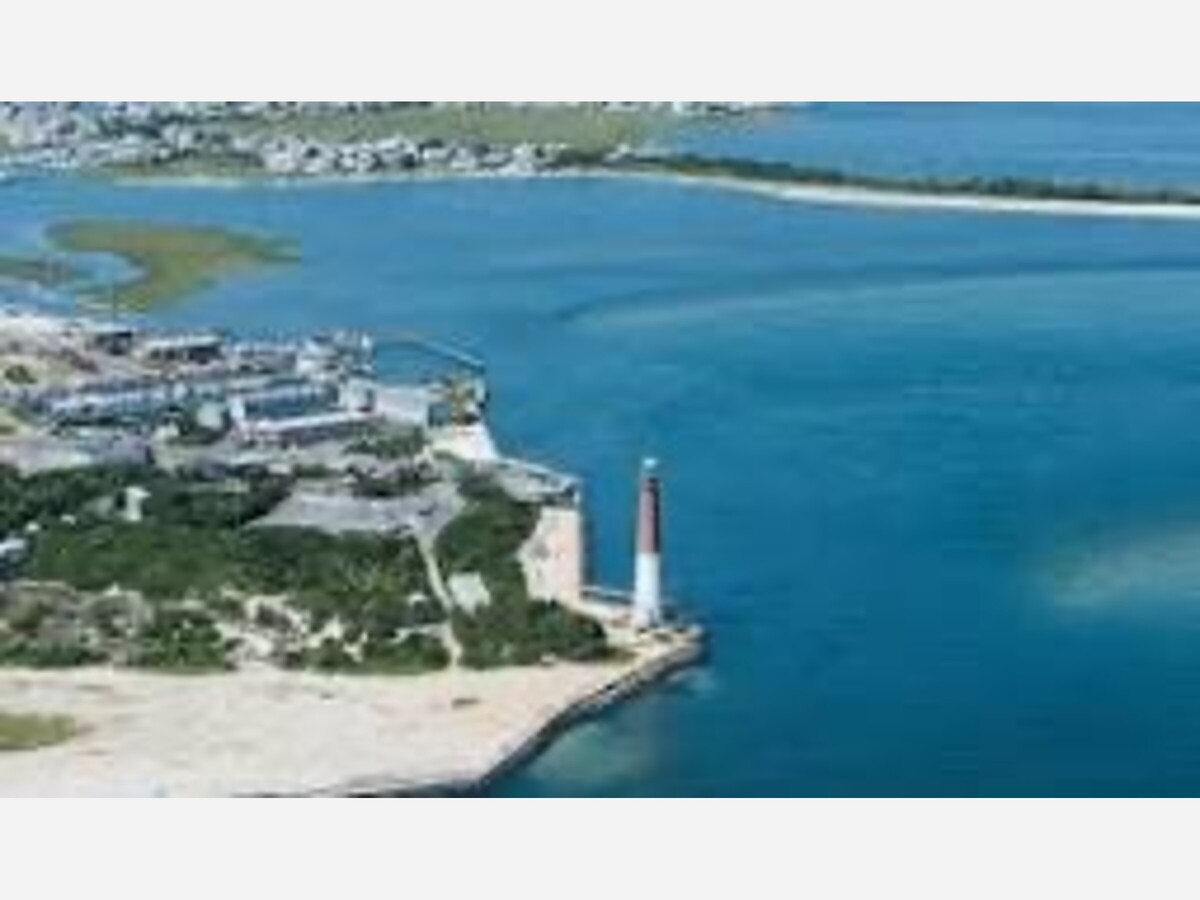
A view of Barnegat Lighthouse State Park
by Mike Strzelecki*
Barnegat Inlet, on the Jersey Shore at Long Beach Island, is a birder’s paradise. It attracts very unusual and uncommon birds for this area. That’s because, while most Jersey Shore beaches are calm and sandy, Barnegat Inlet has more unique terrain. Two mile-long jetties built from massive rocks reach out into the ocean to stabilize the inlet. The currents here are dangerously strong and the waves rough-and-tumble. Powerful winds sweep across the water. What results is not a typical Jersey sandy beach, but terrain that more so resembles a rocky New England coastline. As such, particularly in winter, it attracts unusual birds to the area - birds found more commonly in New England. This unusual terrain makes Barnegat Inlet one of the most interesting and productive birding locations in the United States.
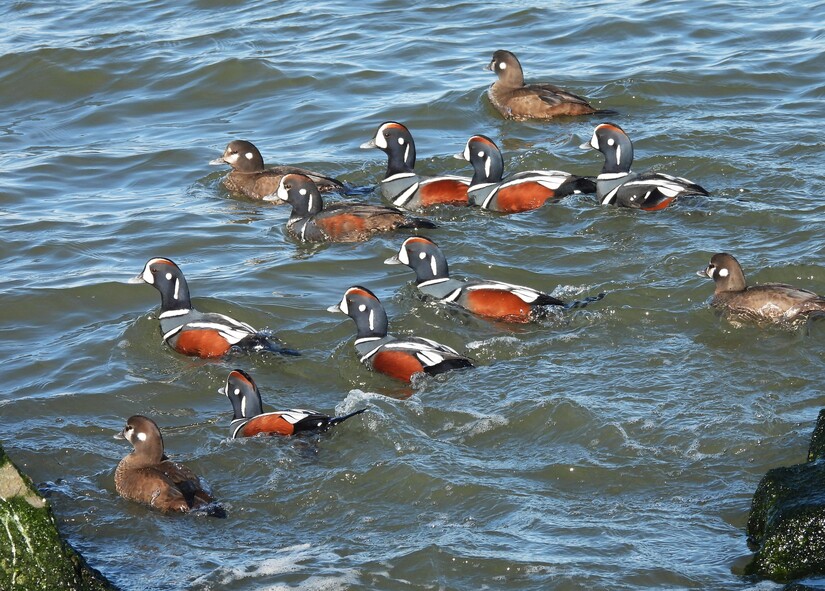
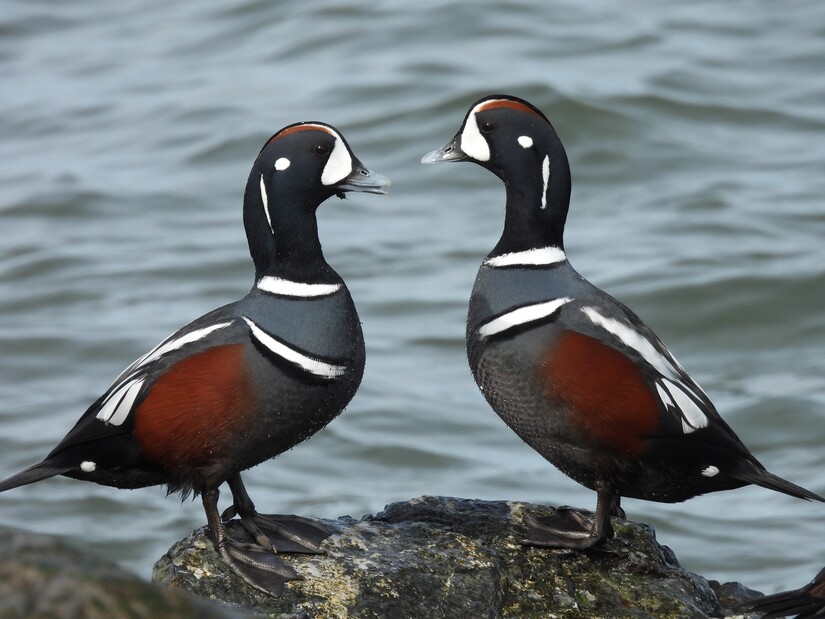
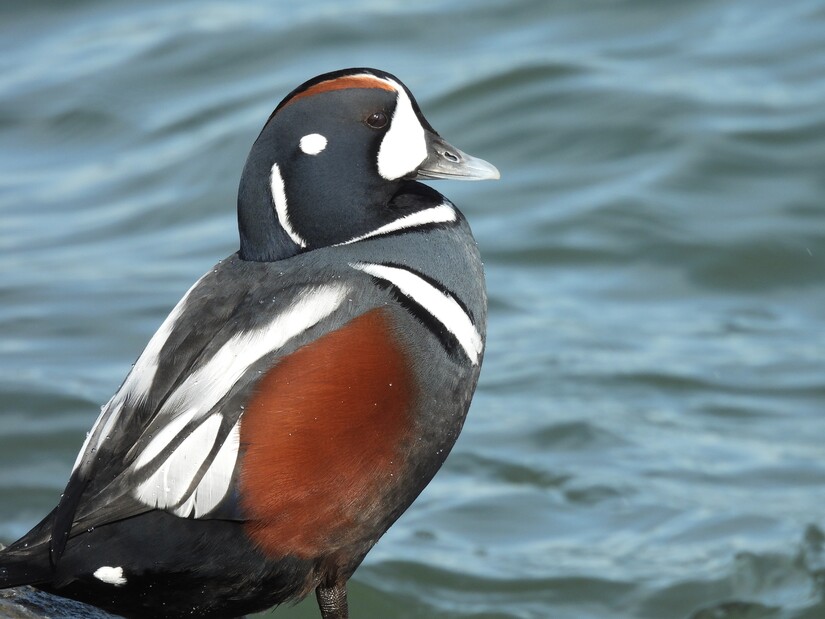
My wife Kelly and I visit Barnegat Inlet regularly. Most birders come to the inlet in winter to see the crowd-pleasing Harlequin ducks. This is the only location in the mid-Atlantic region where you are reasonably assured of seeing them. They hang out in tight groups along the jetty rocks, diving down to pick underwater mollusks off the rocks. They look like tiny colorful corks getting tossed around in the rough water. The males look like brilliantly colored paint-by-number ducks, while the females are brown with a white facial spot. They are highly photogenic and will let you get surprisingly close for pictures.
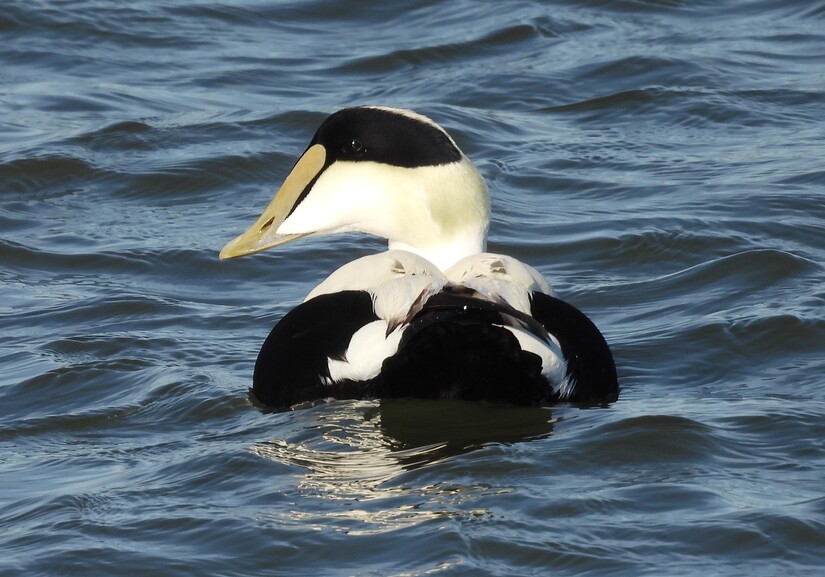
Common eiders are also northern birds that frequently show up at Barnegat Inlet. Eiders have some of the fluffiest feathers of any species, which are used in making feather pillows and quilts. The male eiders are white and black, while the females are non-descript brown. A field mark for identifying an eider duck is the unusual shape of their bill, which resembles a ski slope. They often visit in large numbers; on a recent visit to the inlet, we observed hundreds of them.
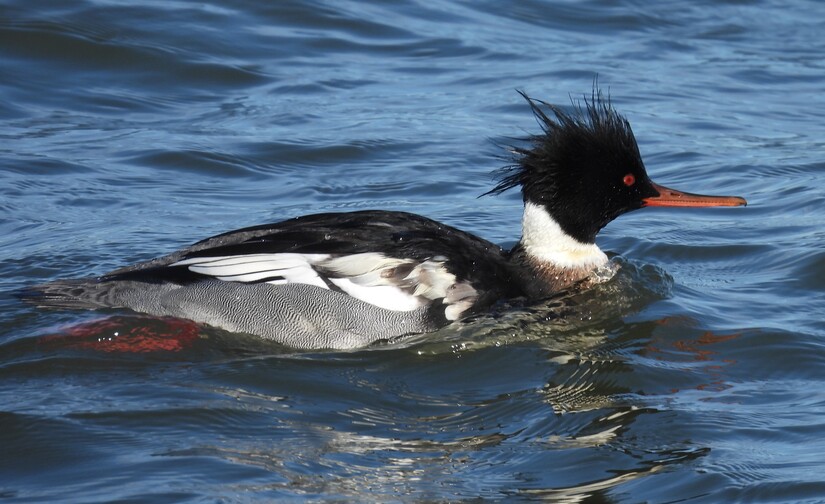
There are several species of mergansers that visit our area, but the red-breasted mergansers are the most uncommon. They prefer bigger and rougher water than other mergansers, and are tough to find. They can be seen in significant numbers at Barnegat Inlet. Their primary field mark is that they look like they are having a bad hair day.
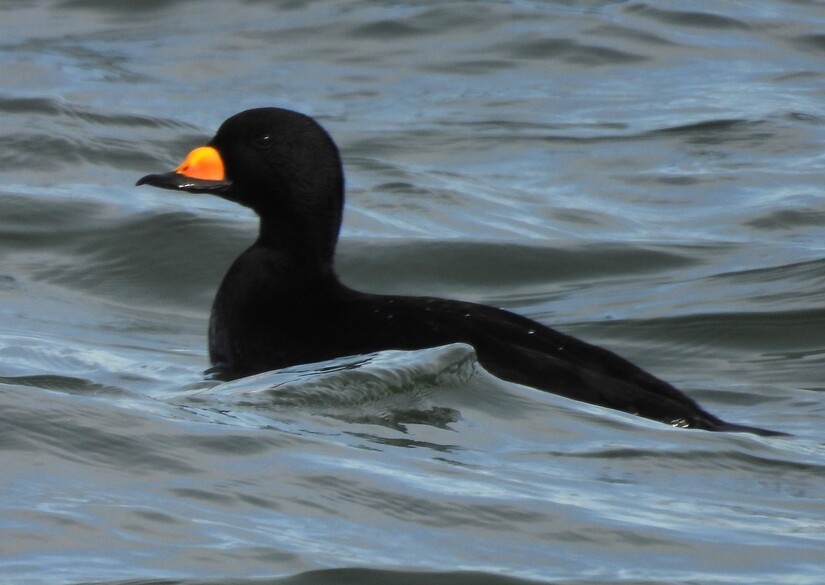
Scoters are tiny, black diving ducks that favor wide-open swaths of water along the coast - either in the ocean or in large bays. There are three types of scoters in our region, all of which show up at Barnegat Inlet in winter. Black scoters are deep black with a bright orange bill.
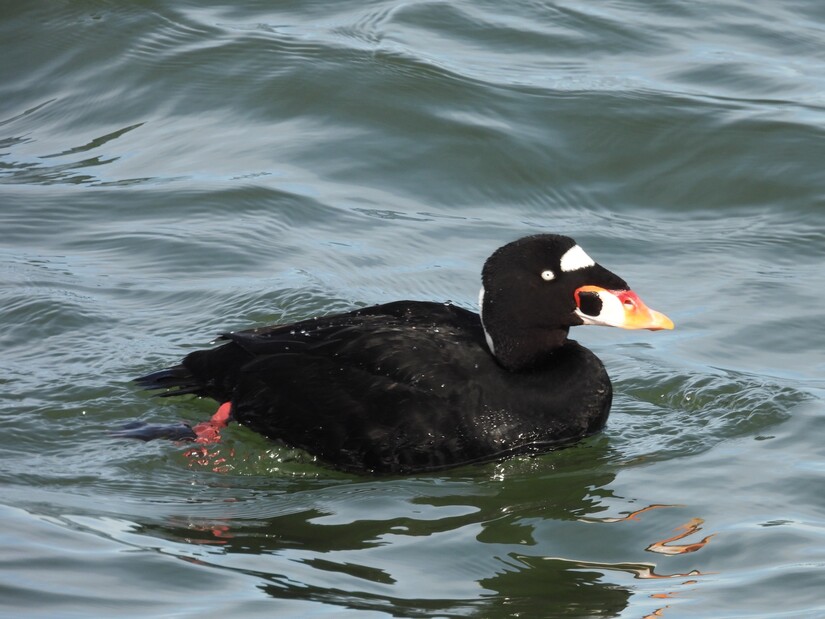
Surf scoters are also deep black but have white marks around the head and an almost comical orange and white bill (sorry, surf scoters).
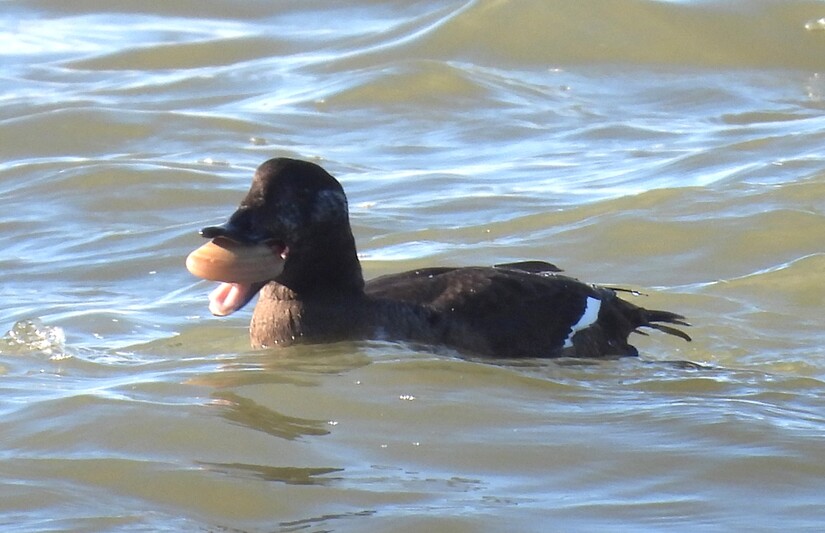
White-winged scoters are easily identified by their white wing bars. We watched this white-winged scoter pass the day plucking clams from shallow waters along the jetty.
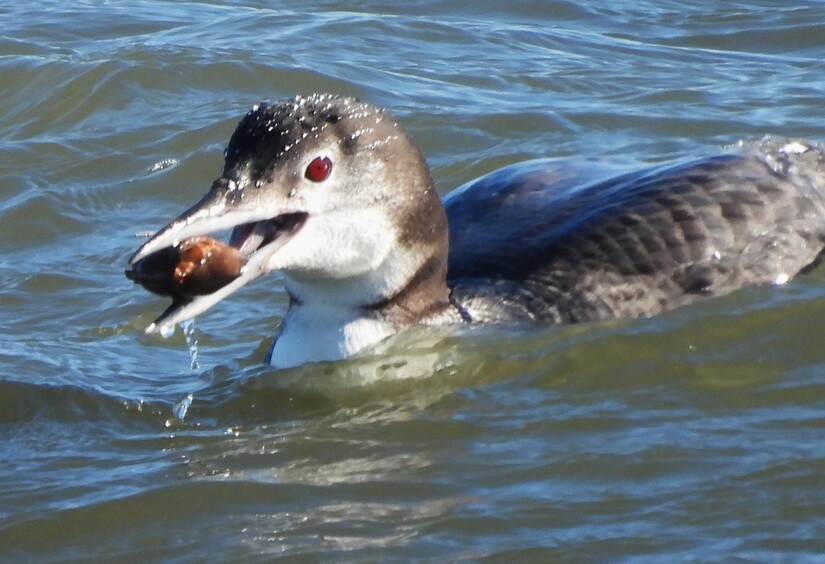
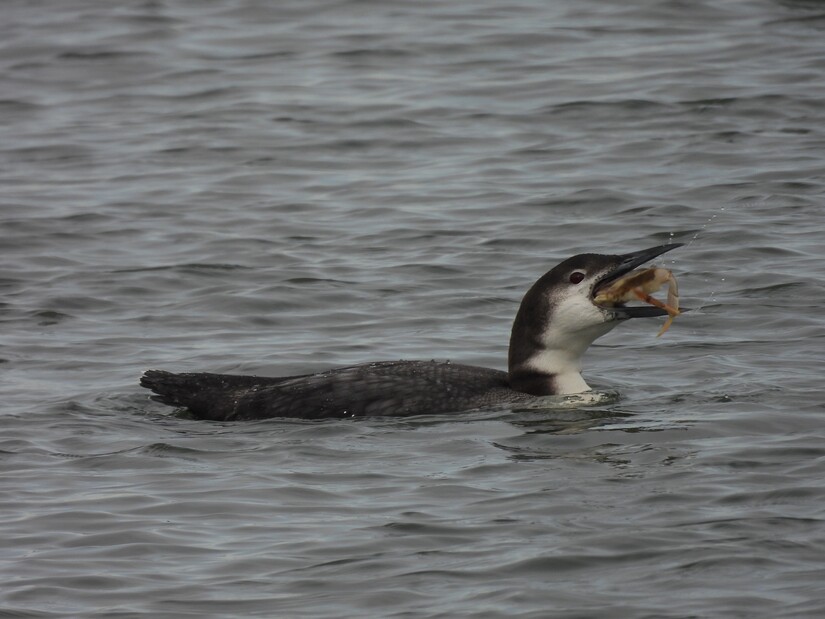
Common loons can be seen in large lakes and coastal zones around the mid-Atlantic region. Barnegat Inlet is a place to see them up close, as they tend to feed in the channel between the jetties. These common loons were figuring out how to digest blue crabs that were putting up resistance.
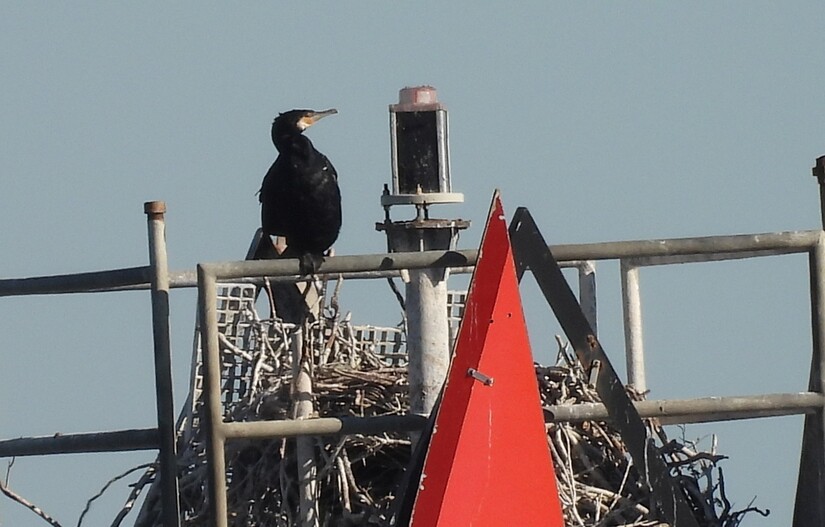
Double-crested cormorants proliferate lakes and coastal areas in the mid-Atlantic region. I once watched an estimated 500,000 pass by while sitting on a beach in the Outer Banks, in North Carolina (it took well over 30 minutes for all to pass). We also have great cormorants in the area, but they are highly uncommon. They prefer open water away from humans. Barnegat Inlet has great cormorants nesting in their channel buoy. The great cormorant is larger than the double-crested cormorant, darker in color, and also has a white mark under its bill, which can be seen in this picture.
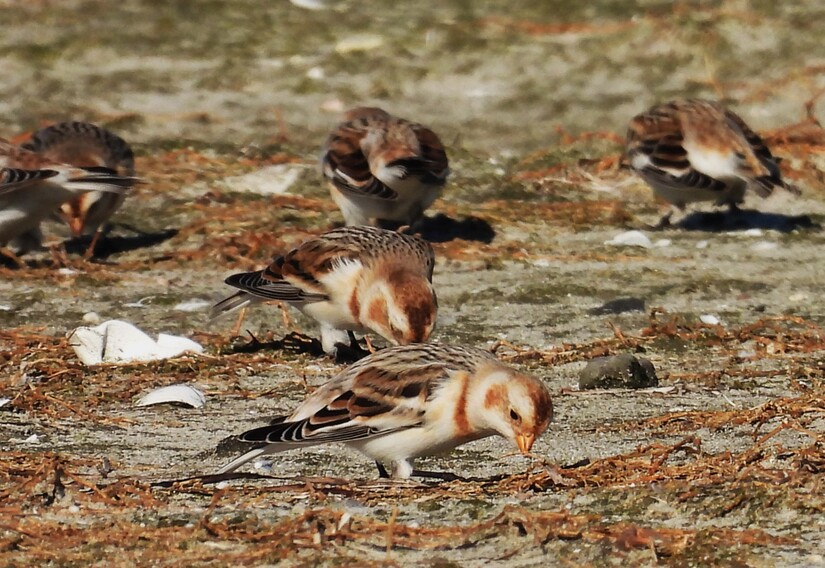
Behind the jetty, hidden among the sandy and weedy dunes, are smaller birds often out searching for seeds. The impossibly cute snow buntings visit in winter from the Arctic. They hang in small groups and can be seen erratically moving around the dunes in chaotic flight patterns.
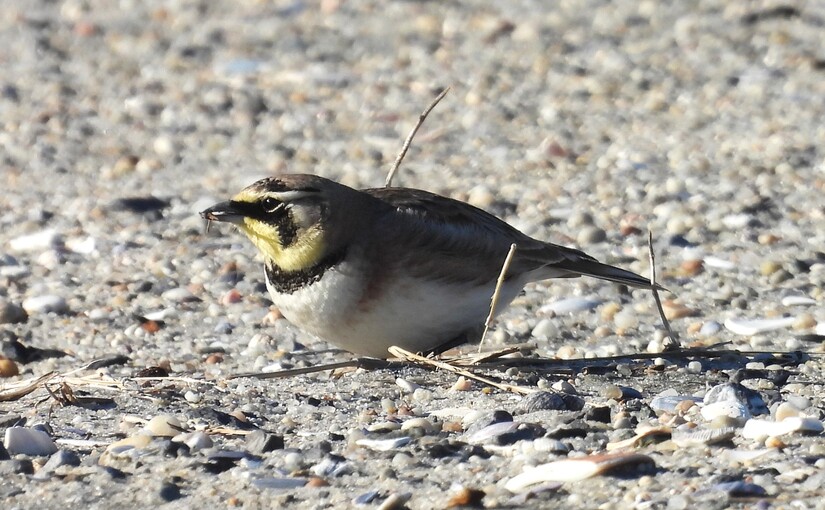
A prize bird to see in the same dune area is the horned lark. It takes a keen eye to spot these diminutive friends, as they blend in so well with the sand and shells. But patience will pay off, and you may get nice views of their yellow face with black markings. They do possess feather horns but rarely show them. The American Birding Association named the horned lark their Bird of the Year for 2026, so we were thrilled to spot some.
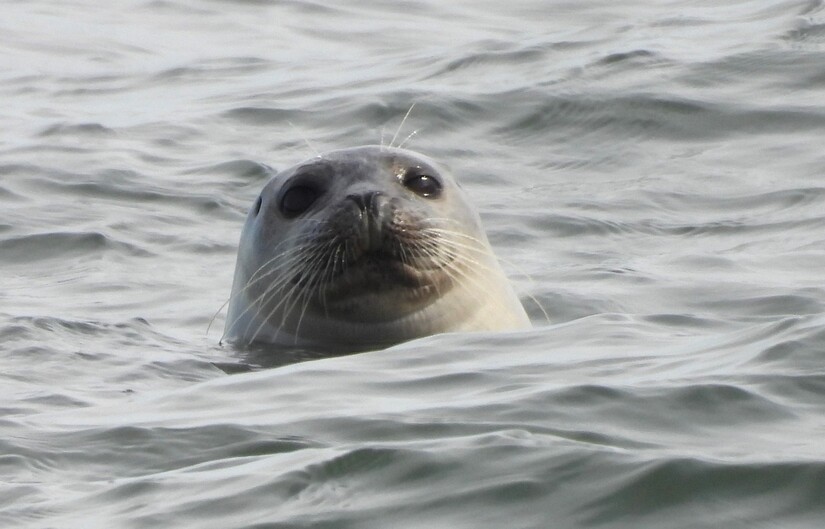
Other wildlife also flourishes around Barnegat Inlet. If you are walking on the jetty and feel like you’re being watched, you may not be wrong. Harbor seals lurk in the channel, chasing after fish and surreptitiously keeping an eye on you from the water. They have unmatched curiosity in the animal kingdom, and will engage you in staring contests.
* Mike Strzelecki is a freelance travel and outdoor writer, and 1981 graduate of Boyertown Area Senior High School. He writes from his house in Baltimore, Maryland. In his spare time, he joins his wife on adventures around the country observing and photographing birds.


Interesting, Bob. Thanks, but I wonder how that related to people’s probably very strong religiously beliefs back then —-not the fact that there’s evil, but that there’s some kind of symbol that can stop it; that sounds more like witchcraft.


Sunny, with a high of 65 and low of 40 degrees. Sunny in the morning, clear for the afternoon and evening, overcast overnight.