

Image
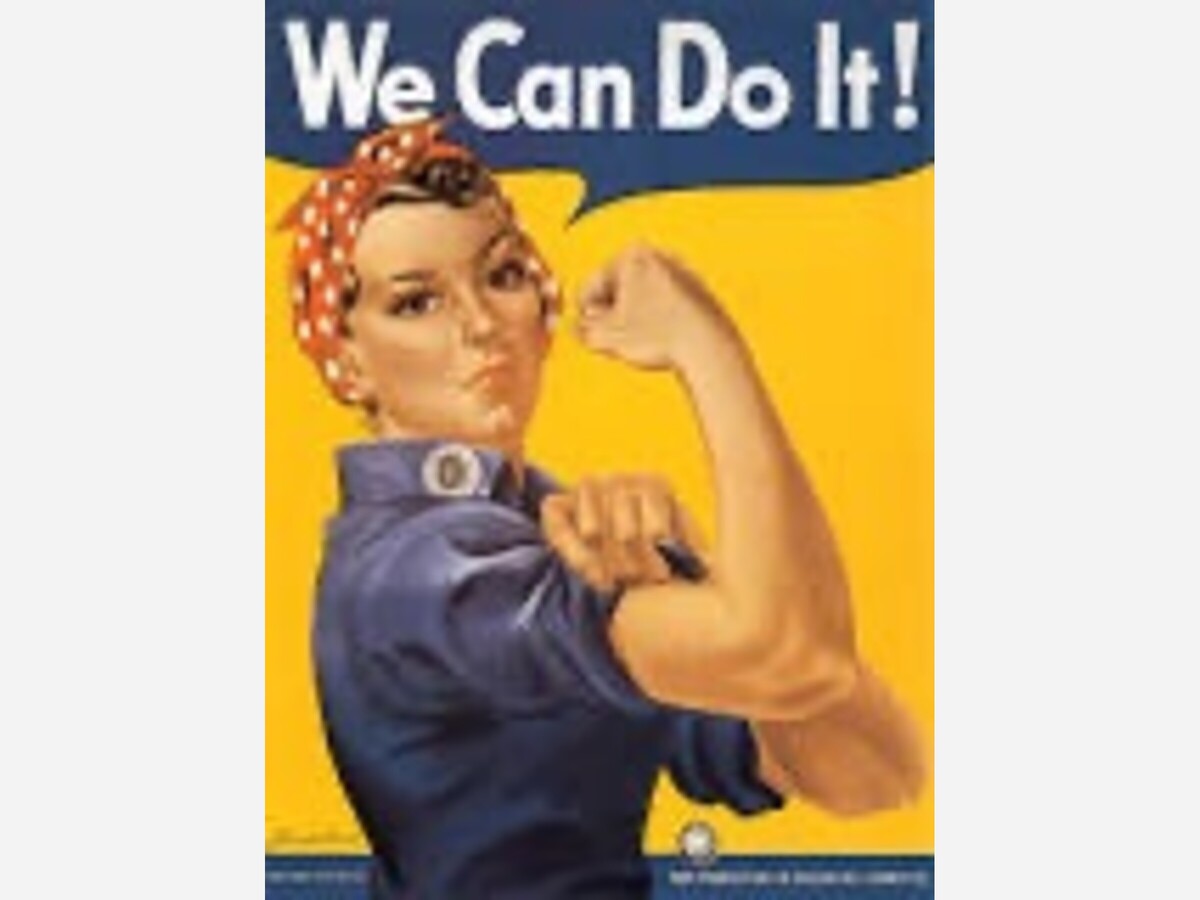
The iconic Rosie the Riveter is frequently used as a symbol throughout National Women's History Month.
by Jane Stahl
Women’s History Month is a dedicated to acknowledging the contributions of women to U.S. history from Abigail Adams to Susan B. Anthony, Sojourner Truth to Rosa Parks. Milestones in women's history go back to the founding of the USA.
Women’s History Month started from a weeklong celebration of women’s contributions to culture, history and society organized by the school district of Sonoma, California, in 1978. Dozens of schools and hundreds of students participated in a “Real Woman” essay contest and a parade was held in downtown Santa Rosa. A few years later, the idea caught on within communities, school districts and organizations across the country..
In 1980, the National Women's History Project (NWHP) was founded in Santa Rosa, California, by Molly Murphy MacGregor, Mary Ruthsdotter, Maria Cuevas, Paula Hammett, and Bette Morgan to broadcast women's historical achievements.
In 1980, Jimmy Carter was the first President to recognize Women's History Week, noting that too often women's contributions went unnoticed. The proclamation declared the week of March 8 as National Women’s History Week. The U.S. Congress followed suit the next year, passing a resolution establishing a national celebration. Six years later, the National Women’s History Project successfully petitioned Congress to expand the event to the entire month of March.
“Leading the Change: Women Shaping a Sustainable Future" is the theme for 2026, designated by
the National Women's History Alliance. This year's theme celebrates the contributions of women leading sustainability efforts across environmental, economic, educational and social justice movements.

Did You Know?
Although the United States does not celebrate International Women's Day (IWD) due to its socialist origins, which clashed with American anti-communist sentiments during the Cold War, March 8 is celebrated as International Women’s Day (IWD) primarily in honor of the 1917 strike by Russian women that sparked the Russian Revolution. The United Nations officially began celebrating March 8 during International Women's Year.
The mimosa branch is often associated with the annual celebration of International Women's Day around the time the bright yellow flowers come into bloom.
Purple became a color for International Women's Day (March 8) because it was adopted by the UK's Women's Social and Political Union (WSPU) in the early 20th century, symbolizing dignity, justice, and loyalty to the women's suffrage cause, alongside green for hope and white for purity, and has since become a global symbol for women's equality. The color's association with royalty and power also lent it prestige, representing the "royal blood" of suffragettes fighting for rights.
Seven principles of women's empowerment
Inspiring Words from Inspiring Women
"The most difficult thing is the decision to act, the rest is merely tenacity," Amelia Earhart (1897-1937?), aviation pioneer.
“You must never be fearful about what you are doing when it is right.” – Rosa Parks (1913-2005), civil rights activist.
"If they don't give you a seat at the table, bring a folding chair." - Shirley Chisholm(1924-2005), U.S. Congresswoman.
“My mission in life is not merely to survive but to thrive and to do so with some passion, some compassion, some humor, and some style.” – Maya Angelou (1928-2014), memoirist, poet, civil rights activist.
“It took me quite a long time to develop a voice, and now that I have it, I am not going to be silent.” – Madeleine Albright(1937-2022), U.S. Secretary of State.
“Champions keep playing until they get it right.” – Billie Jean King (1943 - ), tennis champion.
"The most common way people give up their power is by thinking they don't have any." - Alice Walker (1944 - ), novelist, short story writer, poet, social activist.
“One child, one teacher, one book, one pen can change the world.” ― Malala Yousafzai (1997- ), Pakistani female education activist, Nobel Peace Prize laureate.
Some of the information for this article taken from https://www.history.com/articles/womens-history-month, Google, and Wikipedia.


Overcast, with a high of 69 and low of 51 degrees. Overcast in the morning,