

Image
by Mike Strzelecki*
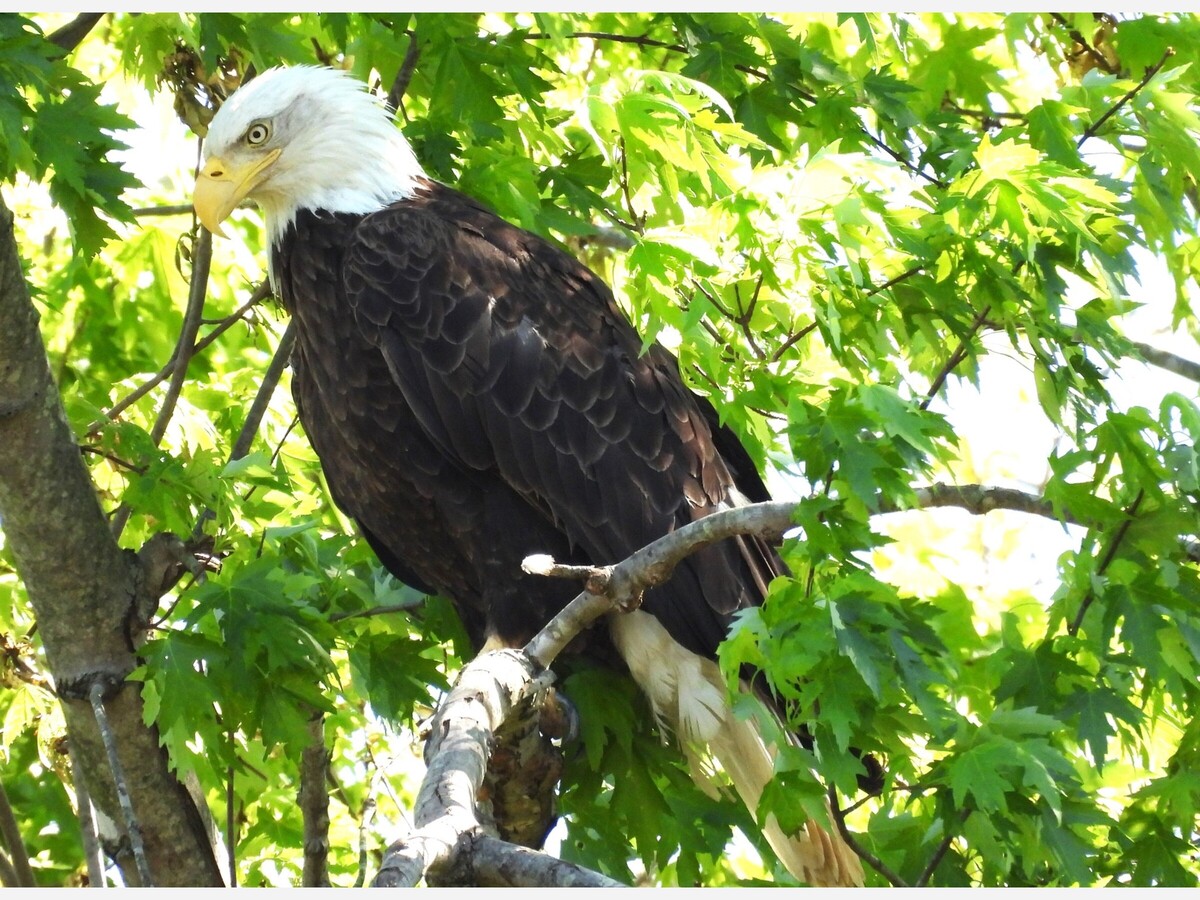
Spotting a majestic bald eagle is a forever thrill. Whether perched on a protruding limb or wheeling overhead, it’s a sight birders never tire of. Bald eagles are plentiful in the Boyertown region, but often pass unnoticed. They lurk, but are rarely seen. Here is how to get started in spotting a local bald eagle.
First, keep your eyes peeled when passing through areas where bald eagles are known to frequent. They tend to loiter around lakes and waterways. According to the international birding database known as Ebird, as well as other social media postings, bald eagles have been spotted in the past few months along the Manatawny Creek, primarily around the covered bridges and also in the Weidner Mill area. They are often observed along the length of the Schuylkill River. They are commonly seen at Lake Ontelaunee and Lake Nockamixon. A few years ago I saw an active eagles nest in Gilbertsville, though it may no longer be active.
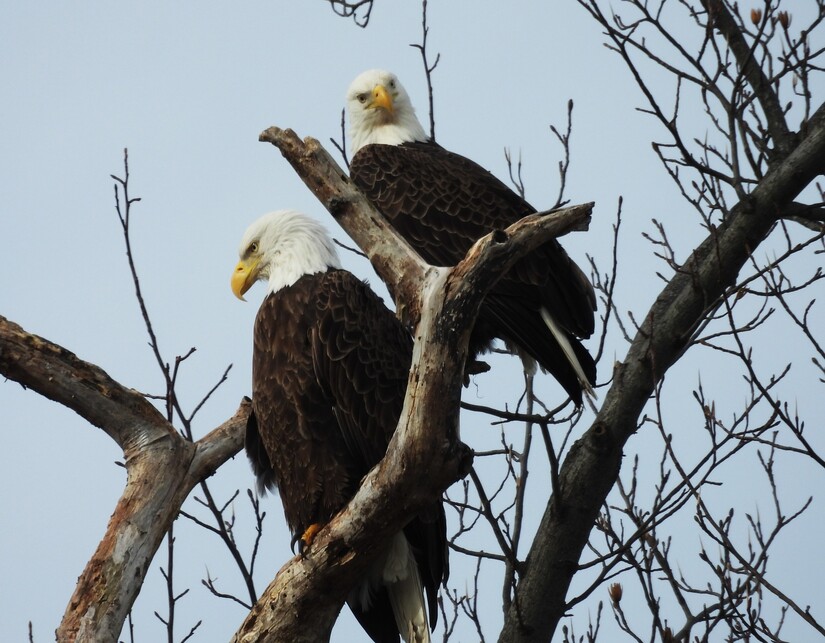
Second, cast your eyes skyward. Bald eagles can often be seen circling overhead, even over town. I live in a Baltimore suburb, and see eagles over my house almost weekly. It’s just a matter of being able to pick them out and differentiate them from other soaring raptors and vultures. Here is the key: vultures soar with their wings tilted upwards, creating a V (see diagram below). Bald eagles soar with their wings spread horizontally. While hawks also soar with their wings horizontal, they are differentiable from eagles by their much smaller size and they often have a whitish appearance underneath their wings.
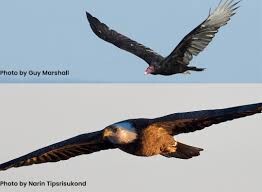
Bald eagles can also be identified by how they soar. They often move through the sky in large, sweeping circles, expending very little energy. Their wingbeat tends to be slow and deliberate.
Knowing where to look is not enough to guarantee bald eagle sightings. It also helps to understand their development patterns. Keep in mind that a bald eagle does not obtain its prototypical appearance (black body with white head and tail) until its fourth or fifth year of existence. Young bald eagles for the first year or two are mottled brown, and some head and tail whiteness evolves in the later juvenile stages. This chart highlights the development of bald eagles over time.
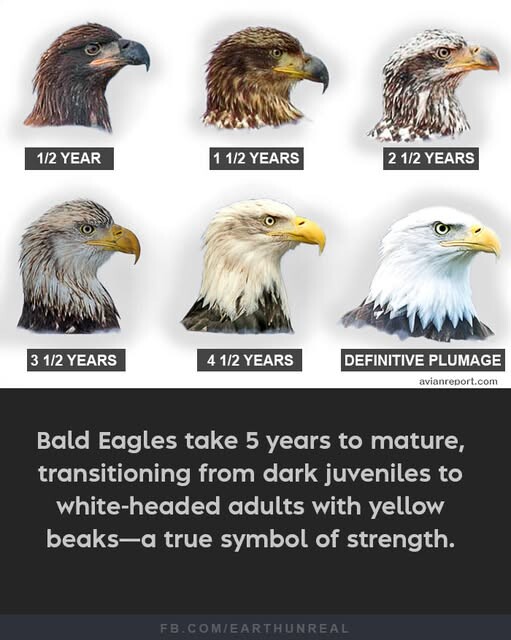
Why is this important? Because juvenile bald eagles, with their brown appearance, are often mistaken for hawks. If you see a large brown bird perched over or near water, examine it closely. Eagles are much larger than hawks, and the bill of a bald eagle is substantial and heavily hooked (and in adult bald eagles, yellow).
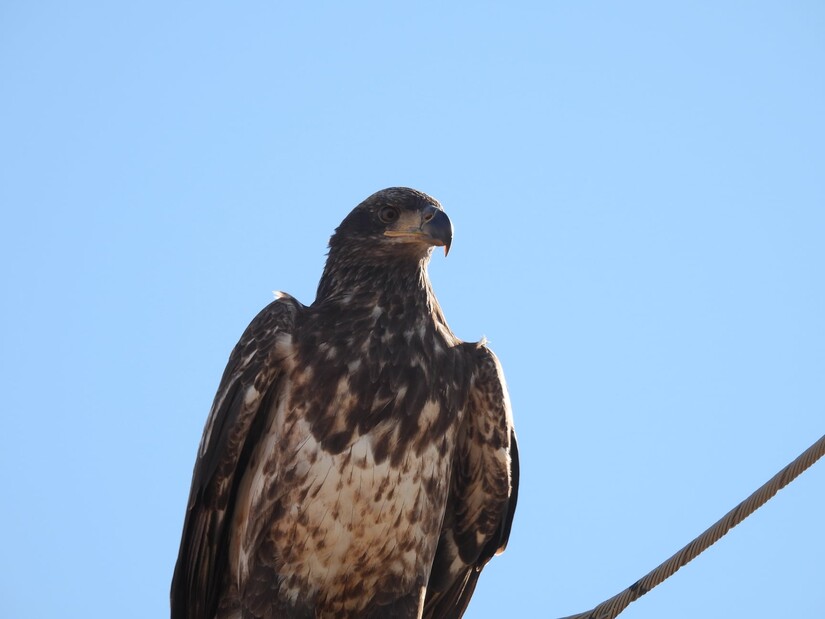
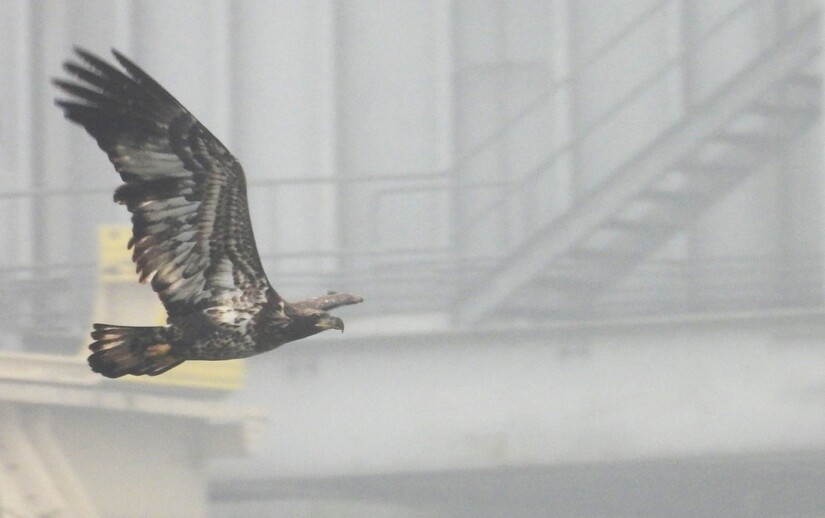
There are many juvenile bald eagles out and about. Eagles congregate in the fall at the Conowingo dam, just over the Pennsylvania border in Maryland. Two years ago I observed an estimated 400 bald eagles feeding below the dam on one day. They were feasting on shad that pass through the dam and get minced by the power turbines. My guess is that almost a third of the bald eagles I saw that day were juvenile and still in their brown phase. If you see a large brown bird perched over or near water, don’t ignore it. Here are two pictures of immature bald eagles still in their brown phase.
Eagles can also be identified by their call. You can sometimes hear them around lakes and waterways. They are chatty birds but often go unnoticed because their call is a series of high-pitched and weak-sounding cackles. Not at all commensurable with the size and majesty of the bird. I noticed that in television commercials, whenever a bald eagle is shown calling out (think truck commercials), they replace the eagle’s call with that of a red-tailed hawk which is more fierce-sounding. Here are several recordings of the bald eagle’s call:
https://www.allaboutbirds.org/guide/Bald_Eagle/sounds
Also, be sure to keep an eye peeled for eagles nests, which are often built on waterfront acreage or within a short flight of larger water bodies. In winter and early spring, when leaves are off trees, their nests are easily seen. Eagles’ nests are large and fairly unmistakable. The first picture below is an eagle perched near its nest, I took in Delaware. When you pull back, you get an idea of the nest’s colossal size.
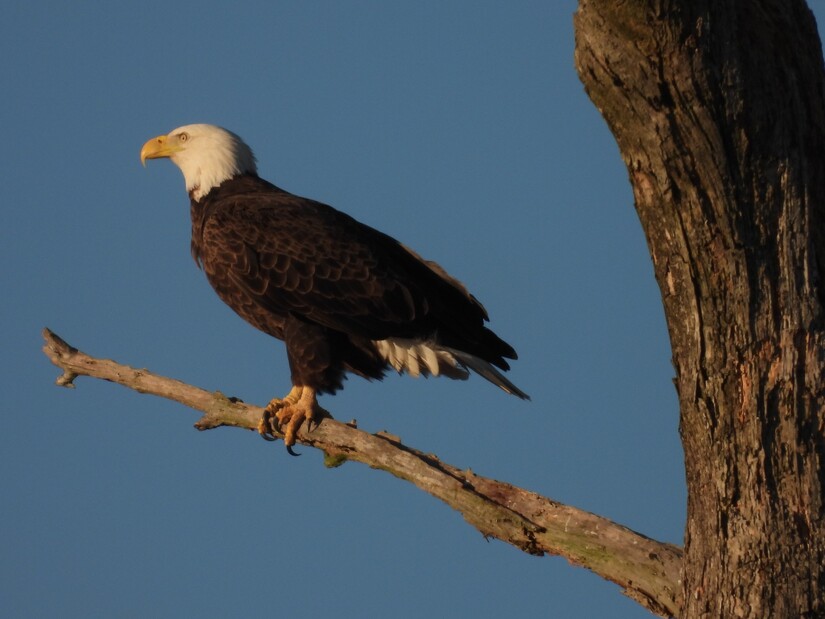
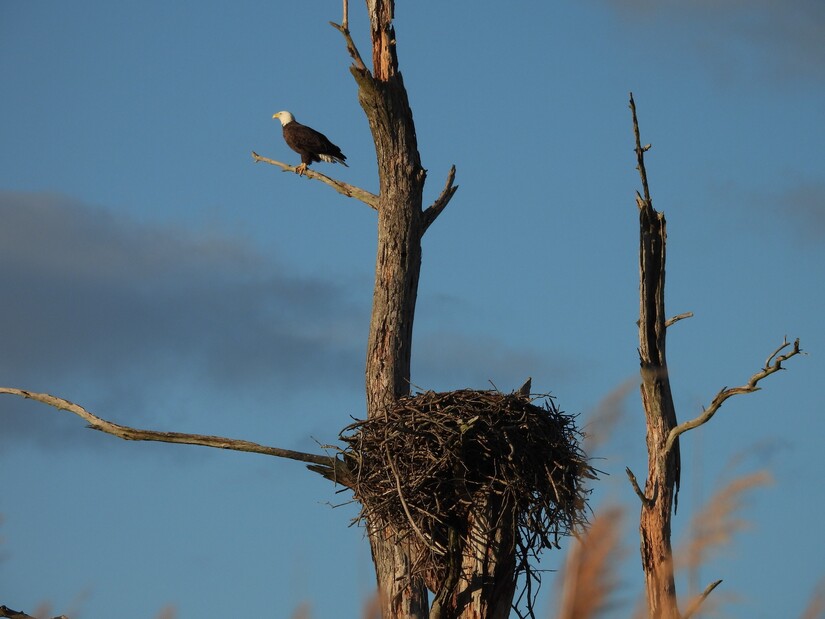
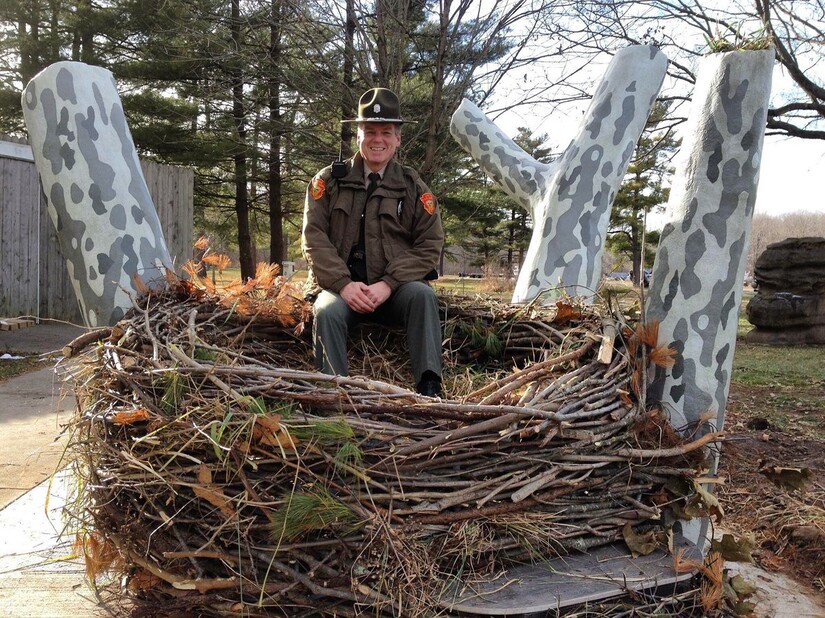
For perspective, here’s a shot I pulled from social media of a ranger sitting in a bald eagle’s nest. In general, nests are five- to six-feet wide and three or so feet deep. But they can be much larger. The most sizable bald eagle nest ever recorded measured 9.5 feet wide, 20 feet deep, and weighed almost 6,000 pounds.
In the mid-Atlantic region, bald eagles typically lay eggs from mid-February through late March, and the eggs hatch in about 35 days. If you are fortunate enough to find an active bald eagle nest, it’s fun to monitor them and observe eagle behavior. Male and female bald eagles take turns sitting on the eggs to incubate them. The female typically spends the most time on the eggs as it’s the male eagle’s primary duty to hunt and bring food back to the nest.
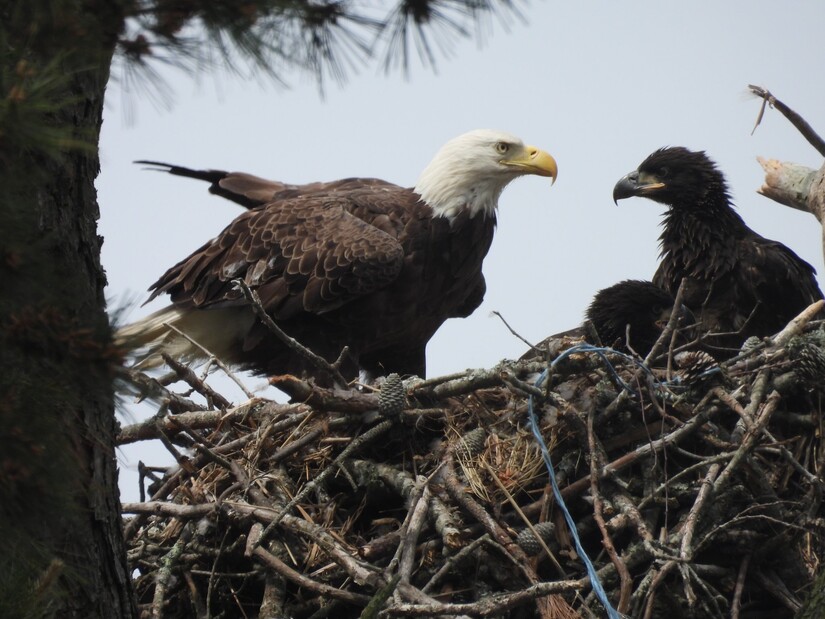
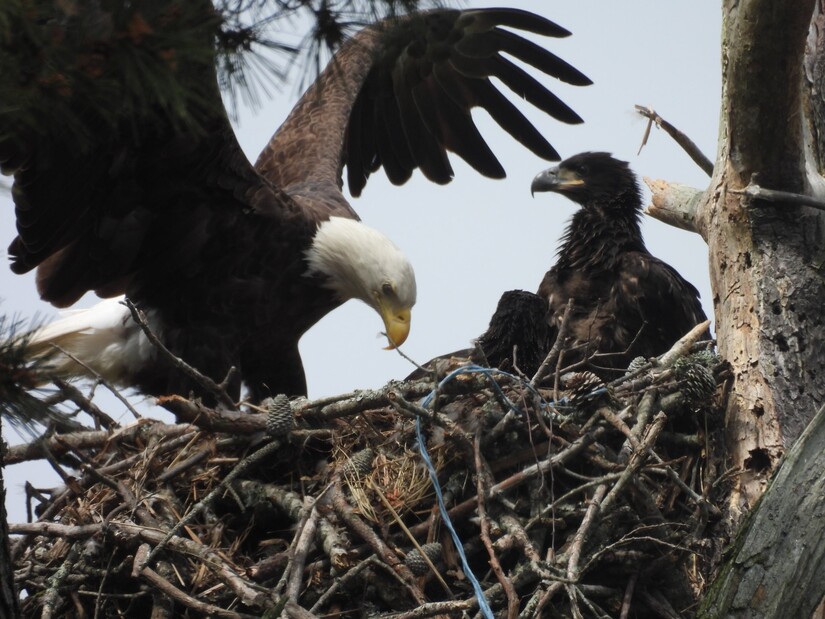
It’s also enjoyable to observe the newborn eagles in the nest. The two pictures below I took at the Edwin B. Forsythe National Wildlife Refuge, in New Jersey. They are of a mother eagle trying to teach a newborn how to fly. The mom would stare deeply into the eyes of the young one, and then flap her wings and lift herself off the nest a few feet before dropping back into the nest. She would then encourage the juvenile to try. She repeated this urging many times. On this particular day, the baby eagle spurned mom’s attempts.
If you are highly motivated to see a bald eagle in the Boyertown region, the best bet is to log on to the Ebird app, developed by the Cornell Lab of Ornithology. This is a free app that tracks where people are seeing birds all over the world. It will provide daily updates on where bald eagles are being seen in the Boyertown area.
* Mike Strzelecki is a freelance travel and outdoor writer, and 1981 graduate of Boyertown Area Senior High School. He writes from his house in Baltimore, Maryland. In his spare time, he joins his wife on adventures around the country observing and photographing birds.


Overcast, with a high of 68 and low of 49 degrees. Overcast in the morning, clear overnight.