53° and Cloudy
Image

Image from Facebook.



As spring unfolds and graduation approaches, a familiar ritual has returned for seniors at Boyertown Area Senior High School: the game known as “Senior Assassin.” Played by high school seniors across the country, the game blends strategy, stealth, and social interaction into what many students describe as a memorable sendoff to their final weeks of high school.
But while participants often see it as harmless fun, some adults in the Boyertown community—and beyond—view it with a more cautious eye, raising questions about safety, perception and the broader message behind the game.
At its core, Senior Assassin is a live-action elimination game. Participants pay an entry fee and are assigned a “target,” typically through an app that tracks progress. Using water guns, Nerf blasters or even silly string, players attempt to “eliminate” their assigned target while avoiding being eliminated themselves. Once a player is out, their assassin inherits their target. The last student standing wins the prize pool. (Not all schools plays for prizes or money; it varies with each student group determining local rules of play.)
The game is not affiliated with the school and is generally governed by student-created rules. These often include restrictions such as no eliminations on school grounds or during school hours. Still, gameplay can unfold in a wide range of settings—parking lots, neighborhoods, workplaces and public spaces—often at unexpected times.
“Lots of senior classes play it now,” said Brian, a Boyertown alumnus and educator. “All the contestants put in money… the goal is to try and squirt your target… last person alive wins the money.”
For many students, the appeal lies in the mix of competition and camaraderie. Tara, a parent, described how the game fosters unexpected connections: “They are having a blast! Working together, problem solving and meeting new peers that they may have never talked to.”
Others echo that sentiment. “It’s a fun time for all the seniors,” said Krissie, noting the popularity of videos shared online. Shanna added, “Everyone is having such a good time. They are all good sports when they lose.”
 Image from Washington Police Dept./internet.
The concept of seniors engaging in end-of-year antics is hardly new in Boyertown. For decades, graduating classes have marked the occasion with “senior pranks,” ranging from harmless jokes to more questionable stunts. One memorable prank involved reshaping shrubs near the football field to spell an inappropriate word instead of the school’s “BEARS” mascot.
In that context, some see Senior Assassin as a safer, more structured alternative—a kind of elaborate game of tag played with water guns instead of property damage.
“Oh no, kids being kids!!!” Matthew commented. “It’s all in fun… just make sure they aren’t being stupid.”
Others agree, emphasizing that similar games have existed for generations without serious negative consequences. “Absolutely harmless,” said Robert, while Lauren added, “My son played last year; it’s truly harmless.”
 Image from The Royal Banner/internet.
Despite its playful intent, the game has drawn concern from law enforcement and some community members. The New Hanover Township Police Department issued a public advisory, warning that participants’ behavior—such as hiding in bushes, wearing dark clothing or running through public spaces—can be misinterpreted as suspicious or even threatening.
Police also cited instances of risky behavior, including reckless driving and high-speed chases, as players attempt to track or evade targets.
“These actions can lead to dangerous situations,” the department noted, urging families to consider safer alternatives.
The concern is not purely hypothetical. In nearby Germantown, police responded to reports of what turned out to be students playing the game after they were mistaken for armed suspects. Nationally, unrelated senior pranks have also resulted in tragedy, underscoring how quickly things can go wrong when judgment lapses.
Some parents worry about the broader implications as well. “I don’t like this,” Holly said. “It’s kind of making light of school shootings… Do you really want your kid to be known as an assassin?”
Michael voiced a more immediate fear: “Somebody is legitimately going to get shot.”
These concerns highlight a central tension: even if the game itself is nonviolent, its appearance—especially in an era of heightened awareness around public safety—can create real risks.
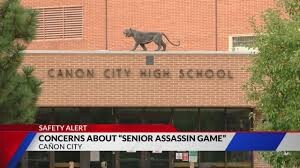 Image from Youtube.com
In an effort to prevent misunderstandings, Boyertown resident named Rita recently posted a public service announcement in the Facebook group “The Boyertown, PA Chit Chat,” urging residents not to panic if they see suspicious-looking behavior.
“If you see teenagers hiding behind cars, lurking in bushes, sprinting through parking lots… don’t panic,” she wrote. “They are most likely participating in an ongoing water elimination game.”
Her message struck a chord. More than 100 group members reacted positively, with many expressing amusement and support.
“Sounds like a good time,” Kevin commented. “This sounds amazing!” added Matt. Alyssa called it “hilarious,” while Michelle simply said, “sounds like fun!!”
Notably, none of the responses to Rita’s post were critical—a reflection of how widely accepted the game appears to be among many local adults.
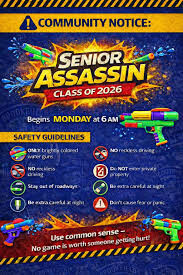 Image from Facebook.
The divide in perspectives ultimately comes down to risk tolerance and interpretation. For supporters, Senior Assassin represents a creative, social and largely harmless way for students to celebrate the end of an important chapter in their lives.
For critics, the game introduces unnecessary risks—both physical and perceptual—at a time when caution may be warranted.
Both sides, however, share a common goal: ensuring that students reach graduation safely.
As one parent put it, the key lies in balance—allowing teens to enjoy their final weeks of high school while remaining mindful of how their actions affect others.
In Boyertown, as in communities across the country, Senior Assassin continues to evolve as a modern tradition. Whether it is ultimately seen as a rite of passage or a risky trend may depend less on the game itself and more on how responsibly it is played.



Sunny, with a high of 67 and low of 51 degrees. Sunny for the morning, overcast for the afternoon and evening, cloudy overnight.