41° and Clear
Image



Let’s all raise a glass to Karla Trinkley.
The Boyertown glass artist is among a select group of pioneering women whose work is being recognized in a major new exhibition at the Corning Museum of Glass in Corning, New York. During its 75th anniversary year, the museum is presenting Tough Stuff: Women in the American Glass Studio, which opened May 16, 2026. The exhibition is the first-ever survey of work by women artists working in glass in the United States during the 1960s and 1970s, the years known as the American Studio Glass Movement.
During that period, glass became recognized as a serious artistic medium, although much of the acclaim went to a handful of male artists. The Corning Museum of Glass has chosen this anniversary year to present a more inclusive and historically accurate account by highlighting the ingenuity and influence of women who played a central, yet often overlooked, role in the movement.
A small and distinguished group of women who ventured into the male-dominated field were invited back to Corning this spring to share stories of their glassmaking careers, techniques, and artistic discoveries. Among the honorees was Trinkley, who made the four-hour trip with her husband, fellow artist Will Dexter.
For Dexter, co-founder with Trinkley of Boyertown's Taylor Backes studio, the opening was both a reunion and a celebration of artists whose contributions helped shape the contemporary glass world.
“We were met by a whole host of amazing women artists who were and are pioneers in glass,” Dexter said. “What a joy to see so many people again after a very long time.”
He described the exhibition as long overdue recognition for many influential artists and educators whose accomplishments have not always received the attention they deserved.
“There are so many important figures in the history of glassmaking who, for various reasons, have either been overlooked or eclipsed,” he said. “This show gives some recognition going all the way back. The people included are great artists and very important teachers.”
Each artist was asked to discuss her unique relationship with the medium and the challenges of developing her own studio practice and artistic voice. According to Tami Landis, Curator of Postwar and Contemporary Glass at the Corning Museum of Glass, the featured works “will showcase both a wide breadth of techniques and illuminate the broader social, cultural, artistic, and gender politics of the time that impacted female artists.”
Among that distinguished company, Trinkley stands out for both her technical innovations and her singular artistic vision.
According to Dexter, her inclusion in the exhibition is a testament to the groundbreaking work she produced throughout her career.
“Karla’s work is included in this show mostly because she was just so good,” he said. “She developed techniques and aesthetic vocabularies that had never been recognized before. She really broke a lot of ground technically and artistically.”
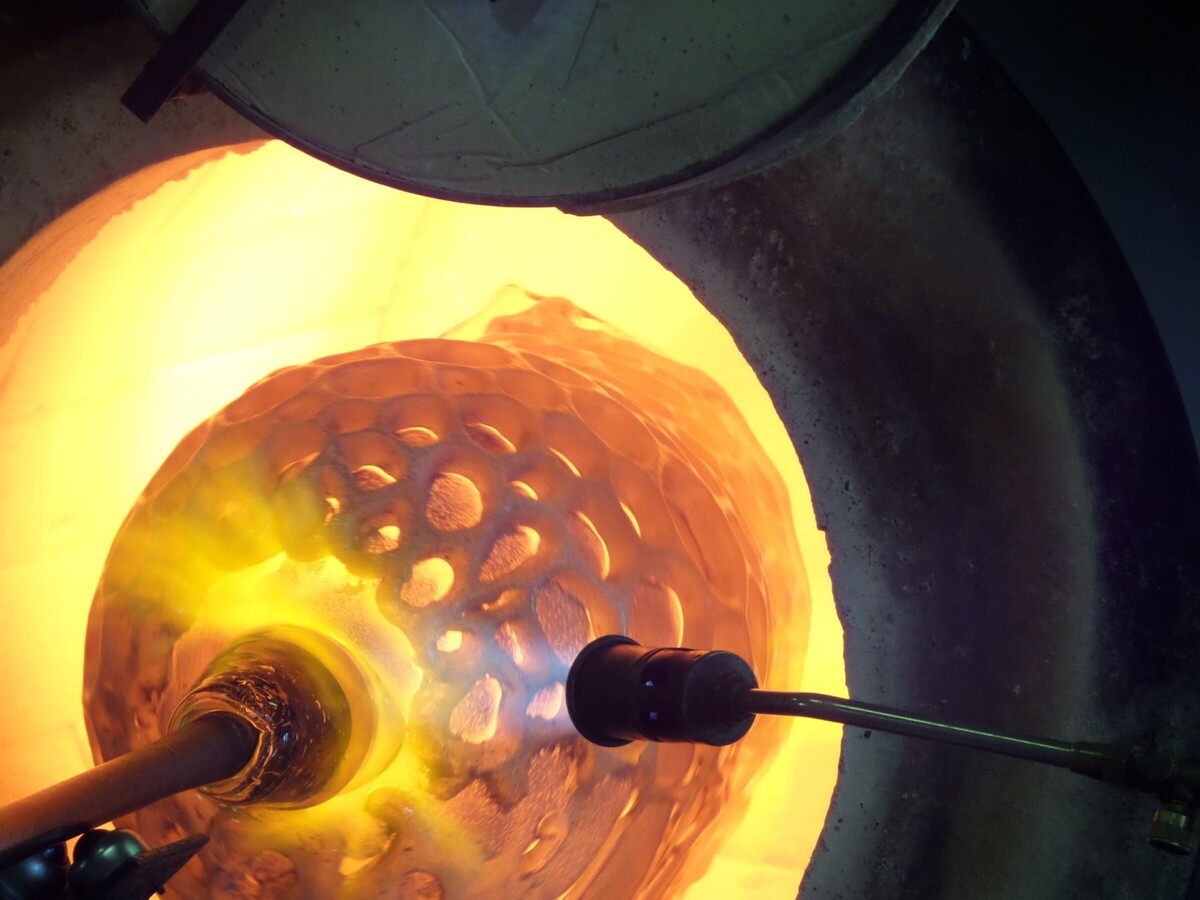
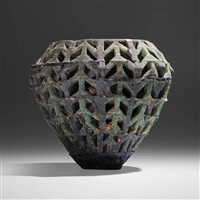
Trinkley’s work is unique and instantly recognizable. She has perfected the art of pâte de verre, meaning “glass paste” or “cast glass.” In this process, glass is coarsely ground, placed in a mold, and heated until the particles fuse. She first became interested in the technique while a student at the Tyler School of Art in Philadelphia. The method allowed her to create objects that appear weathered, deteriorating, ancient, and richly textured qualities that became hallmarks of her work.
Over decades of experimentation, Trinkley pushed the boundaries of the medium, transforming a traditional process into a vehicle for highly personal artistic expression. Her sculptures often evoke archaeological artifacts or relics from forgotten civilizations, inviting viewers to contemplate memory, time, and transformation.
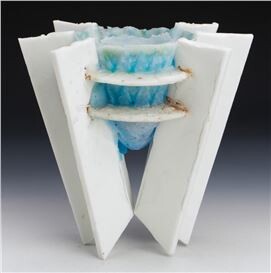
The originality of her work has earned widespread recognition. Trinkley has received numerous awards and honors throughout her career, both individually and in collaboration with Dexter. Her work can be found in prominent public and private collections, including the Smithsonian Institution in Washington, D.C., which describes her piece Rossette as resembling a delicate sugary confection despite being made entirely of glass.
The artistic partnership between Trinkley and Dexter has also left a lasting mark on the regional arts community. Together they founded Taylor Backes, the Boyertown glass studio known for its workshops, educational programs, and handcrafted glass art. Visitors to the studio can observe molds, tools, and various stages of Trinkley’s pâte de verre process, offering a rare glimpse into the experimentation and craftsmanship behind her creations.
The Corning Museum of Glass is a fitting venue for such recognition. Founded in 1951 by the Corning Glass Works, the museum has grown into one of the world's foremost centers for glass art and scholarship. Its collection includes more than 35,000 objects spanning 3,500 years of glassmaking history and representing virtually every form of glass art imaginable.
For Dexter, the exhibition is more than a celebration of individual artists. It is an opportunity to acknowledge the women whose creativity, perseverance, and innovation helped establish glass as a respected artistic medium.
And for Boyertown residents, it is a reminder that one of those pioneers has been working in their midst for decades.
As I was recently traveling to Buffalo for a family graduation, my route took me past the exit for Corning, bringing back memories of numerous high school field trips to the museum. I may not have fully appreciated those visits at the time—there may even have been an eye roll or two over yet another glass dolphin—but I have come to recognize the esteemed place Corning holds in the glass world.
Although I did not stop there on this trip, I plan to visit the museum soon. And when I do, I will proudly point out that one of the artists being celebrated in this landmark exhibition—innovative glass artist Karla Trinkley of Boyertown—is among the women whose creativity helped shape the history of American studio glass.
It has been over 40 years since a chemist job in Malvern lured Julie Cordingley away from her up state, New York home. She is a proud resident of Gilbertsville! Besides working in industry, at various times she has been a stay-at-home mom, and has just recently retired from Phoenixville Area School District as a (wait for it!) chemistry teacher. It has been a life-long dream to be a writer. She figures she can work at that craft while also traveling with her husband in their drivable RV… a retirement present to herself!
I am in awe of this glass artwork and plan to visit the Corning Museum exhibit soon! Thanks for making us aware of our local pioneers.



Sunny, with a high of 62 and low of 40 degrees. Sunny in the morning, clear in the afternoon and evening,