48° and Clear


Image
by Mike Strzelecki*
In birding parlance, a “Big Year” is a personal challenge where you try to observe and record as many bird species as you can in the United States in one calendar year. It was made famous in the 2011 comedy movie The Big Year, starring Steve Martin, Owen Wilson, and Jack Black (well worth a watch for its entertainment value, even if you are not a birder). Kelly and I are partaking in a Big Year this year. We have been travelling the country looking for unusual species and doing lots of day trips from our home in Maryland.
One aspect of the Big Year is that birders often “chase” rare birds that are either uncommon, or show up in places that they are rarely seen. “Chasing” clearly does not mean running after birds. Birders scan rare bird alerts for unusual species seen on any particular day. If an interesting species is located within driving distance, birders may “chase” reports of the birds, driving to see if they can locate the bird. Chasing rare birds is a highlight for some birders.
Since we are in a Big Year, we sometimes join the chasers. Here are three rare bird sightings that have highlighted our Big Year so far.
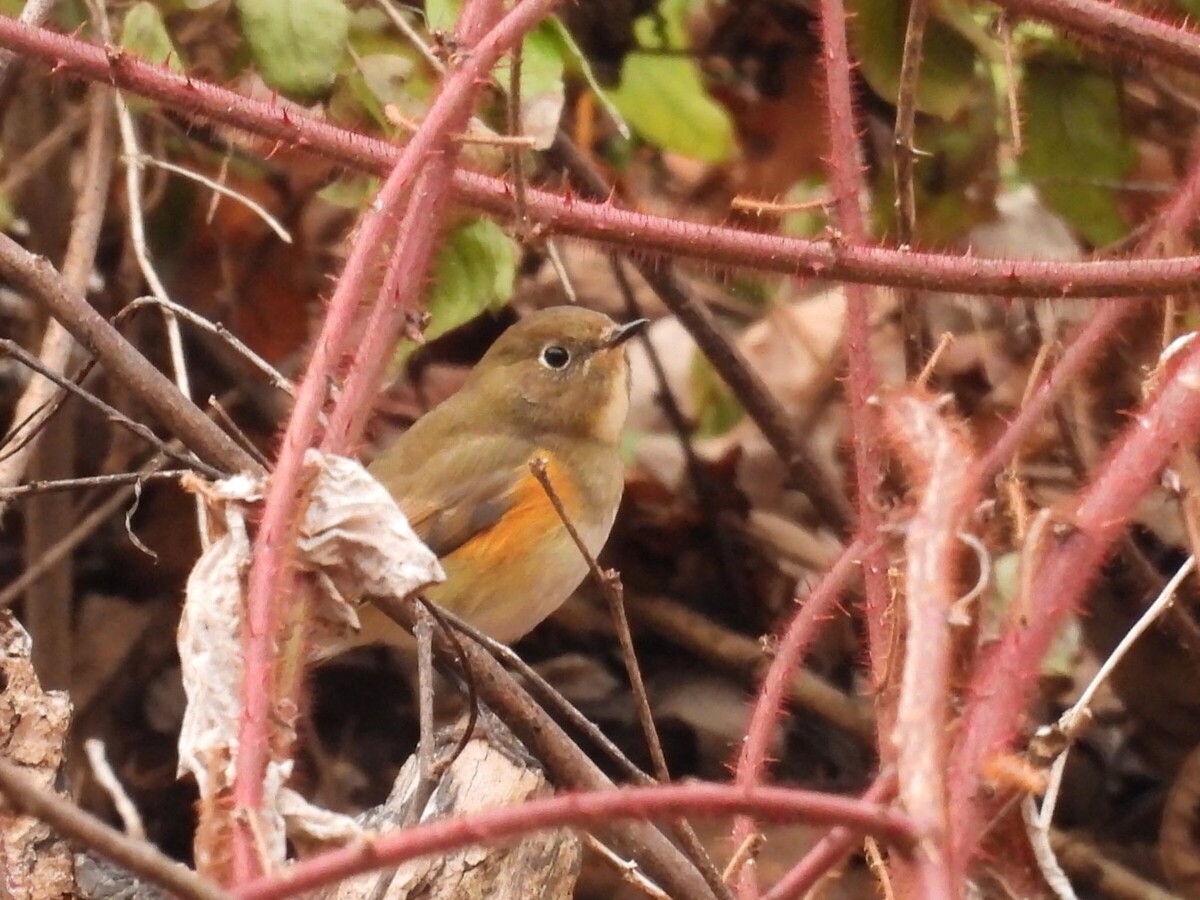
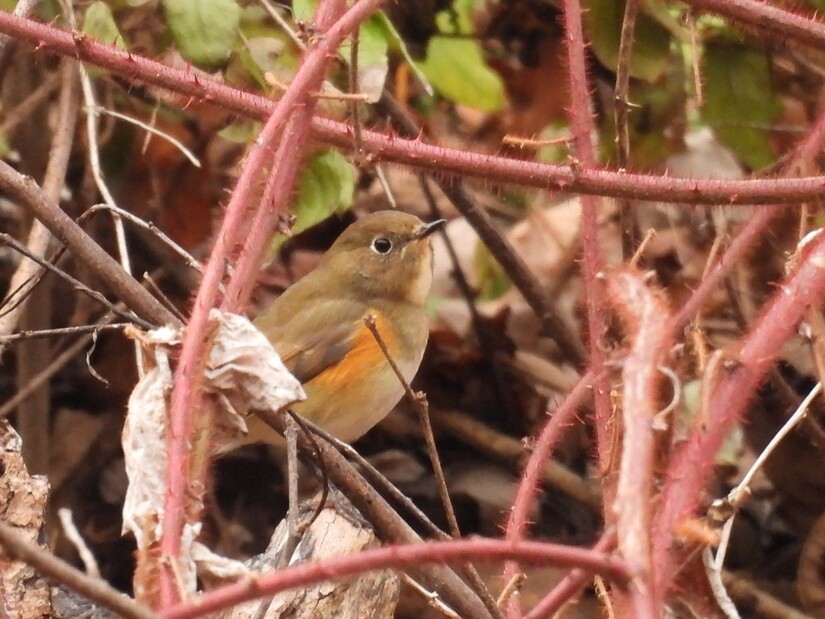
In early January, the east coast birding world was abuzz with a sighting of a red-flanked bluetail on the banks of the Potomac River, in Great Falls, Virginia. It was only the second recorded sighting of one on the east coast. The red-flanked bluetail lives in Finland and Siberia, and annually migrates to Laos, Myanmar, or Thailand to over-winter.
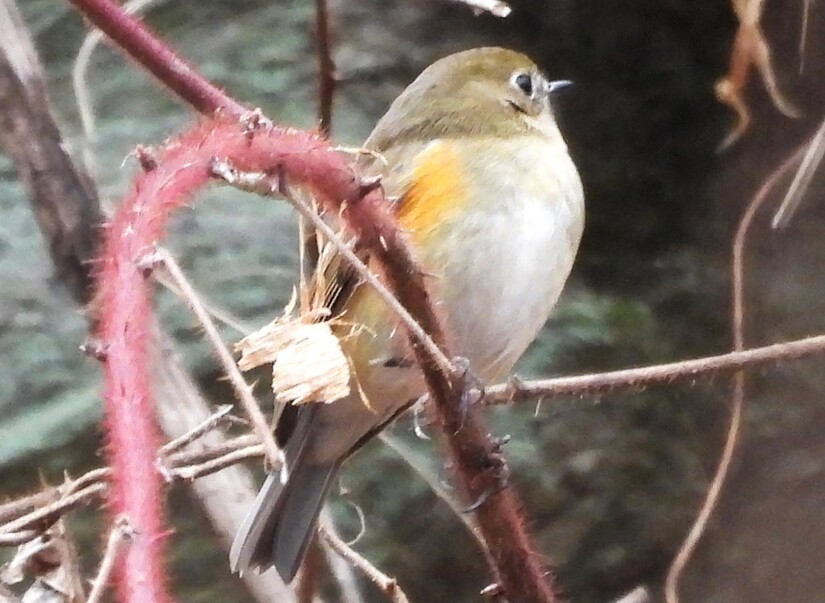
No one knows how this tiny songbird ended up on the banks of the Potomac River, so far out of its home range. This particular bird is probably from Finland. During its fall migration, it likely became disoriented and flew southwest instead of southeast, crossing the Atlantic Ocean, before coming to rest in a thatch of scrub brush in Virginia.
As part of our Big Year, we traveled to Virginia to observe the bluetail. The beauty of finding rare birds is that they are often easy to spot; you just follow the bird-nerd crowds. We hiked to where we read the bird was showing itself, and no less than two dozen cameras and spotting scopes were already set up awaiting the bird’s appearance. We slipped into the crowd and were thrilled to have scores of eyes scanning the habitat for its appearance.
On that day, we were fortunate to see the bluetail. It would appear readily and briefly show off to the photographers, bouncing around the low shrubs and popping up occasionally onto a tree branch for a lengthier pose. It would then disappear into the thick brush for anywhere between 30 and 60 minutes before appearing again. Patience is one of the birder’s most vital weapons.
We observed the bluetail eating berries, and were thrilled that it probably would have enough food to survive the winter in its strange land. One of the sad truths about birding is that, say, for this situation, no one knows if this tiny fellow made its way back to Finland, or if it strayed farther off course. Kelly and I both agree that it will probably be the only time in our life that we see a red-flanked bluetail.
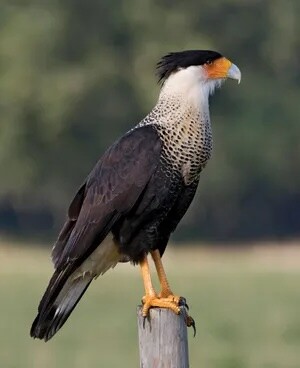
Our second rarity appeared during a birding swing through southern Arizona. We added about 120 new bird species to our Big Year list on that excursion. But the winner was a bird called the crested caracara. This large raptor - almost eagle-like - is a denizen of Mexico and Central America, all the way through to the southern tip of South America. But it rarely crosses the border into the United States, except an occasional visit to Arizona or Florida. This is a picture of a crested caracara from the website Brittanica.
On that day, Kelly and I were watching another uncommon species - burrowing owls - on a remote tract of land outside the tiny town of Marana. The local water district sets aside a plot of land specifically for the burrowing owls to live. They provide pre-dug burrows and perching poles. We saw no less than ten burrowing owls sweeping the fields for rodents or basking outside their burrows.
Ebird is an international birding database where everyday birders post what species they saw at a particular place. We noticed on ebird that someone listed seeing a crested caracara near this field the previous day. We spent some time scanning the horizons for wheeling caracaras to no avail. Driving down a dirt road on our way home, a large black bird with flagrant white wing bars flashed in front of our car, flying quickly. We pulled over and followed it with binoculars across the sky. It landed in a fallow farm field beside our car, at which point we identified it as the crested caracara. Its giveaway was its brilliant orange bill.
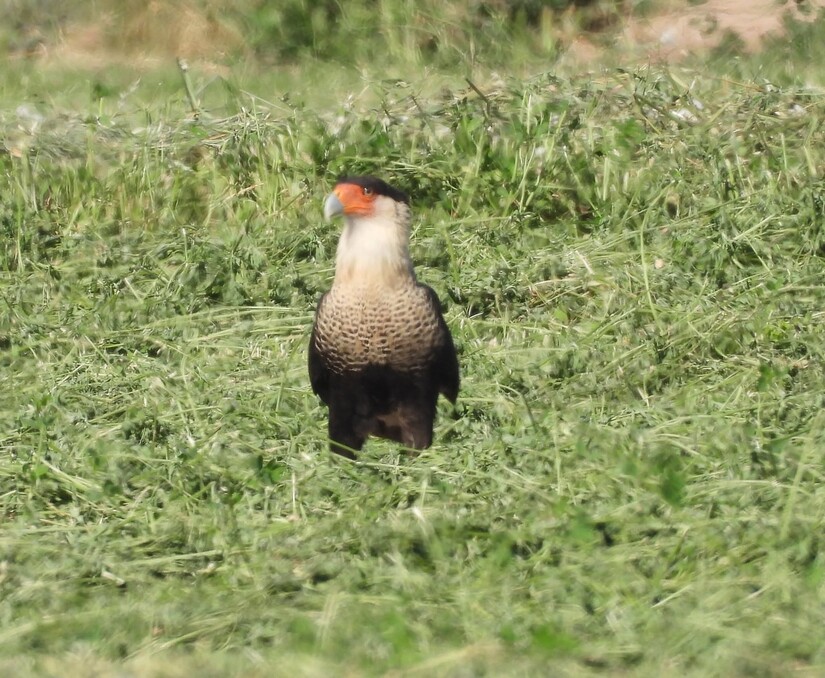
The caracara seemed to be in resting mode for about 30 minutes, and then started bouncing around the field in search of dinner. A second appeared in the distance. They moved across the field together, seeking prey, disappearing in tall grass. They never reappeared. The crested caracara looks like an eagle, but is a member of the falcon family. It is thought to be a sacred bird of the ancient Aztecs. Seeing one in our country was the highlight of our southwest birding expedition.
As for our third rare bird sighting…sometimes birding jokes write themselves. Last week, Kelly and I visited an obscure park on the banks of the Chesapeake Bay, in Maryland, searching for brown boobies. Brown boobies are tropical seabirds that are common in the Caribbean islands. They rarely venture northward of southern Florida. However, for the past three years, a handful of brown boobies have been seen in the northern reaches of the Chesapeake Bay, near Baltimore. Here is a picture of a brown booby from the website Brittanica.
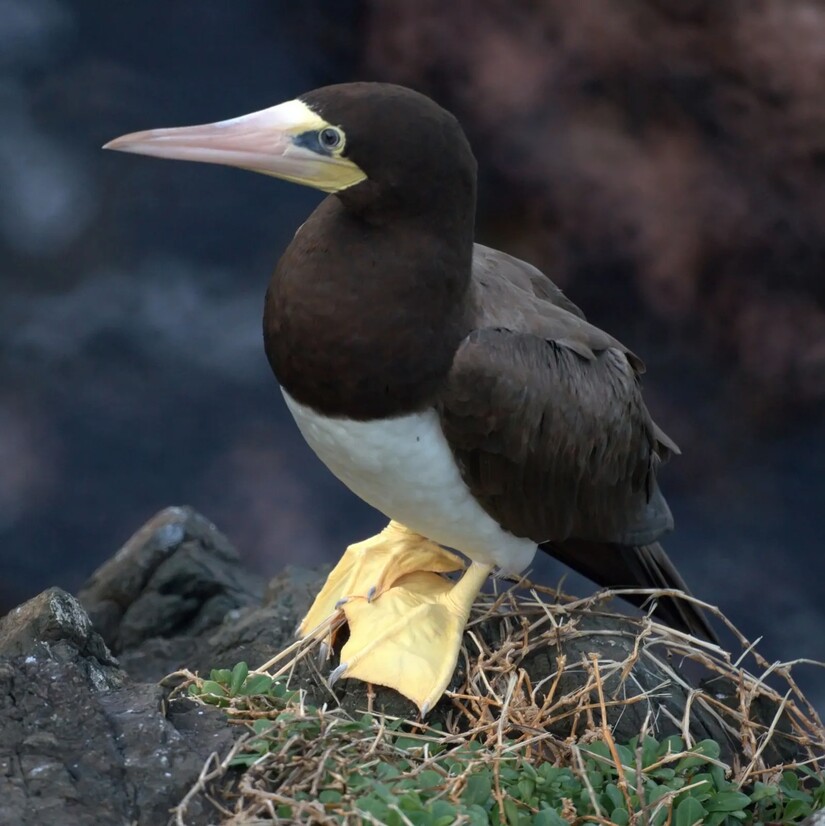
No one knows specifically what draws them so far northward, but warming ocean temperatures and changing weather patterns could be at least part of the cause. Or maybe a few were pushed northward by a strong hurricane or weather event and found the waters of the Chesapeake Bay flush with feed fish. They are likely the same brown boobies returning to the area every summer.
Brown boobies spend their time in big water. They can be seen flying low over the waves or resting on such nautical items as buoys and channel markers. The Chesapeake Bay is massive, and usually to see these brown boobies, you need to rent a boat. We had read where the boobies were being seen regularly perched on large channel buoys within eyesight of Fort Howard State Park, not far from downtown Baltimore.
We scanned the many buoys with our spotting scope. The buoys were overrun with double-crested cormorants, who use them as waystations for feeding expeditions. It took hours, but we finally noticed that, on one of the buoys, one of the cormorants seemed to be standing more erect than the others. When it turned towards us, we noticed a white belly. When it strode to the edge of the buoy, it flashed massive webbed feet. These are the field marks of the brown booby. It became the 404th bird species on our Big Year list.
While chasing rare birds is fun, it more often than not ends up in disappointment. We have chased other rare species with little luck. A European shorebird called a ruff showed up in a Maryland marsh a few days ago and was posing for birders for a few days. Except, of course, the day that we drove four hours to see it. Swing and a miss. A western loon species called a yellow-billed loon showed up this spring near Solomon’s Island, Maryland, spending days just off a public pier. On the day we made the drive there, the loon opted to spend the day elsewhere. Like the ruff, the loon also returned the day after we tried to see it. But I have always said that birding is more about the process of birding than seeing birds. And spending an entire day on a pier, in a beautiful location, was wonderful, regardless of whether the loon was ever seen.
* Mike Strzelecki is a freelance travel and outdoor writer, and 1981 graduate of Boyertown Area Senior High School. He writes from his house in Baltimore, Maryland. In his spare time, he joins his wife on adventures around the country observing and photographing birds.

Not badly done for a former journalism teacher and school newspaper advisor. Thank G_d there was no need for collating or paste-ups.

Sunny, with a high of 62 and low of 39 degrees. Smoky haze during the morning, sunny in the afternoon, clear for the evening, smoky haze overnight.



Interesting, Bob. Thanks, but I wonder how that related to people’s probably very strong religiously beliefs back then —-not the fact that there’s evil, but that there’s some kind of symbol that can stop it; that sounds more like witchcraft.
Religion and superstition have always co-existed. For an example, see any devout Christian in the area who also has a "lucky" Eagles jersey, or believes that wearing their baseball cap inside out will help a rally keep going...