Image
by Craig Bennett*
When I was in college, I signed up for a course in ethics. The final paper we were to submit, which counted for a significant percentage of our grade, was a lengthy essay delineating our personal code of ethics. That was something I hadn’t thought about to any great extent. Most people, I believed, have a code of ethics; but it’s so foundational to their overall behavior that they have little occasion to reflect upon it. To one extent or another, our personal code of ethics informs all kinds of decisions we make from the time we get up in the morning to the time we go to bed at night; and a very large proportion of those decisions are grounded in the cultural mores of the society in which we live. As a general rule, we think about why we decide to do what we do no more than we think about why we put on clothes in the morning, show up at our job on time, or pay the utility bills when they arrive. But once I started thinking about it seriously, it began to look surprisingly simple.
I could easily remember that one of the things with which my parents always challenged me when they were attempting to correct my behavior was, “How would you like it if somebody else did that to you?” From the time I was old enough to understand anything at all, I was taught that I shouldn’t do things to other people that I wouldn’t want them to do to me. And whenever I did something wrong that may not have directly affected any particular individual, I would hear, “What if everybody did that?”
This, of course, boiled down to two very basic principles. First, don’t do anything to someone else that you wouldn’t want him or her to do to you. Second, if it’s all right for you to do something, then it’s all right for everyone to do it; but if it’s not all right for everyone to do it, then it’s not all right for you to do it. Taken together, these boil down to one simple, universal axiom: the Golden Rule.
By the time I reached adolescence, I had never thought very seriously about all the different situations in life to which these concepts might be applied. They were just very general principles of behavior on which I eventually based just about all of my decisions, particularly those that were likely to affect other people. But I did so subconsciously, without much awareness of why I was deciding as I did. Probably something that really made them stick was observing the behavior of people around me and noticing how it affected me. Then the undeniable truth of those principles became readily apparent. But how could I make these two simple principles, let alone a single Golden Rule, into a lengthy essay. What were the criteria that defined them?
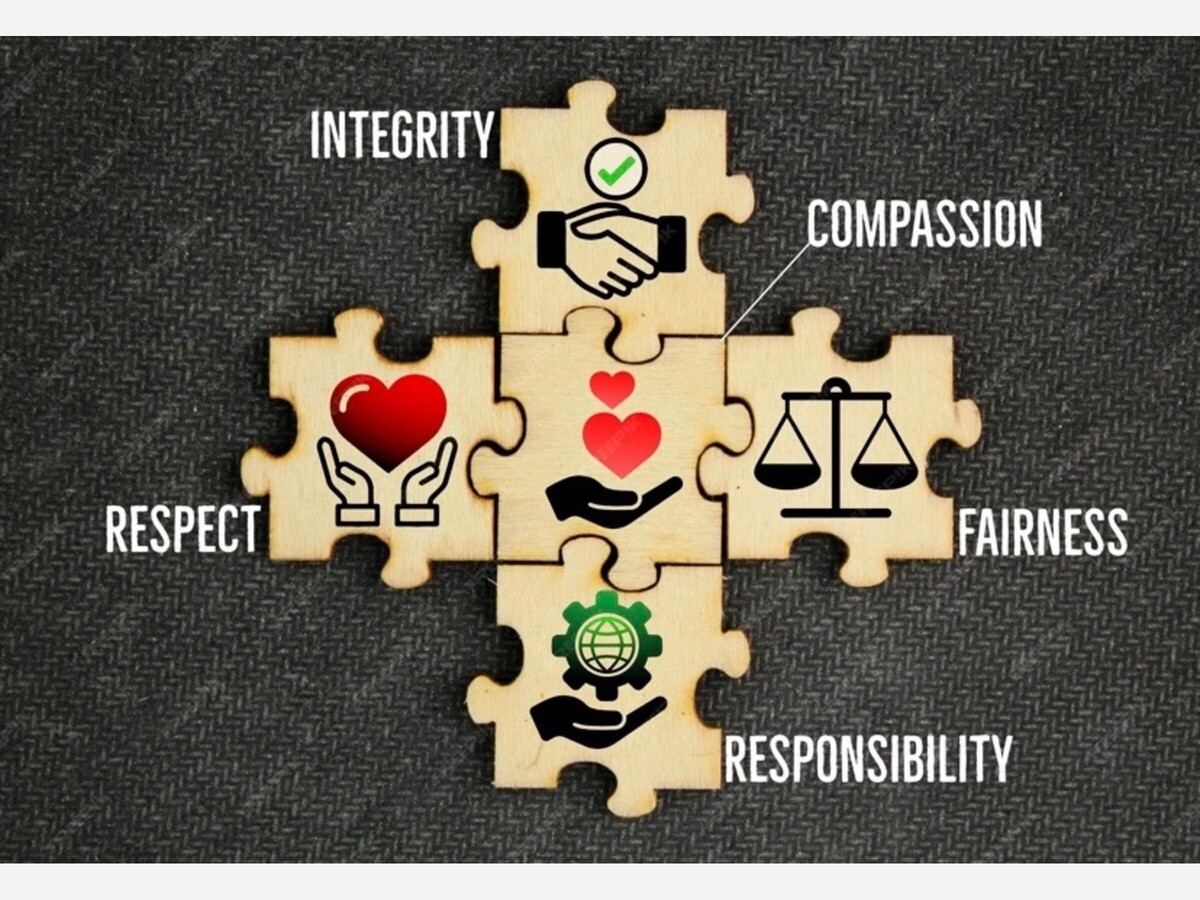
The first and most obvious criterion that came to mind was honesty. No one I ever knew of wanted to be lied to or cheated. Consequently, no one should feel free to lie to or cheat someone else. Another criterion that I realized would tell me whether I was being dealt with according to the Golden Rule was kindness. No one I ever knew of wanted to be treated unkindly, either. Granted, each of these concepts could be subsumed under the other; but then they both could be subsumed under the Golden Rule from which they seemed to be derived. So how far could I break down two simple concepts like honesty and kindness?
Try as I did, aside from a plethora of individual examples of each, I couldn’t. And that made me a little nervous at first. Yet, the more I thought about it, the more firmly I was convinced that it really was that simple; that a single overarching principle, reducible to no more than two closely related concepts (dishonesty, after all, is surely an unkind act) not only could be, but should be the basis for virtually all human interaction. What do people ever have to do with one another that, if carried out according to that one simple principle, would not result in peace, harmony, and mutual benefit?
To my everlasting gratitude and relief, I somehow managed to turn no more than this into an acceptable paper. But I’d often found myself thinking about the whole question ever since.
Eventually, I realized that I needed to add a couple of additional values to the pair I’d come up with for that college essay. They were compassion and forgiveness. But they came later. Much later, in fact. They’d actually been influencing my life and behavior right along, but many years passed before I had occasion to examine my system of moral and ethical values to the extent that I had for that college essay. I had grown in many ways during that time and had become considerably more self-aware than I had been when I was in college.
I’m old now, and evolving a system of moral and ethical values is behind me. But I find myself thinking about honesty, kindness, compassion, and forgiveness a good deal more than I have for quite a while. They seem, at this point, to have become largely passé. It makes me wonder what sort of moral and ethical system people believe in these days. What sort of morals and ethics do you believe in? Are they all for you, or are they mostly for other people to follow? And how congruent are what you think you believe in and what you actually do? Think about it.
* Craig H. Bennett, author of Nights on the Mountain and More Things in Heaven and Earth, available at amazon.com, barnesandnoble.com, and most book stores



Sunny, with a high of 63 and low of 48 degrees. Sunny in the morning, cloudy in the afternoon and evening, clear overnight.


Not badly done for a former journalism teacher and school newspaper advisor. Thank G_d there was no need for collating or paste-ups.



Interesting, Bob. Thanks, but I wonder how that related to people’s probably very strong religiously beliefs back then —-not the fact that there’s evil, but that there’s some kind of symbol that can stop it; that sounds more like witchcraft.
Religion and superstition have always co-existed. For an example, see any devout Christian in the area who also has a "lucky" Eagles jersey, or believes that wearing their baseball cap inside out will help a rally keep going...