Image
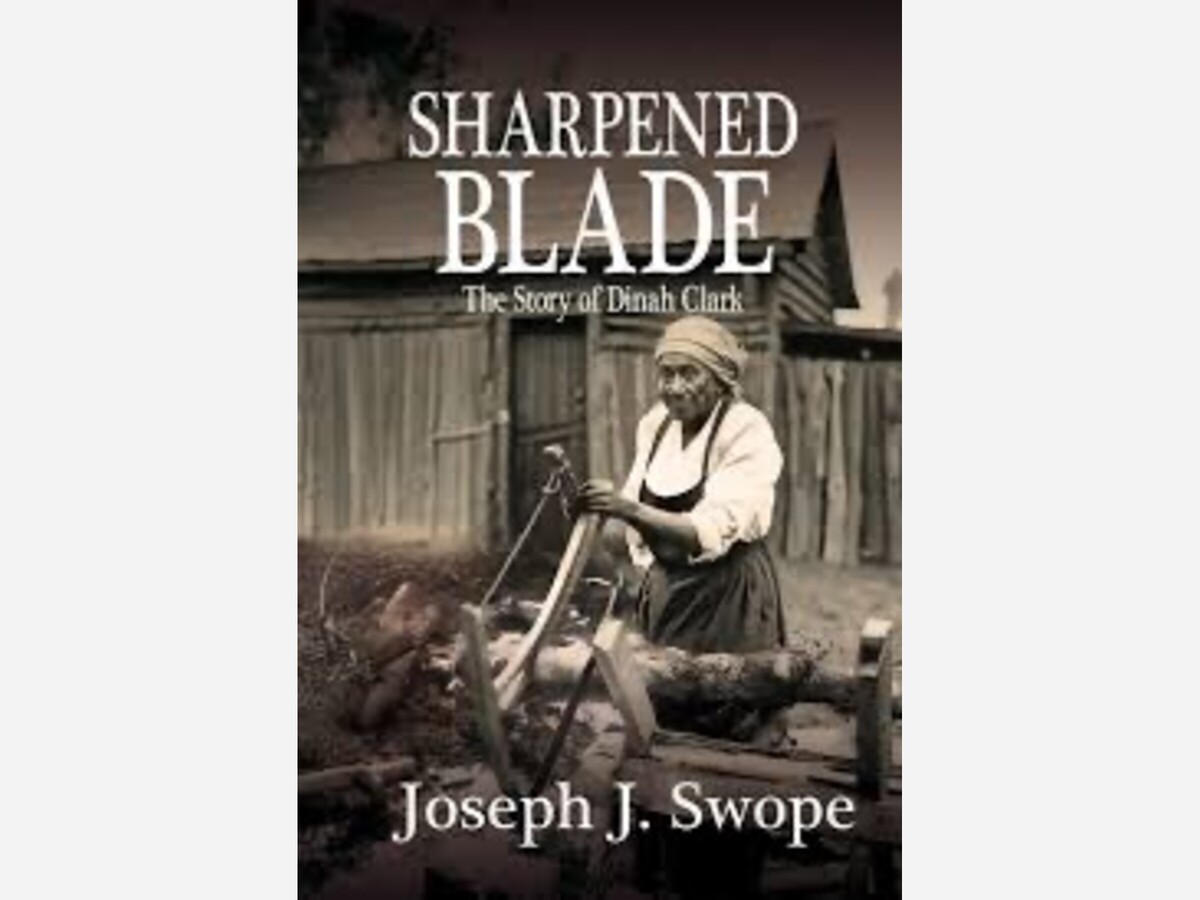



As communities across the nation observe Black History Month, Reading-area author Joseph J. Swope is shining a light on one of Reading’s most remarkable yet often overlooked people. His new historical novel, Sharpened Blade, The Story of Dinah Clark, recounts the life of Dinah Clark — a woman born into indentured servitude who later earned her freedom and became one of Reading’s best-known African American citizens in the 19th century.
Born Dinah Bell in 1794 on a Bern Township farm — land that turns out to have a personal connection for Swope — Clark’s early life was marked by hardship. Sold multiple times before reaching adulthood, she ultimately secured her freedom at age 21. She married William Clark and later moved to Reading, where she raised 11 children, four of whom survived to adulthood.
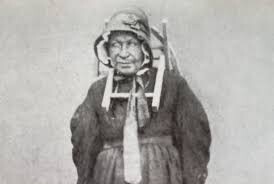 Dinah Clark, photo from Pinterest.
Clark became an itinerant sawyer, traveling from home to home cutting wood and sharing news across the growing city. In doing so, she not only supported her family but also became a familiar and respected presence in the community. She helped found Bethel A.M.E. Church on North 10th Street in Reading and offered refuge and comfort to escaped and freed slaves before and after the Civil War.
Swope’s connection to Clark’s story is personal. In 2021, while researching Clark’s life, a Reading Eagle reporter discovered Clark had been born on the same farm where Swope himself grew up — a property he previously highlighted in his earlier work, Pleasant Valley Lost. That coincidence prompted him to explore Clark’s life more deeply.
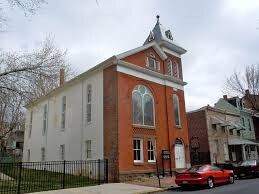 Original Bethel AME Church in downtown Reading, PA.
Swope shares an excerpt from Sharpened Blade, for Black History Month:
“The minister stood in the front of the small building the African American community used as a church. The young woman knelt down and placed her head above the font.
‘I baptize you in the name of the Father, the Son, and the Holy Ghost,’ the minister recited solemnly as he doused the woman with more than a good amount of blessed water. He wanted to ensure his new parishioner would not be short-changed.
‘Praise Jesus!’ the congregation shouted joyfully. Another member of the church provided Dinah a small towel to dry her head as she stood up and smiled at her fellow parishioners.
By Dinah’s own account, she joined the Bethel African Methodist Episcopal Church in Reading while living on the Adam farm. How often she attended services at the church is unknown. The fledgling place of worship stood a good ten miles away or more, a long one-way trip even in a horse and carriage, a luxury William and Dinah could hardly afford.
How the Clarks made the trip and how often remains unclear. Did they pool together with other African Americans and find transportation as a group? Perhaps. Maybe the Adam family proved benevolent and offered them a ride to church as they went about their own business in town. Unlikely at the time, admittedly, but possible. But Dinah held onto her faith in God throughout her life, and knowing her dogged perseverance, attended services as often as possible. William, no doubt, had no choice but to tag along.
‘Are you ready to leave for church?’ Dinah called to her husband on another day of worship. ‘The carriage is about to leave.’
‘Is it Sunday again?’ William responded. ‘I could have sworn it was Sunday just the other day.’
‘Now don’t you sass me,’ Dinah said with a smile. ‘If anyone needs a good church service, it’s you. I’ve heard how you cuss when something doesn’t go your way. You need to ask the Lord for forgiveness.’
At this point, William surrendered the point. ‘I’m coming,’ he said. ‘Just let me get my hat.’”
Swope explains, “Dinah maintained her religious zeal throughout her life, and she and her husband helped build the original Bethel A.M.E. Church on North 10th Street [in Reading]." He continues, “This excerpt recounts her baptism and her dedication to attend services despite long odds. It also shows a little bit of the relationship between her and her husband, William.”
Swope’s fiction reflects the complexities of everyday life, blending meticulous research with emotionally grounded storytelling. He breathes life into his characters. His ties to the region lend authenticity to the landscapes and communities he portrays, ensuring that figures like Dinah Clark are not only remembered, but actually reimagined.
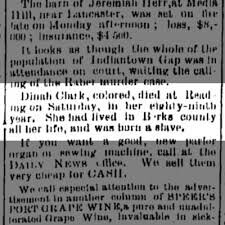 Obituary for Dinah Clark from Newspapers.com
For Black History Month, Sharpened Blade, The Story of Dinah Clark, offers readers an opportunity to rediscover a local woman whose resilience, faith, and enterprise helped shape Reading’s early African American community.
The book is available for purchase on Amazon at:
https://www.amazon.com/Sharpened-Blade-Story-Dinah-Clark/dp/1685137075/
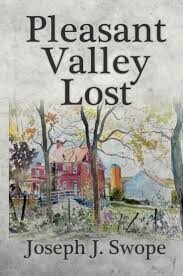 This earlier book by Joseph J. Swope focuses on the farm that he and Dinah Clark have in common.

Overcast, with a high of 69 and low of 51 degrees. Overcast for the morning,