

Image
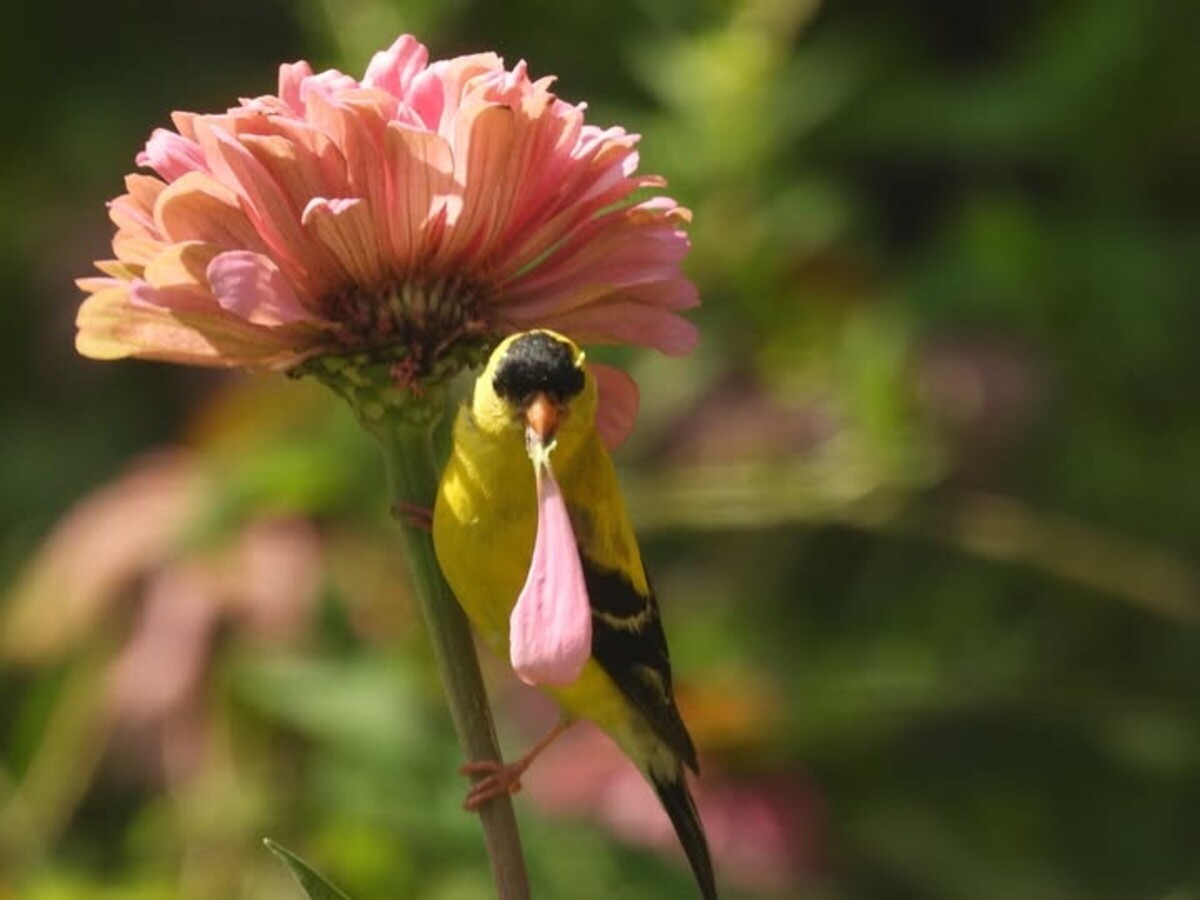
by Mike Strzelecki*
If you see a yellow bird in your backyard in the Boyertown area, it’s probably an American goldfinch. Goldfinch are prolific and well-habituated; they readily come to feeders and gardens. They are striking yellow with black wings and look like they are wearing bad black toupees. They are frequently both seen and heard.
However, there are other yellow birds found throughout the Boyertown region. These are birds that pass through the area in April and May, as part of their spring migration northward. A few will stay and breed in the area, but most will continue on to breed in the northeast or Canada. These migratory birds are tiny and often go unnoticed. They may skulk around woodpiles in the forest or hide in dense tree canopy. But they are around. And someone with a keen eye, a nice pair of binoculars, and perhaps the Merlin bird sound app, can possibly find them.
Here are 12 yellow birds that can be seen in the Boyertown area during the spring migration that are not goldfinches..
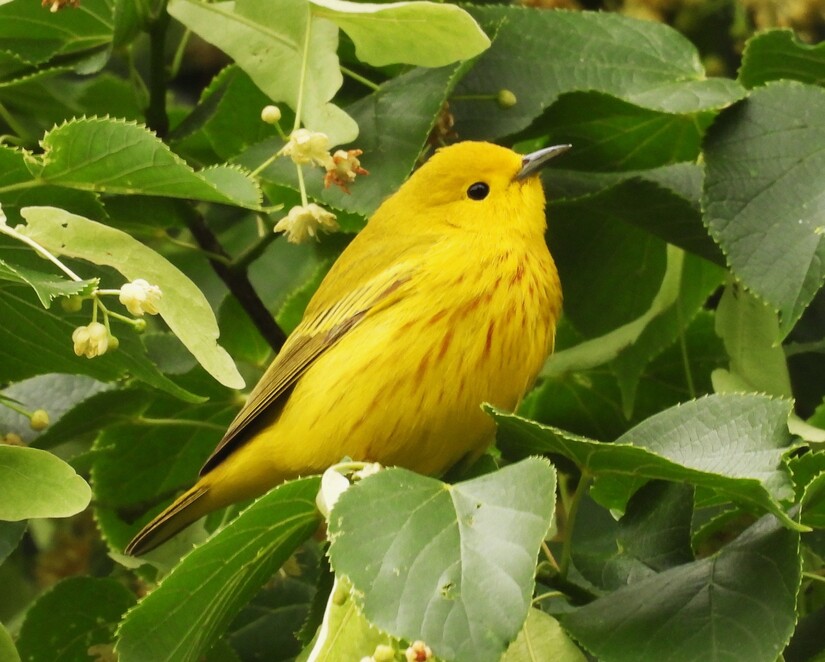
The most common yellow migratory bird is probably the northern yellow warbler. Both the males and females are solid yellow, although the males have crimson streaks down their chests. These are chatty birds. We live in a Baltimore suburb and frequently see and hear them moving through our neighborhood. They are very obliging to photographers,often staking out high points in trees or shrubs to sing.
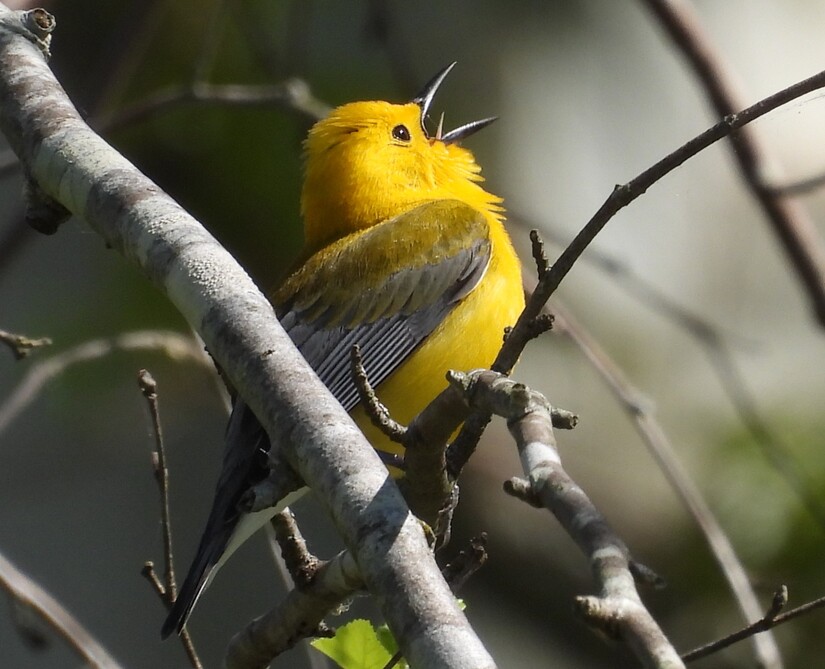
Protonotary warblers are known in the birding world as swamp canaries, as they have the same shiny golden sheen as a canary, but tend to breed and spend summers in marshy areas. We sometimes hear them in our backyard as they migrate through the area. If you happen to be hiking through a marshy area in spring, keep your eyes peeled as they nest low to the ground in bird boxes or holes in tree stumps.
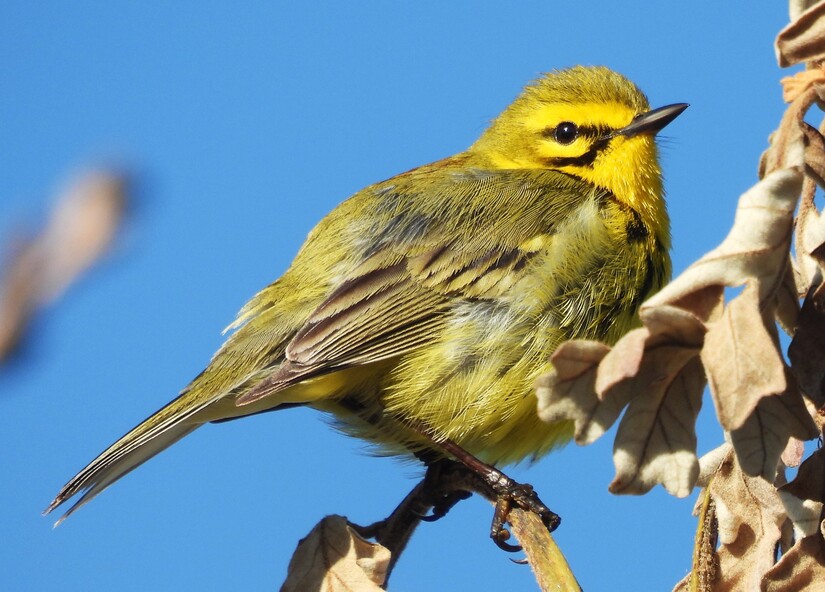
Prairie warblers also breed in this region. They tend to like sweeping fields of tall grasses that have shrubs and small trees sticking out to perch on - like old farm fields that are being reclaimed by nature. They are easily identifiable by their unusual facial pattern featuring a pair of stripes across the face. They are often heard and not seen, but once in a while one will pop up on a shrub for a performance.
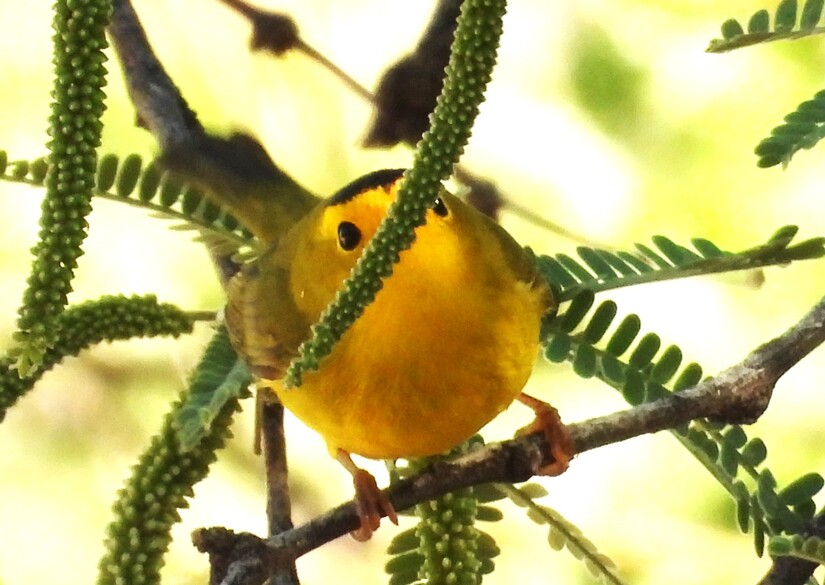
Wilson’s warblers are a treat to see. They will sometimes come down low and bounce around shrubs and short trees. Its clear field mark for identification of males is the deep black hat (female’s have the same hat, but only in a much lighter black). While not necessarily considered rare, they are infrequently seen.
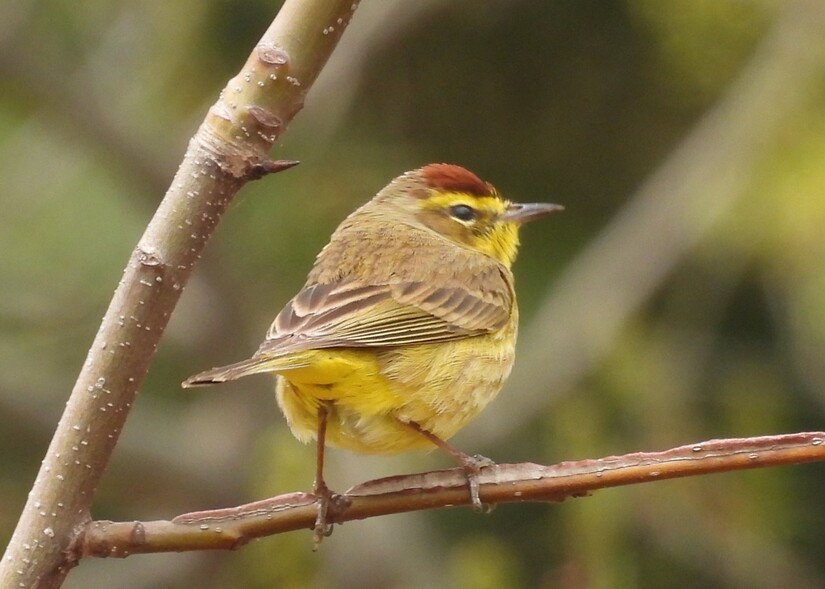
Palm warblers prefer rust-colored hats. Palms are one of the first warblers though the area each spring. We begin seeing them in early April. I tend to see them lower in trees or even bouncing on the ground looking for seeds and bugs. Palms can appear brownish, like sparrows, but the yellow tint with the unusual rust cap is the clear field mark.
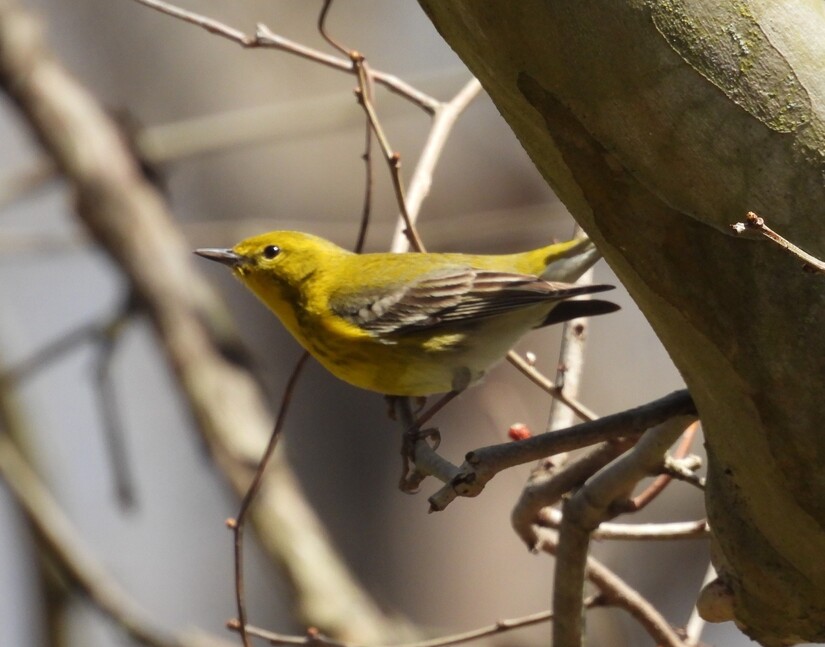
Pine warblers are also an early arrival each spring. I have seen them perched on telephone wires in our yard and on fences. All of these yellow birds are understandably difficult to differentiate. For pine warblers, look for a more dull yellow coloring than other warblers and for the white wing bars. True to their name, they do prefer hanging out in evergreens.
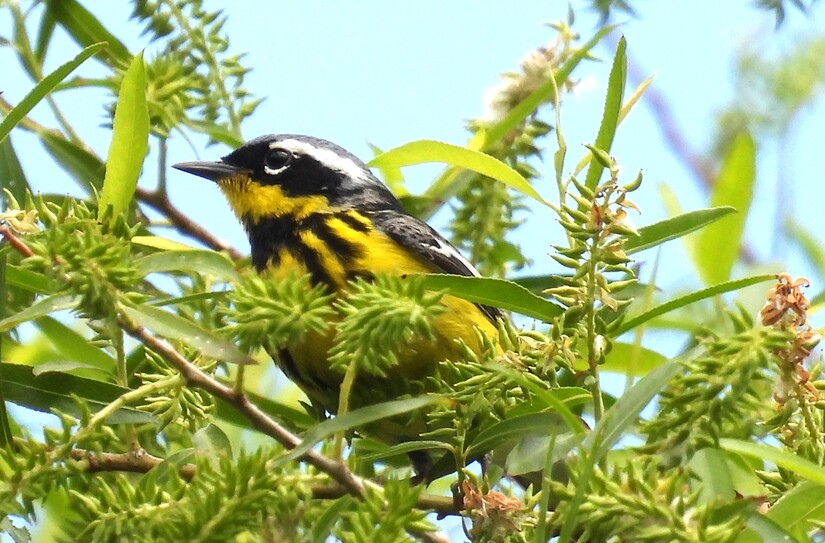
The magnolia warbler is among the prettiest of the warblers with an extravagant pattern of stripes and colors. They are a late migrator, often not seen until May. I see them everywhere from high in canopies to picking bugs off low tree trunks.
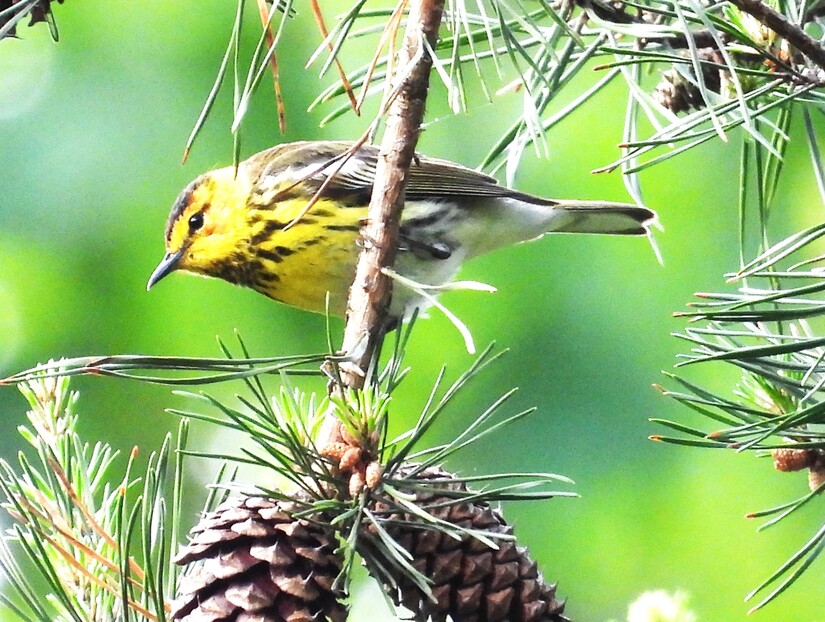
The Cape May warbler is one of the most difficult to identify, at least for me. It has a facial pattern similar to a prairie warbler, some rust on the facial area like a palm, and black belly streaking like a magnolia. They are also fairly uncommon. But I can sometimes locate them by using the Merlin bird sound app. I see them often in evergreen trees as well.
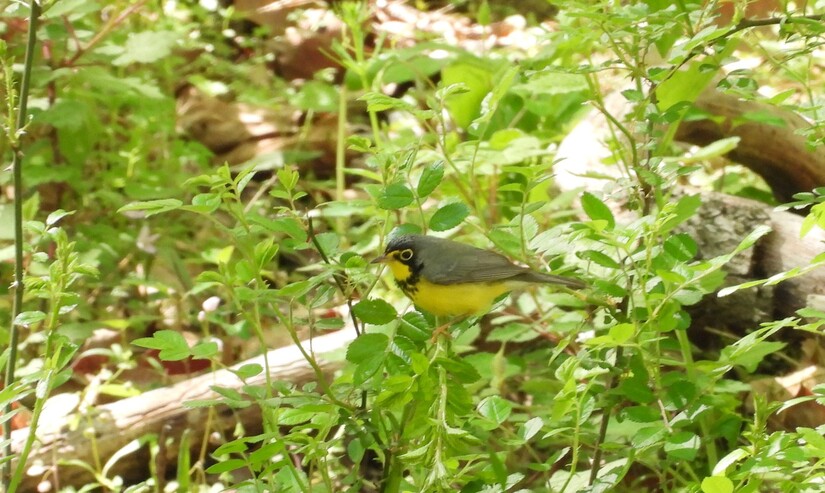
The Canada warbler is one of my favorite warbler species, but I have yet to get a decent close-up picture of one, despite a decade of trying. They stay low in shrubs and around ground cover. They will occasionally pop up for a photo op, but usually it’s deep in brush where focusing is a challenge, and only for a few seconds. They sport a lovely black necklace, which differentiates them from all other warblers. This is my best shot at a good picture.
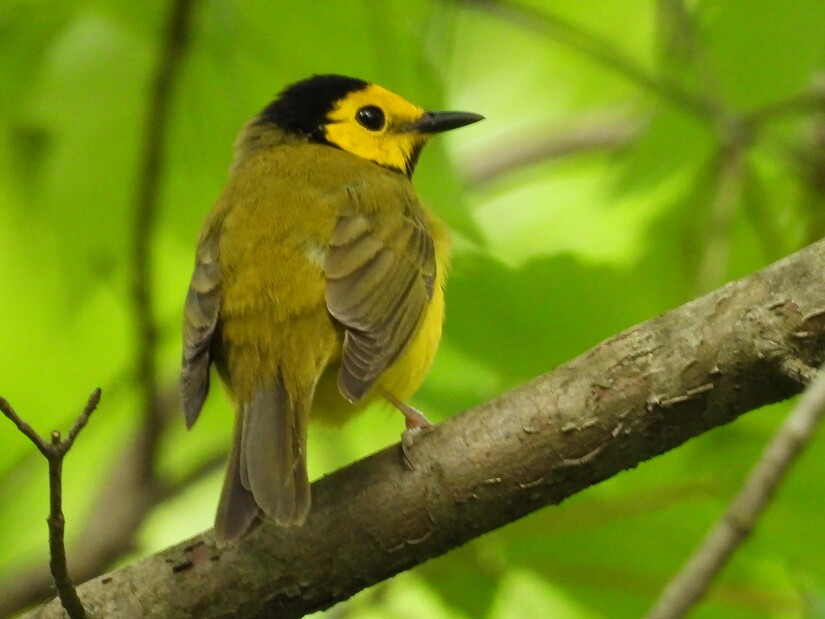
Hooded warblers look like they are wearing football helmets; there is no mistaking them. They are another bird that often keeps low to the ground or perches in the lower branches of trees. If you see one, you will know.
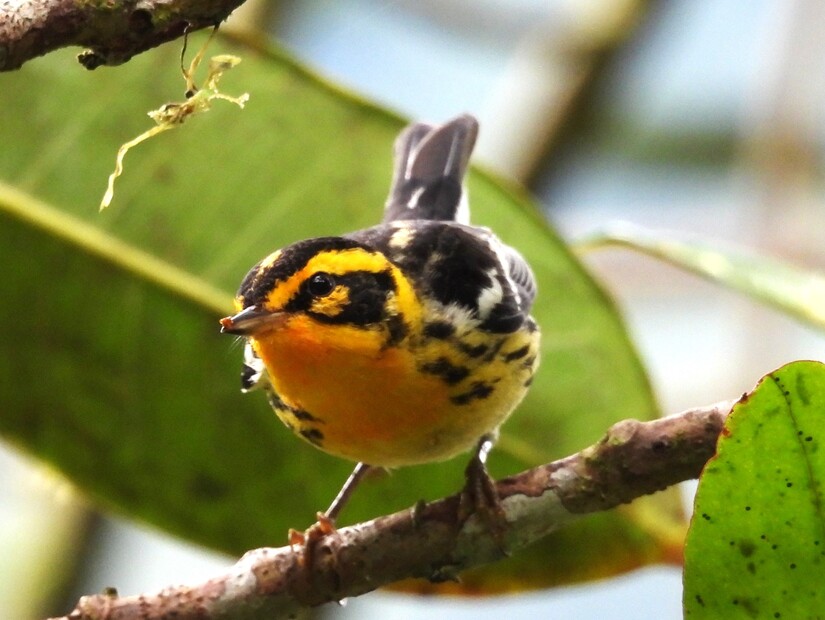
Blackburnian warblers are one of the holy grail birds for birders. They are uncommon and tend to hang out in very high, dense canopies. Even if you are lucky enough to hear a blackburnian, you will likely never see it. But when one does indeed come low and pop out in the open, there is no mistaking it - it looks like its face is aflame. The brilliant yellow/orange contrasts against the canopy and its unusual facial pattern makes for obvious identification.
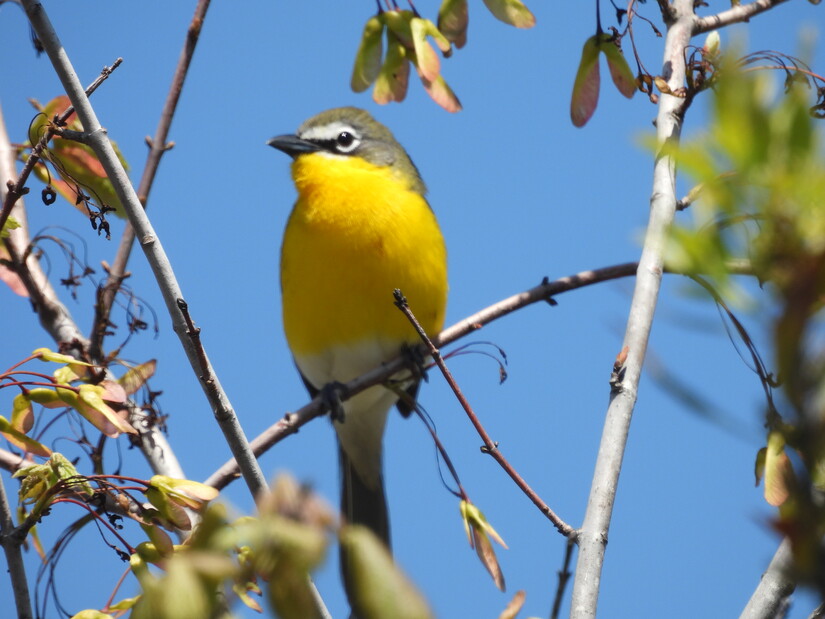
The yellow-breasted chat is not a warbler, but it is a spring migratory bird that can be seen in and around Boyertown. They have a distinctive call, and are usually heard before being seen. Here is the call:
https://www.allaboutbirds.org/guide/Yellow-breasted_Chat/sounds
It’s worth noting that in fall, these same birds will migrate through Boyertown again, this time southward to their wintering grounds in Central and South America. However, these same birds will appear differently than they did in spring. In spring, they will be in full breeding colors, which are the bright colors and sharp patterns. In fall, when they are no longer breeding, their colors become more mute. Some go as far to being an olive, brown color. Warblers become very challenging to differentiate and identify.
Also, since they are not breeding - trying to attract mates or communicate with their young - they don’t call as much in fall. And calling is often the first stage in actually seeing these unusual migratory birds. That’s why springtime is the best time for viewing them.
*Mike Strzelecki is a freelance travel and outdoor writer, and 1981 graduate of Boyertown Area Senior High School. He writes from his house in Baltimore, Maryland. In his spare time, he joins his wife on adventures around the country observing and photographing birds.



Patchy rain nearby, with a high of 77 and low of 57 degrees. Don't forget your umbrella! Patchy rain nearby in the morning, overcast overnight.