Image
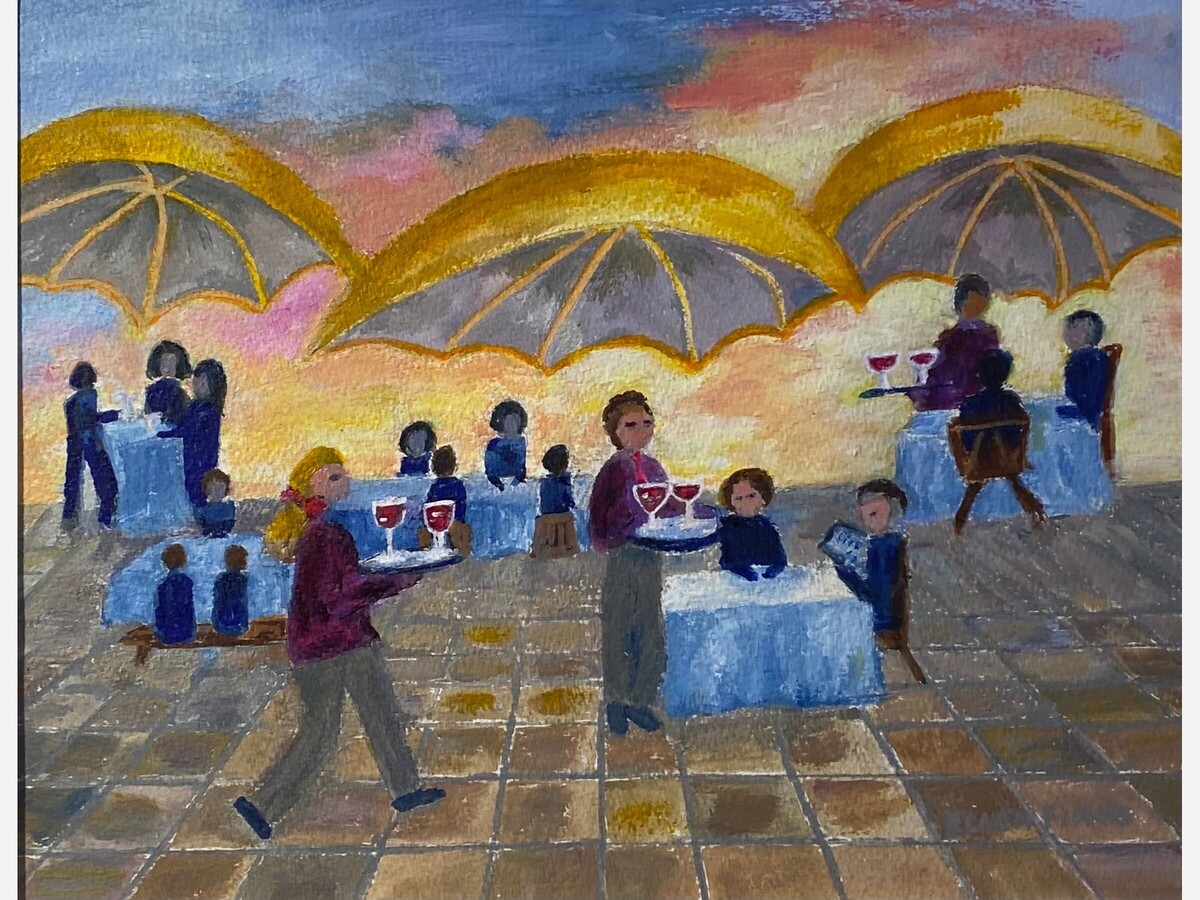



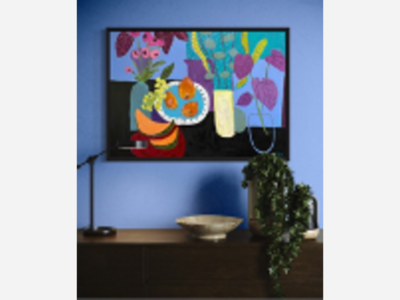
"May I Take Your Order" acrylic by Ellen Finks
Editor's Note:
Kenneth McLeod's reflection explores the types of service we offer one another born in gratitude, in "emergencies," and for the pure joy of offering a surprise gift to another. Writers were asked to respond to the theme of "service' as part of Studio B Art Gallery's "In Service" project sponsored by a grant from the Berks County Community Foundation.
by Kenneth McLeod*
There was a period when my mother still had enough of her cognitive abilities to visit her bank. I’d stand a few steps behind her as she and the teller would perform a transaction.
On one visit I heard a voice behind me: “That’s so nice.” I turned to see a woman in line who smiled and seemed to speak for those gathered in line behind her.
"It's so nice to see someone helping their mother,” she continued.
All I could manage was a shrug; “Just returning the favor,” I managed to say.
I was puzzled. Was helping one’s parent so rare that it merited a compliment?
I had reached a point as my mother’s caretaker where I felt the completion of a cycle. I once told some women who were visiting her from her church that it was the best job I'd ever had. I was tending to someone who was losing their faculties who had, at the beginning of my life, tended to me when I was developing my own.
Not only was it a pleasure repaying her for all the things she had done for me, but it was also a pleasure witnessing the gratitude she received from others.
My mother was a teacher. A teacher is a mentor, a babysitter, a fairy godmother, a bodyguard, an advocate and a coach, among other things. She was a combat nurse of knowledge, and there were many times during my supervision of her when I would witness former students approaching her in the street and thanking her. Youthful expressions would reawaken in their faces and their voices would become bright and lively as they greeted “Mrs. McLeod” and recounted the things she’d said to them that they’d never forgotten.
Our daily meal was at Friendly's, a 70s ice cream parlor that had been converted into a family restaurant with its own little parking lot up the highway from the house.
Our waitress would only place menus for us as an unnecessary formality; we always had pancakes, sausage and scrambled eggs with coffee.
Although by that time she’d no longer speak, I believed that she still understood her surroundings, as she would smile in response to greetings by the staff. Although the dementia had by then left her silent, I would feel the grip of her hand while helping her sit or helping her stand, the strength of her fingers assuring me that she was always in the moment.
On one particular day we sat across from each other by the big front window behind a man who sat alone at his own table.
Across the small aisle waitresses began pushing tables together end-to-end like coastal residents preparing for a storm. Soon a pair of full-sized family vans pulled up outside. Two loads of family emptied out of the vehicles, formed a cattle run past the foyer and corralled themselves at the defenseless table settings. At least three generations dictated their orders, the waitresses orchestrating the requests like an auction, then, after the arrival of their meals, closed in on their plates. I imagined that there were Viking banquet halls quieter than what was going on at those joined tables.
Mom seemed oblivious. Although she’d lost the power to remember and retain, she still had the personality that her mental processing had built over the years. Not only could she smile and be emotionally engaged with activity around her, but she also had the freedom to choose to ignore anything she had no interest in.
After a while, the feast was demolished, and the herd rounded itself up, filled up the vans and continued their convoy down the road. The restaurant was left as silent as a historical battlefield.
Then, a bathroom door in the back opened, and a boy, about ten or eleven years old, slowly walked out and stopped, staring at the shambles of the feast, then looking out the front window at the parking lot.
The man at our neighboring table, a senior in a sports shirt with hairy, ruddy arms, called the boy over and talked to him while getting the attention of a waitress. He tended to him and told him to give his family’s phone number to the staff. The staff took over and kept him company as he stood by the cashier’s station.
I struck up a conversation with the man. He was a retired police officer from Crofton, Maryland, the kind of tiny planned community one winds up at while looking for someplace else.
When he was sure the boy was taken care of, the ex-officer finished up and left.
I myself went over our bill and prepared to pay. The waitress told us that the retiree had already paid for it.
I looked aghast; “Do we look that bad?” I said to her.
She chuckled and explained that every once in a while a customer will cover the check for another customer’s table. The benefactor was long gone before I could thank him.
Soon the vans were skidding back into the lot. The mother entered the foyer, scanned the restaurant and then picked up and reclaimed her son, thanking the staff profusely.
Mom looked out the window, silently watching the family vans depart again. Then she turned to me and, leaning forward with a smile, clearly whispered:
“Home Alone, Part Four.”
Copyright 2026 Kenneth McLeod
*Kenneth McLeod is a retired Marylander with an amazing front yard.
That is a great story.
What a wonderful story!

Sunny, with a high of 72 and low of 51 degrees. Sunny in the morning, clear in the afternoon and evening,