48° and Overcast



Image
by Craig Bennett*
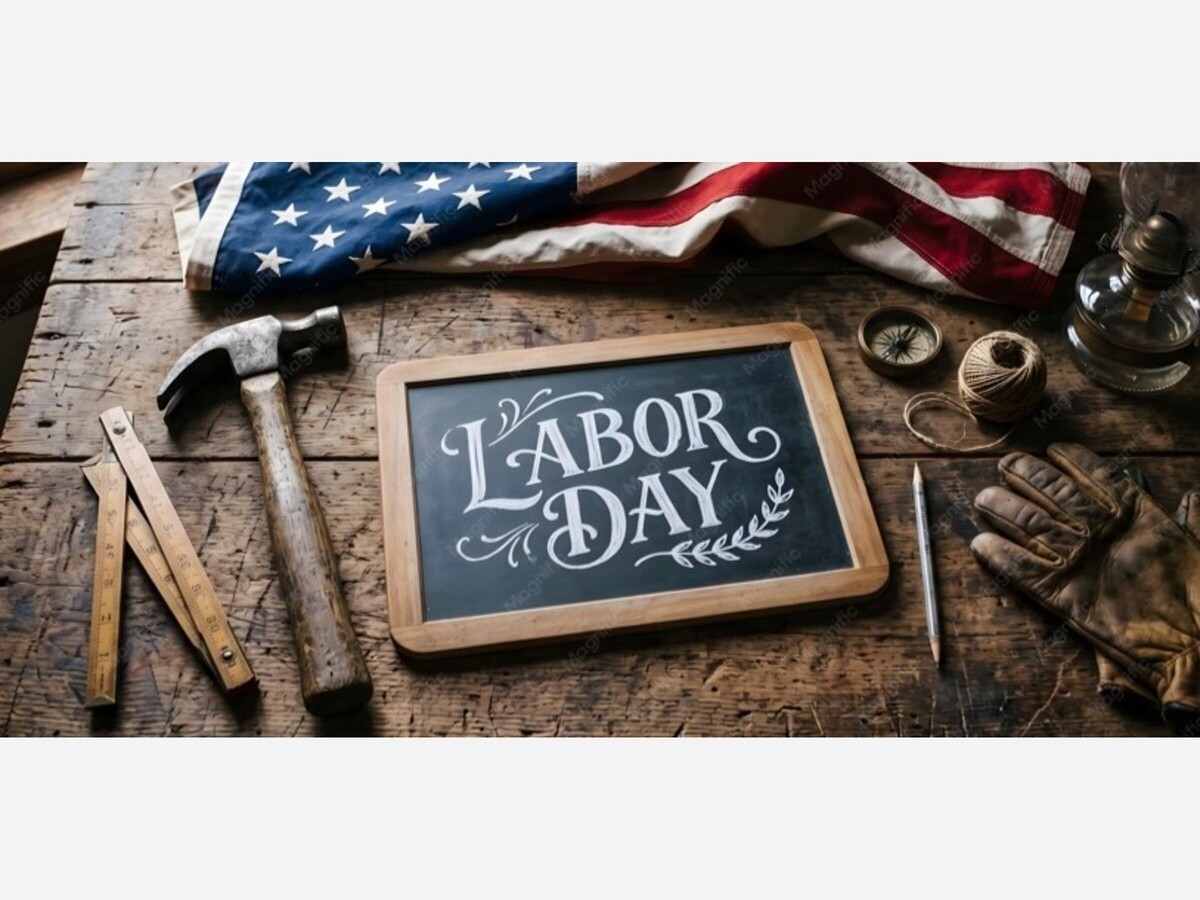
Labor Day, for most of us, has come to mean the unofficial end of summer: back to school, begin digging out the fall clothing, have the heater checked to see that it will function as it should on that first chilly morning when we can look outside and see a thin, white coating of frost on the grass, the mailbox, and the car we forgot to pull into the garage last night. More immediately, it’s an occasion for the last summertime picnic or barbecue before the tools and accoutrements befitting such activities are cleaned off and packed away until next year.
And that’s really what we celebrate on Labor Day, even though relatively few of us are aware of the extent to which labor itself in this country was rarely anything to celebrate. Up until approximately the time of World War Two, the wage-earning laborer was one step above a jobless vagrant. Going back to the early days of the Industrial Revolution in America, working hours were almost universally “from can see to can’t see,” six days a week. For the unskilled especially, pay was whatever the company decided—and it was meager. Accidents were common, and workman’s compensation was unknown. “Companies disclaimed responsibility, refused to install protective apparatus, and paid no compensation.” (1)
These conditions and the lives of those who had to try to survive among them was well documented. In the same way that Charles Dickens’s novels made Victorian England aware of the dismal conditions of London’s poor and working-class citizens, so did books like Upton Sinclair’s The Jungle try to accomplish something similar in the U.S. The story of Yergis Rudkus, a Lithuanian immigrant and his family, is based on what Sinclair learned from spending time in the stockyard and meat packing district of Chicago, observing closely what was going on there. However, instead of inspiring positive changes in working and living conditions for the meat packers’ employees, it created public outrage over the grossly unsanitary food produced by those plants. The net effect of the book was “public outrage over its graphic description of unsanitary food [that] led directly to federal safety laws.” (2)
In The Grapes of Wrath, John Steinbeck made a similar attempt to make middle-class readers aware of the considerable injustices perpetrated on the thousands of Depression-era “Oakies” whose Midwestern farms had mostly dried up and blown away. With no crop with which to pay off last year’s debt and, therefore, no credit left to borrow against next year’s, the farmers lost their property to the banks as they foreclosed on the farmer’s property and took what had become legally theirs. Having spent their lives working in agriculture, the farmers quite logically headed for southern California and places like Steinbeck’s Salinas Valley. What they found there, however, was a widespread collusion of industrial-scale growers offering lower and lower wages as more and more desperate migrants began to show up hoping to find work. And when the workers themselves tried to organize in order to demand a living wage, that’s when burly men in trench coats with clubs and guns began visiting the migrant camps late at night in order to discourage the people there from organizing. (3)
Back in April of 1940, another key episode occurred in the continuing attempt of workers to be treated like human beings instead of mere cogs in the machinery of production. In Studs Terkel’s fascinating book Hard Times, the account is preceded by the recollections of Justin McCarthy, who worked at a Ford assembly plant in a suburb of Chicago. McCarthy recalls, “When I went to work in January, we were turning out 232 cars a day… four months later we were turning out 535. Without any extra help and no increase in pay. It was the famous Ford Speed-up.”
It was these conditions that later brought about the first sit-down strike in the history of American labor. The workers simply did not leave the Ford plant at the end of their shift. Then the next shift reported for work and joined the occupation as well. This is what its laborers had to resort to to finally impress upon the Ford Company that they would not put up with being treated as slaves or draft animals. And finally, it got the company’s attention. (4)
But Ford might have been following the advice implicit in the well-known time-motion study done by Frederick Winslow Taylor in 1881. Taylor carefully observed the activity of various manual laborers, timed exactly how long each individual motion in their assigned task took, and determined from that how long each stage of production should take—and how many units should be produced in a day. This was embraced with the utmost enthusiasm by the manufacturing community, particularly those companies with a large labor force. (5)
But Taylor’s system was based on a worker’s performing at the same level of speed and efficiency an hour before the end of the work day as he did when he first began work that morning. It made no allowance whatever for the obvious fact that human beings tend to become fatigued as they accomplish repetitive tasks over and over for eight hours or more. Those in jobs that require heavy lifting and other such physical demands usually can’t perform as quickly and efficiently as they did at the outset of the work day. Taylor’s method was a wonderful idea for the factory owners, the investors, and the more highly placed executives. It wasn’t quite the same for the laborers out there on the production line.
And then, back in 1970, none other than Milton Friedman, Nobel Prize winner and a leading influence in the Chicago school of economics, came forth with what became known as
“the Friedman Doctrine.” This was to Corporate America about the same as the Declaration of Independence was to the thirteen colonies. Also known as the “shareholder theory,” this document states that “a business has only one social responsibility: to increase its profits and maximize returns for its shareholders, as long as it plays by the rules of the game without fraud or deception.” Of course, no mention is made of any alleged responsibilities that a corporation might have toward the people who actually make the product or provide the services that the company sells. And when it comes to dismissing the requests and proposals of unions, what better justification could a company have than the authority of such an eminence as Milton Friedman? (6)
Happy Labor Day.
*Craig H. Bennett, author of Nights on the Mountain and More Things in Heaven and Earth, available at amazon.com, barnesandnoble.com, and most book stores.
SOURCES:


Overcast, with a high of 58 and low of 41 degrees. Overcast in the morning, clear in the afternoon and evening, overcast overnight.