Image
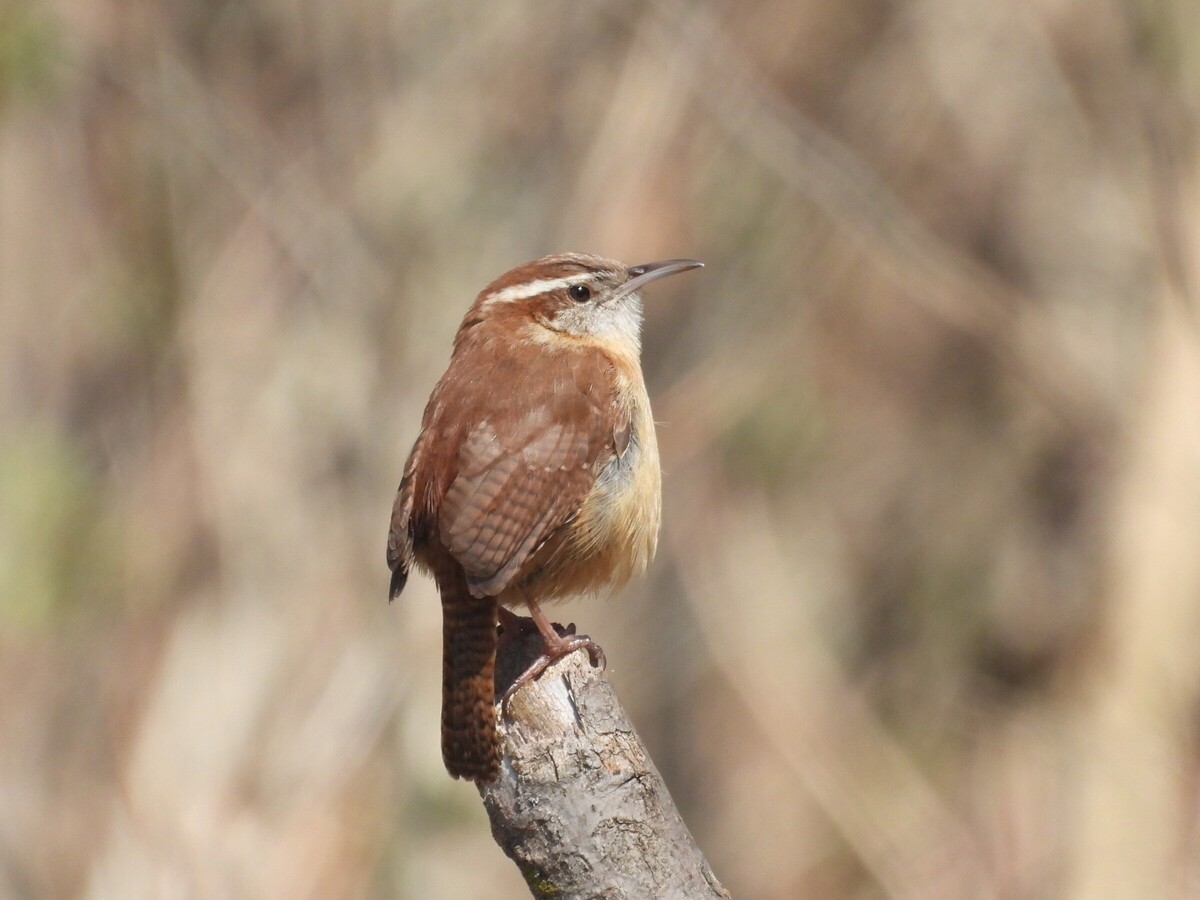
by Mike Strzelecki*
The Carolina wren may be one of the tiniest birds in the avian kingdom, but it’s also among the most boisterous and bold. William Shakespeare used the wren in his plays to symbolize outsized courage. “The world is grown so bad, that wrens make prey where eagles dare not perch,” he wrote in Richard III.
This reputation is well-earned. The Carolina wren is one of the most common wrens in the Boyertown region, and you probably have one living in your neighborhood, if not your backyard. They are well-habituated to humans. They boldly nest in plain view, sleep in the folds of your backyard patio umbrella, and wake you with loud banshee-like screams. They pack a punch well beyond their diminutive size.
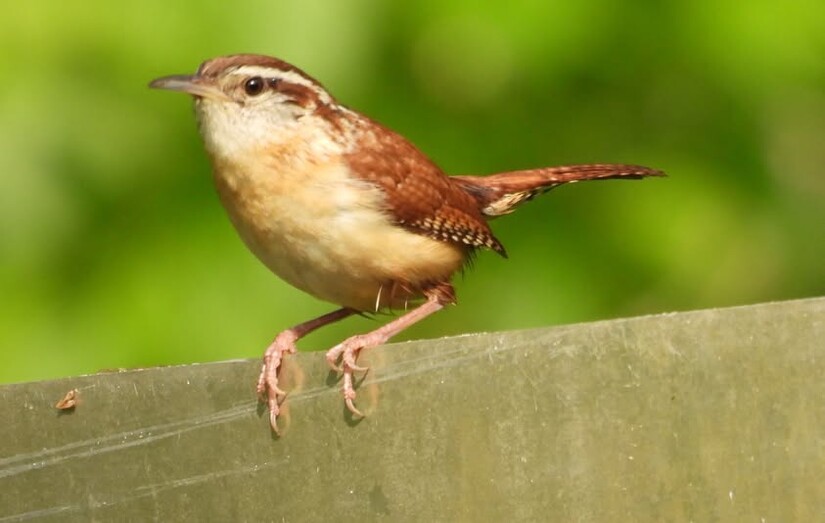
The Carolina wren is physically very distinctive. It’s about the size of a golf ball and has a tiny tail that often sticks straight up. It’s rusty-brown, with buff plumage. Its most distinctive field mark is the sharp white eyebrow.
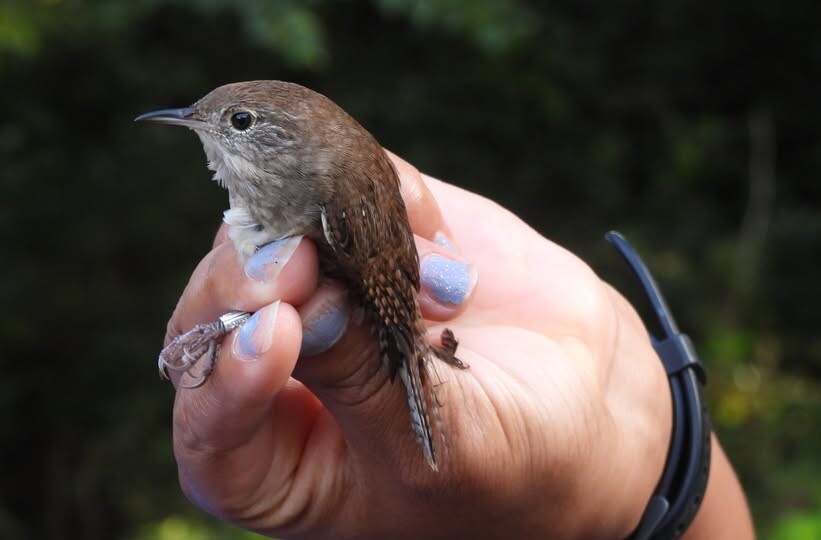
Carolina wrens are year-round residents of Pennsylvania. Other local wren species include the house wren, a common cousin that is here from early spring through late fall, and the winter wren that is here in cold weather. Both of these wrens look similar - uniform grayish-brown feathers that are a bit mottled. The are easily differentiable from the Carolina wren by their softer color and lack of distinctive white eyebar.
This picture of a house wren was taken during a recent bird banding session. We have house wrens nesting in our backyard but they are more secretive and shy than the attention-seeking Carolina wren.
Carolina wrens are amongst the loudest backyard birds, offering decibel levels beyond what their size would seemingly allow. Listen for the resonating “Tea Kettle, Tea Kettle, Tea Kettle, TEA.” Their vocal repertoire extends to other calls as well. Here is a sampling of their songs.
https://www.allaboutbirds.org/guide/Carolina_Wren/sounds
Nesting season for the Carolina wren is late spring into summer. They will nest more conspicuously than other birds, who prefer discretion and privacy. Our neighbors had a Carolina wren nest in their patio flower pot. A friend had one nest in his motorcycle helmet hanging in his garage. I have heard of Carolina wrens nesting in shoes that are left outside the backdoor for too long. They love nesting in the eaves of porches and garages. Male and female Carolina wrens mate for life.
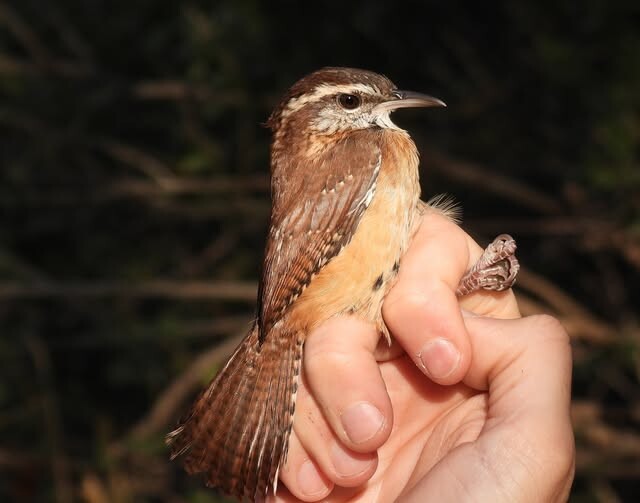
Carolina wrens eat bugs and seeds and terrestrial insects. They will come to our feeder at times but seem to spend more time rooting around the grass beneath it. An unusual attribute of wrens is that they stick close to the ground, usually hiding in shrubs, low canopy, or around fallen logs. It’s rare to see one more than eight feet off the ground.
Even though Carolina wrens are year-round denizens of Pennsylvania, they are also susceptible to cold weather. Scientists note large population declines after particularly cold winters. They are a bird that greatly benefits from backyard feeders to help them get through tough times.
*Mike Strzelecki is a freelance travel and outdoor writer, and 1981 graduate of Boyertown Area Senior High School. He writes from his house in Baltimore, Maryland. In his spare time, he joins his wife on adventures around the country observing and photographing birds.



Sunny, with a high of 79 and low of 63 degrees. Sunny in the morning, mist overnight.



Thanks for this exposure, Jane & Leslie! Hello to everyone in Boyertown!






Dear Jan - Thank you for this article! I love the Overview Effect. planet first, society second, economy last