77° and Overcast
Image
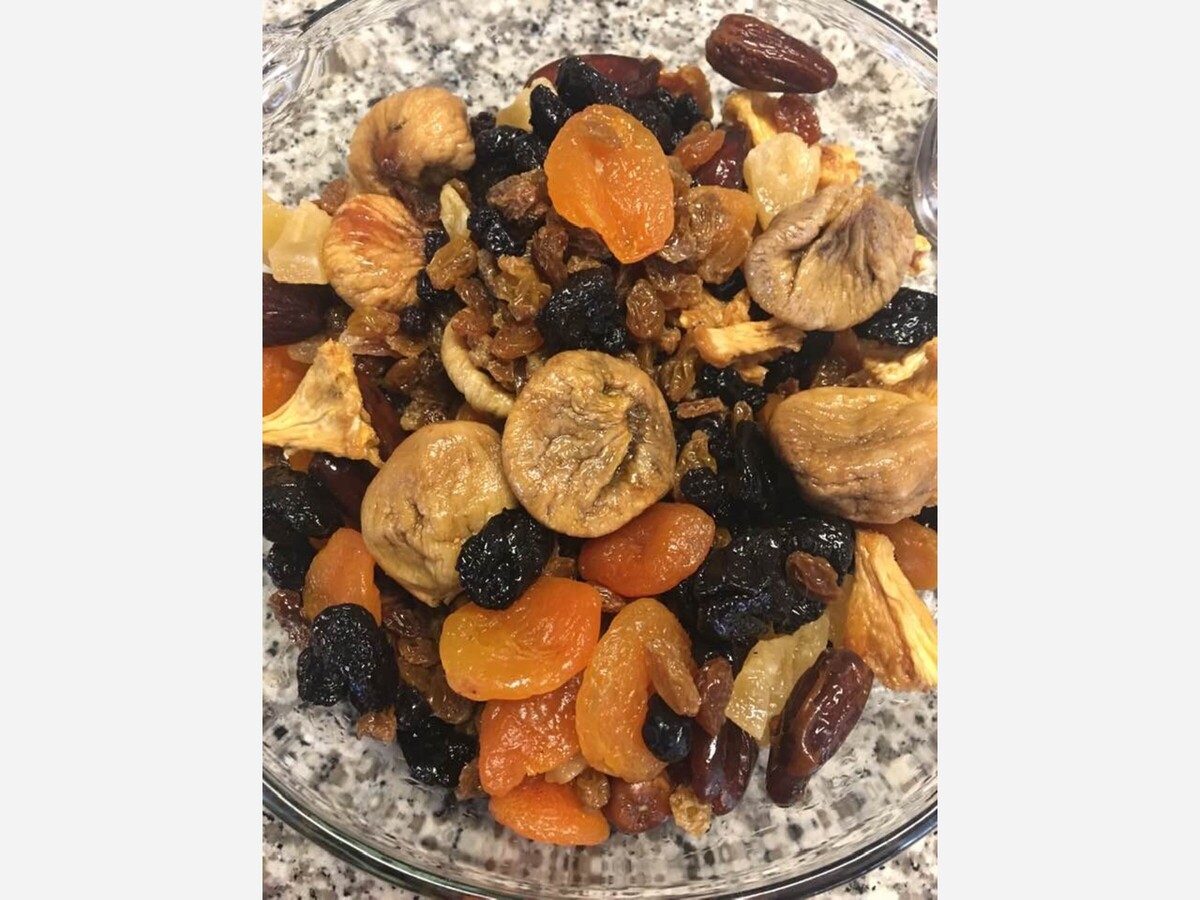



Today we’re macerating a little over a pound of assorted dried fruit in some very fragrant dark Jamaican rum.
Why?
If you guessed we’re making fruitcake, you’d be absolutely correct!
Sadly, fruit cake has gotten a bad reputation for being dry, full of awful tasting, strangely textured, neon colored bits of what might at one time have been fruit. I’m in full agreement, it is really unpleasant! If, however, you were to make your own fruitcake, as we are, in a time honored tradition reaching back thousands of years, you would realize why the fruit cake was considered worthy of being offered to the deities of old and later offered as a very special gift to family and friends for Christmas and New year celebrations.
As our excellent combination of dried cherries, blueberries, golden raisins, apricots, pineapple, dates and figs begins its journey today, over the next 24 hours, we’ll observe a softening of the fruit and release of the concentrated flavors and sweetness that will ultimately make its way into the cake batter.
No artificial colors, preservatives or flavorings here. We’ll only get to enjoy the purity of nature’s bounty in a confection that has unfortunately suffered at the hands of modern commercial manufacturing processes.
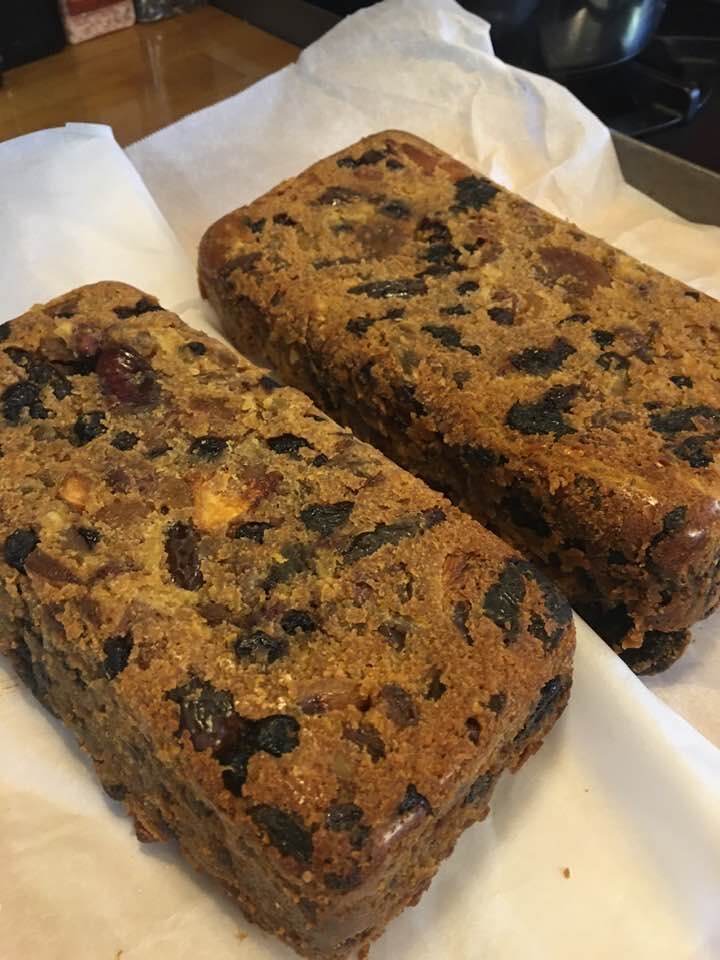
Fruit cakes on their way!
Our dried fruits finally absorbed all the dark rum and with the addition of grated apple and lemon and orange rind, were baked in a batter enhanced with warm spices. Cooling on parchment, they’re waiting to be swaddled in linen soaked in triple sec. After a rest of a week or so they’ll be ready to sample.
Fruitcake can trace its origin back to 3,000 BCE Mesopotamia and the great Sumerians who created the first writing system called cuneiform.. It was at the confluence of the mighty Tigris and Euphrates rivers that these early bakers created dense chewy cakes made with dates, figs and nuts. (I chose to include them in my cakes as a nod to these ancient culinary artists.). These extraordinary treats were solely offered to the gods of rivers, rain and harvest.
Two thousand years later, the Babylonians continued the tradition, believing the rich sweetness of the fruited cakes could bless their communities with safety and prosperity. For these ancient people, fruitcakes were more than food. They bridged the earthly to the divine and were enjoyed at festivals that marked the seasons and also offered to honor their gods.
During those same millennia, the Egyptians, harvesting similar fruits from the Nile delta, also offered these sacred cakes as tribute to their gods. Incredibly, the ancient Chinese Shang Dynasty (1600 BCE) were also making similar fruitcakes which for them were symbolic of wealth, longevity, happiness and served at important life celebrations.
Fruitcake chronicles continue to present times, of course, but we’ll have to reveal those mysteries at the unveiling of our cakes in another week.
High in the mountains above Bally, where the dense groves of treetops seem to touch the sky, is Francine Black, Boyertown’s own version of chef Julia Child. Her daily activities reflect the things she most values: family and friends, music, and lovingly prepared food.



Sunny, with a high of 87 and low of 70 degrees. Sunny for the morning, overcast overnight.