63° and Clear



Image
by Mike Strzelecki
In birding parlance, a “Big Year” is a personal challenge where you try to observe and record as many bird species as you can in the United States in one calendar year. It was made famous in the 2011 comedy movie The Big Year, starring Steve Martin, Owen Wilson, and Jack Black (well worth a watch for its entertainment value, even if you are not a birder). Some birders take their Big Year very seriously, spending much of the year traveling the country chasing rare bird sightings. Others take a more casual approach to the challenge, basing out of their home but traveling when opportunities avail.
My wife Kelly and I have chosen 2026 to partake in our Big Year. Our plan is to base from our house in Maryland. We are in a very productive birding area, so we will take many long day trips to various parks and preserves. We have planned numerous long weekend birding excursions to more far-flung places like New England, the Catskill Mountains, the Finger Lakes, the New Jersey coast, the Blue Ridge Mountains, and places south. We also plan to take several cross-country flights to hot-spot birding areas like New Mexico, Florida, Arizona, the Pacific Northwest, and Colorado.
Kelly and I spent the first three days of 2026 canvassing coastal parks along the Chesapeake Bay and its many inlets. Winter is when waterfowl is abundant in our area and the perfect time to observe interesting ducks and geese. We logged 55 unique bird species. Below are a few pictures from the first three days of our Big Year.
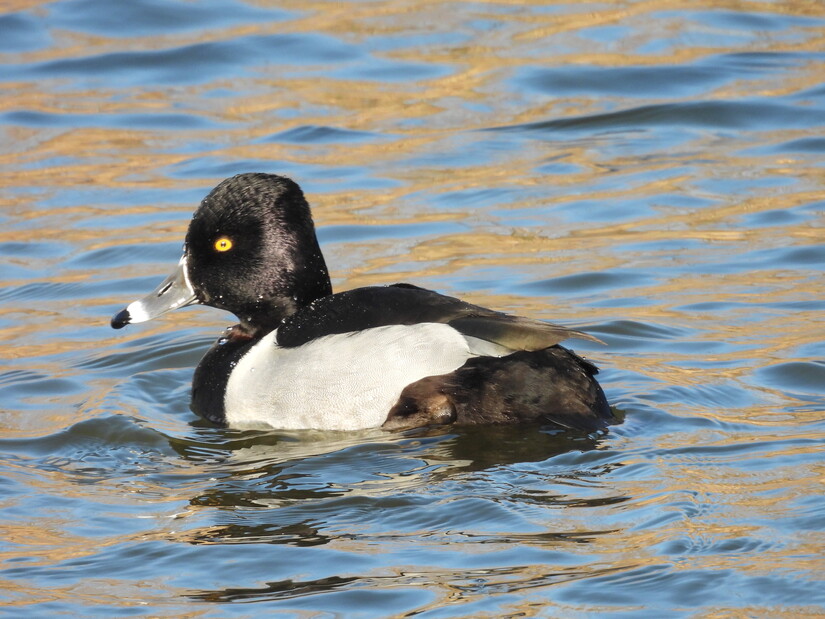
The ring-necked duck is a lovely waterfowl that is identifiable by the ring around its bill and its piercing eye. The ring around its neck, for which it is named, can only be seen when it is in flight. We found this ring-necked duck in a tiny pond in a downtown Baltimore park.
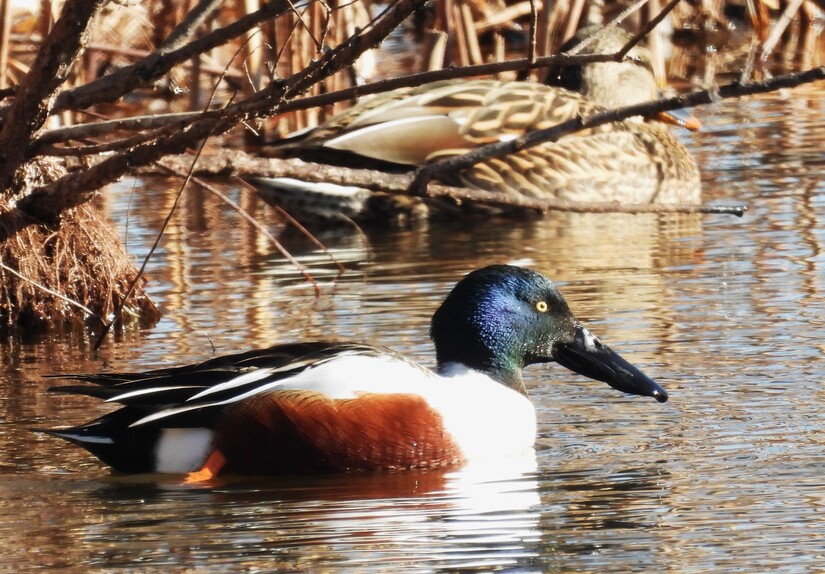
Northern shovelers have large, paddle-like bills that they use to dredge the bottom mud of shallow ponds, hoping to stir up some dinner. Their bold chestnut side makes them easily identifiable, even from a distance. We found this northern shoveler in the same pond in downtown Baltimore.
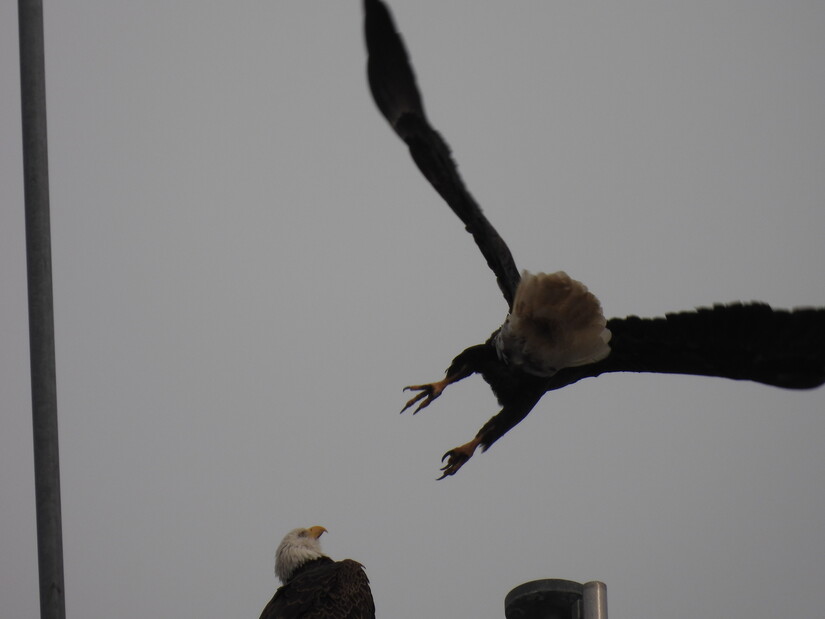
Bald eagles are beginning their mating and nesting cycle in January. We saw many bald eagles over our three days, as they are common along Chesapeake Bay parks. We observed this bald eagle pair erecting a massive nest on a radio tower in Sandy Point State Park.
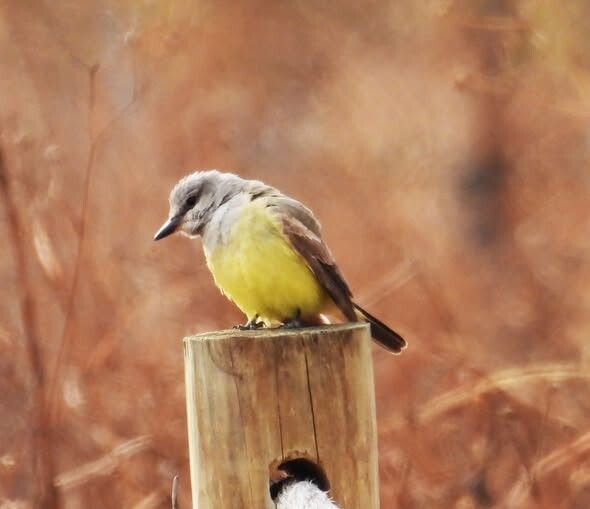
Every so often, a rare bird inexplicably shows up in the mid-Atlantic region. We currently have a western kingbird holding court at a local park. It is usually found in western states. This one may have been blown in by a weather front or perhaps got its migratory wire crossed. This kingbird is camera-friendly and birders from far distances are converging on the park to observe it. The beautiful yellow bird friend will undoubtedly struggle to survive the winter as his food source is bugs which are scarce during the winter here. He appeared to be eating heartily during our observation, though.
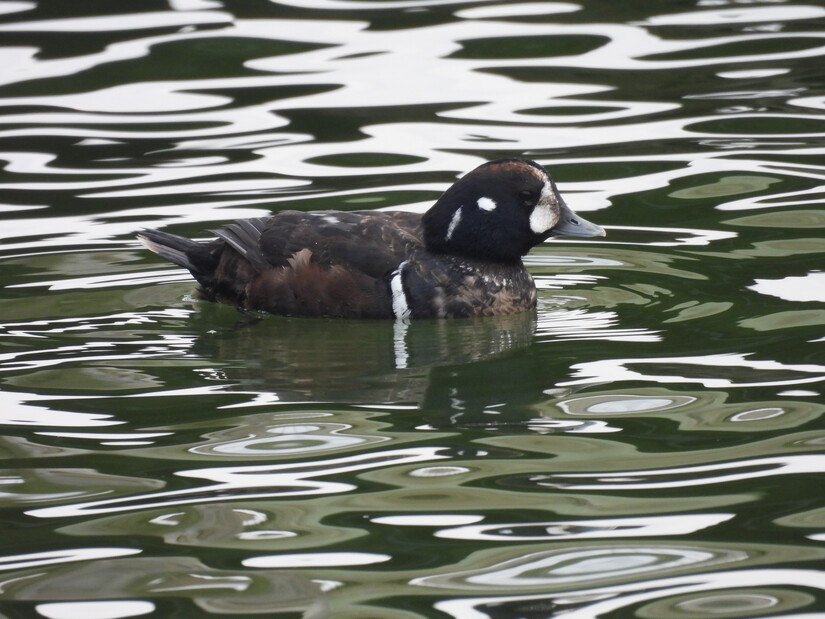
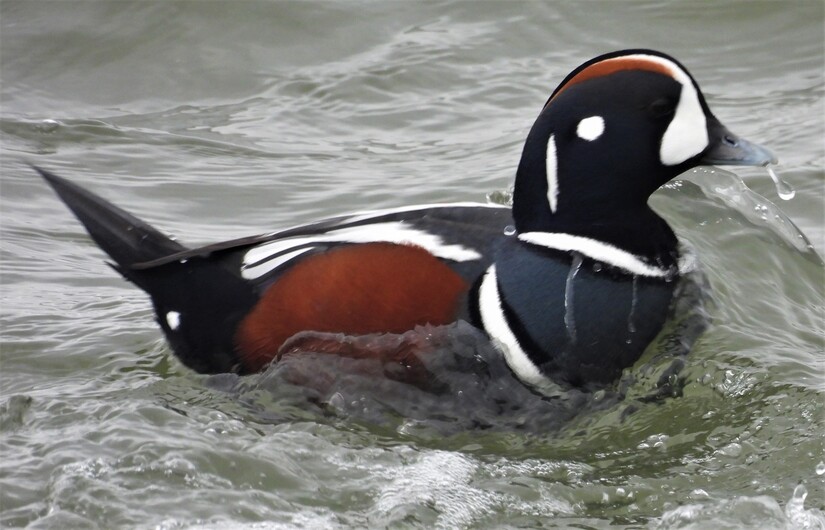
Another unusual bird we were fortunate to observe was this harlequin duck. They are typically found in northern regions of the east coast, along rocky, wave-battered coasts. This one seemed out of place padding around placid waters beneath a dock on Kent Island, in the Chesapeake Bay. This particular harlequin duck appears to be a juvenile since its colors are not fully developed. For comparison, the second picture is of a mature harlequin duck I took last year at Barnegat Inlet, in New Jersey.
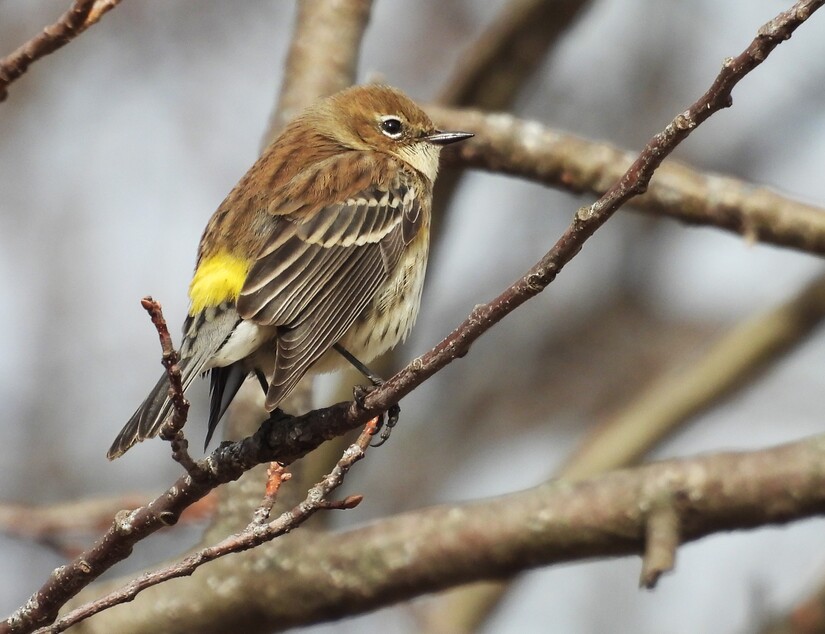
Virtually all warblers in our region migrate south in winter, except for one species. They are chasing bugs that disappear from our area in winter. The yellow-rumped warbler is the only warbler that has the ability to digest the waxy skin of berries seen in winter on various bushes, and as such sticks around all winter. This one, seen in Sandy Point State Park, proudly shows off its namesake posterior.
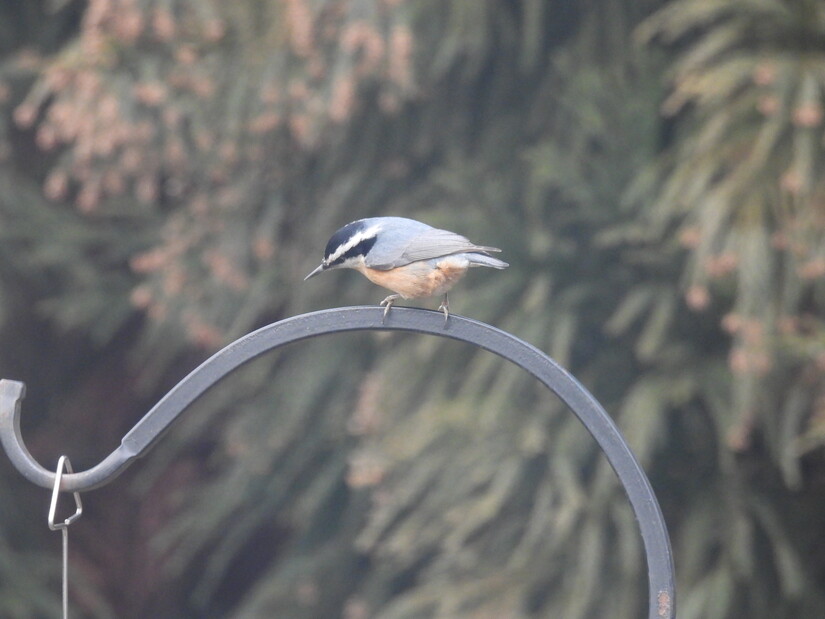
Our Big Year started with a boom when we woke up on New Year’s Day to an uncommon bird at our backyard feeder. This red-breasted nuthatch dined for two days before moving on.
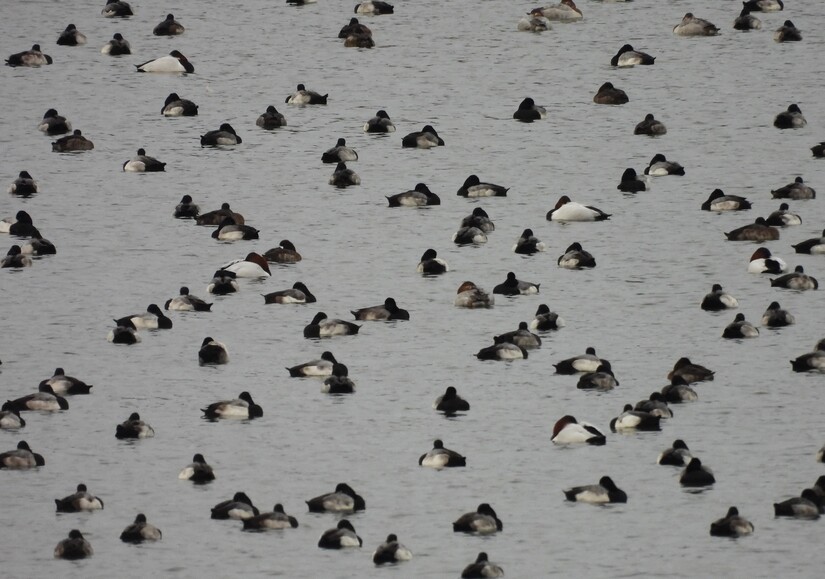
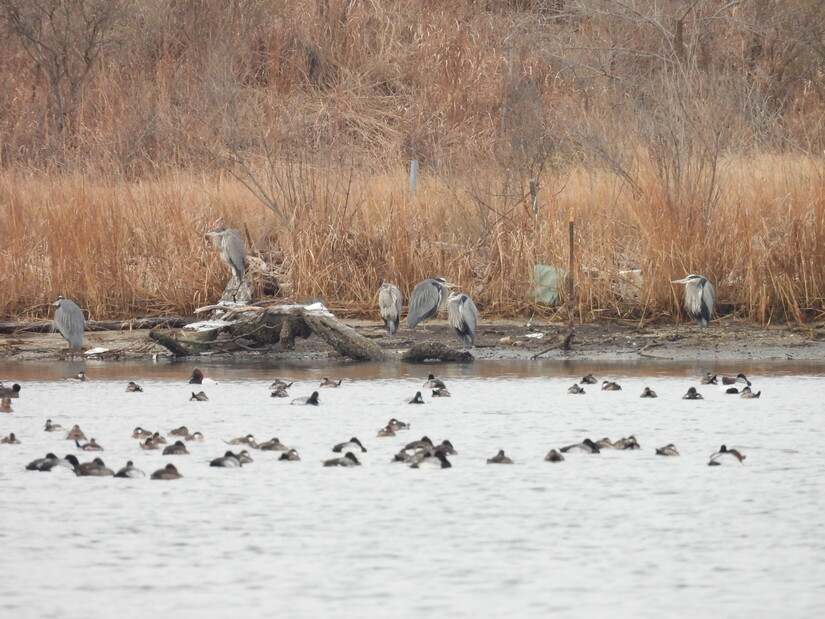
Masonville Cove, a former industrial area of Baltimore city that has been converted to marshland and a hiking trail system, hosts massive numbers of birds throughout the winter. The ducks often aggregate into large rafts numbering in the hundreds, and sometimes the thousands. This first picture is a section of a large duck raft that is composed mostly of greater and lesser scaups, canvasbacks, and ruddy ducks. The second picture is of a small raft of ruddy ducks being watched over by a dozen great blue herons.
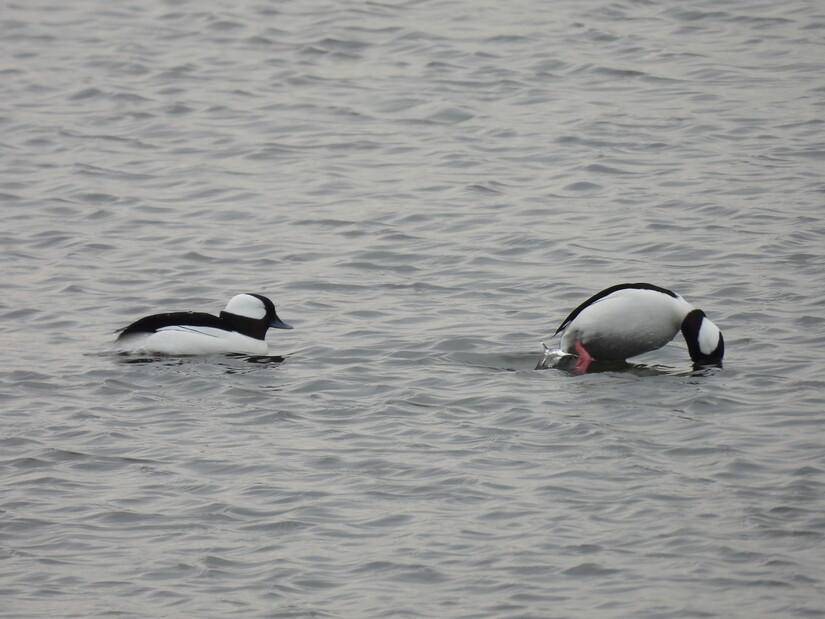
Buffleheads are tiny diving ducks that are prolific in the Chesapeake Bay. Trying to photograph one diving is often an exercise in futility as their dive is quicker than most reflexes. I was fortunate to grab an image of a diving bufflehead while birding on the shore of Fort McHenry, in downtown Baltimore.
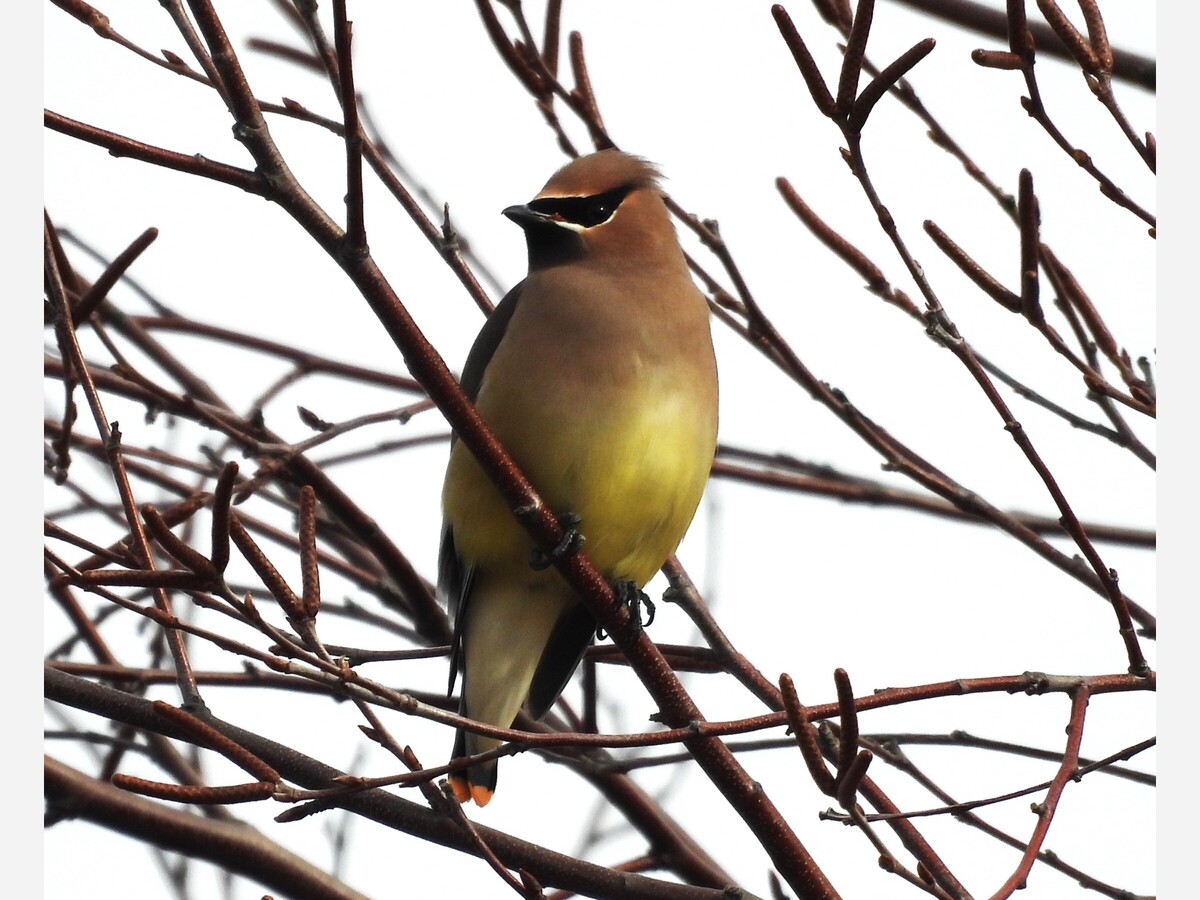
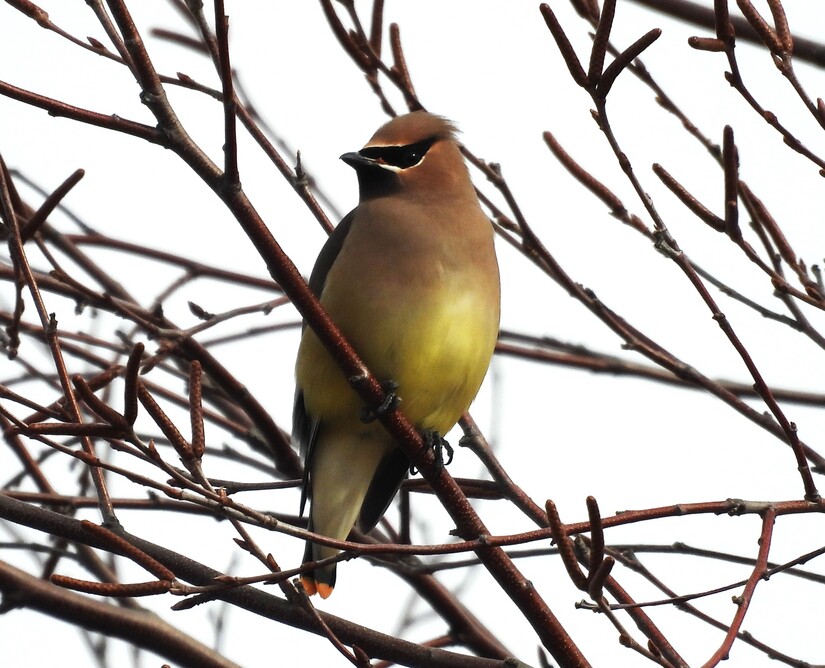
Finally, many birders will tell you that cedar waxwings are among their favorite species. They are regally beautiful with a black mask, yellow belly, and red tail tip. They often bounce around treetops in groups of 12 to 25. We had a flock converge on a tree near where we were standing in Sandy Point State Park. It was a pleasant close to the first three days of our Big Year.
* Mike Strzelecki is a freelance travel and outdoor writer, and 1981 graduate of Boyertown Area Senior High School. He writes from his house in Baltimore, Maryland. In his spare time, he joins his wife on adventures around the country observing and photographing birds.



Sunny, with a high of 76 and low of 60 degrees. Sunny in the morning, patchy rain nearby for the afternoon, clear overnight.