

Image
by Mike Strzelecki*
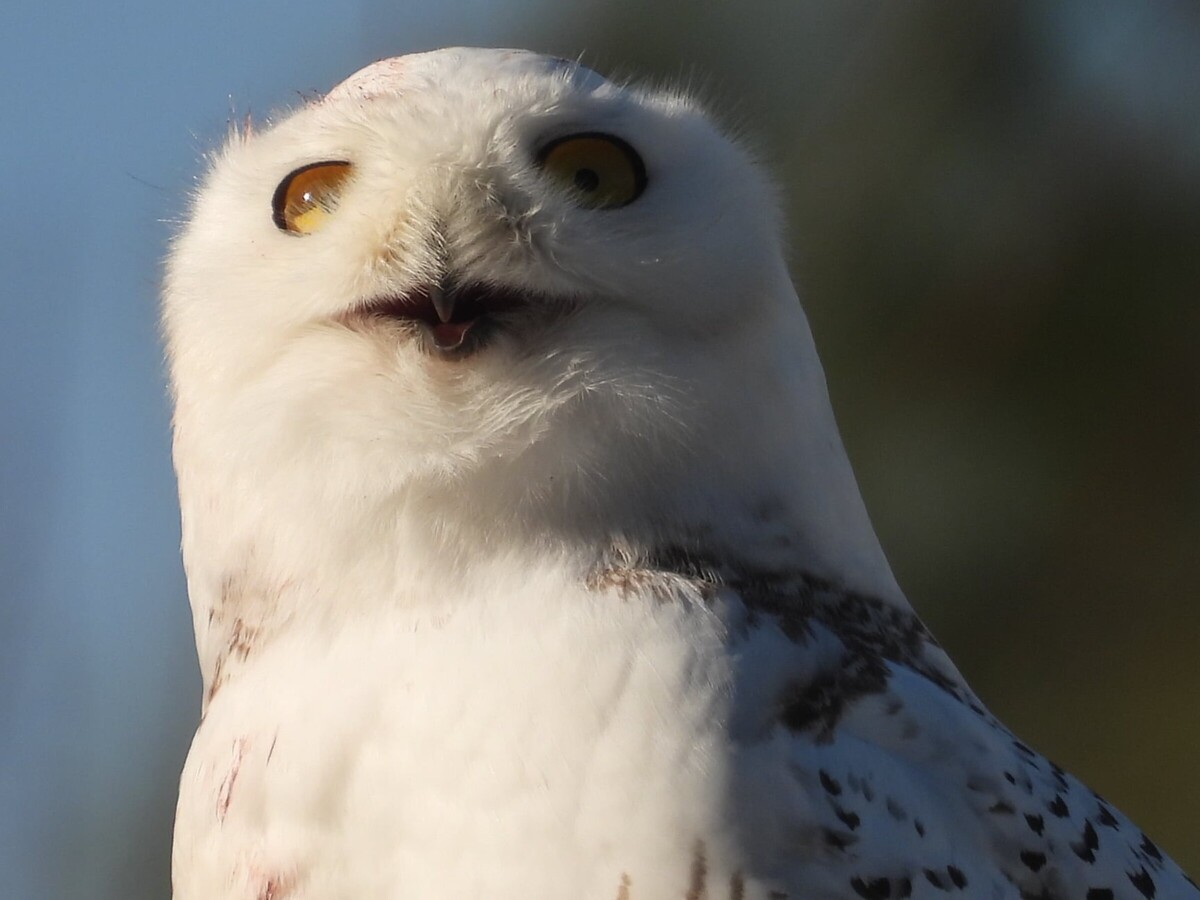
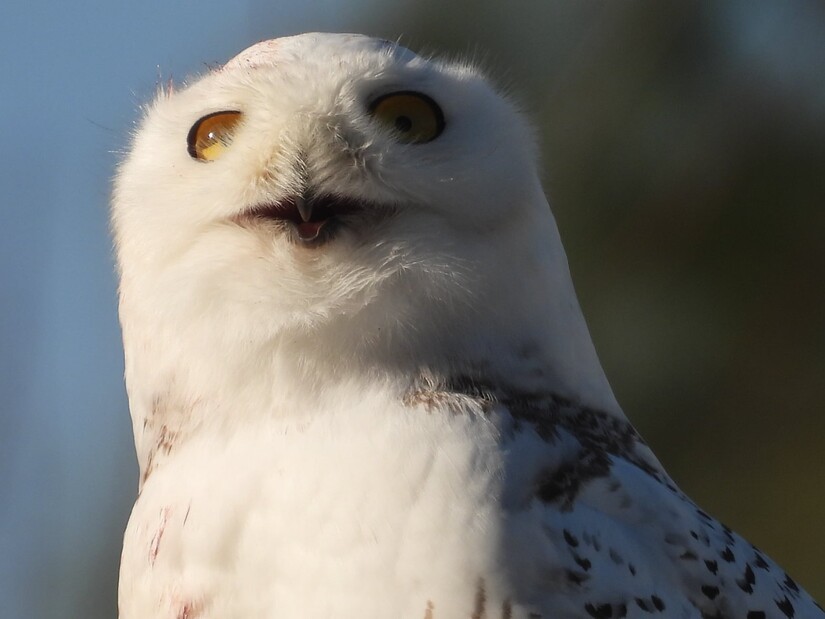
Snowy owls are generally considered by birders and nature photographers to be among the most photogenic and sought-after bird species. Their pure white plumage and deep yellow eyes make them the height of photogenic. Females sport a gray back pattern. They are only seen in the mid-Atlantic region during winters, and only certain winters at that - not all. Here’s why.
Snowy owls live in the north Arctic tundra regions. They do not migrate per se, but they move around the arctic following their favorite foods - lemmings and voles. Consider them nomadic. Every so often, snowy owls show up in the mid-Atlantic region, sometimes in substantial numbers. Maybe every four or five years, based on my limited experience. These are what scientists call "irruption years." This year, much to the delight of local birders, is an irruption year.
Scientists, in recent years, figured out why snowy owls move south into our region only in certain years. It is tied to their food supply. In years when there is an unusual abundance of lemmings and voles in the arctic, snowy owls flourish and they have more babies than usual. As the snowy owl population increases in the tundra due to the influx of a higher number of young, it pushes the first-year snowy owls out of their usual range into new territory. In those years, some are being pushed south into the mid-Atlantic region. So an irruption year this year means that there was an abundance of lemmings and voles in the tundra last year.
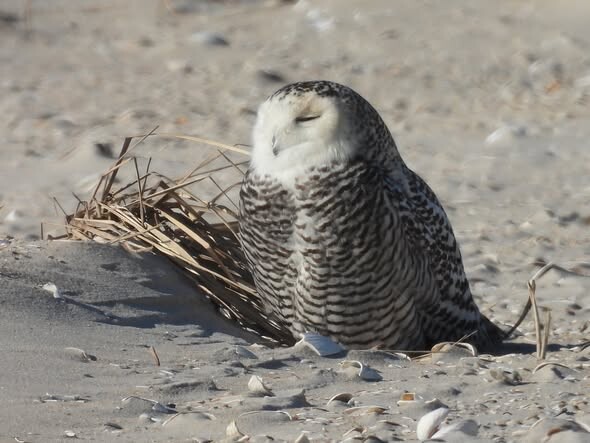
These first-year owls, when being pushed into new territory, look for terrain that is similar to the white, icy tundra in which they are used to living. As a result, in our area, they are often seen on either large swaths of wild, undeveloped beaches, or at airports. Both types of terrain replicate the tundra by offering huge swaths of undeveloped land devoid of trees. Just like the tundra.
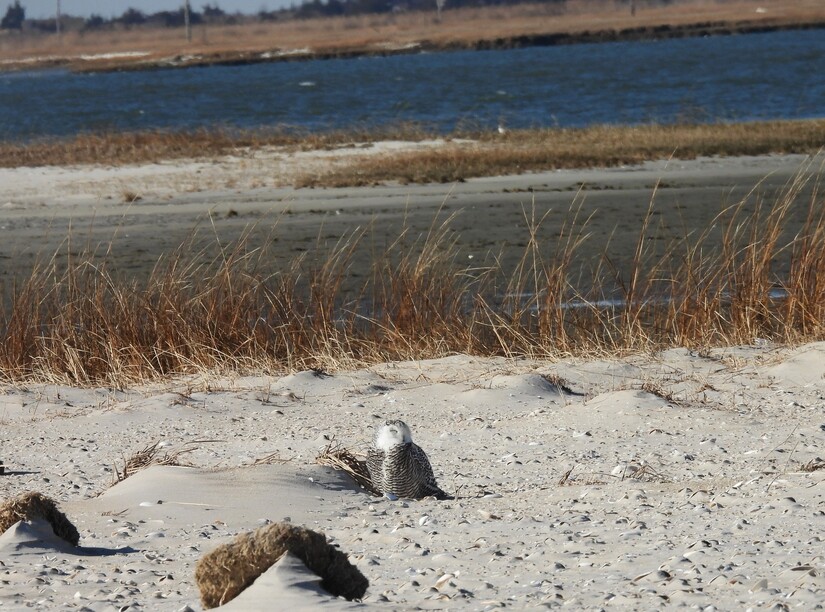
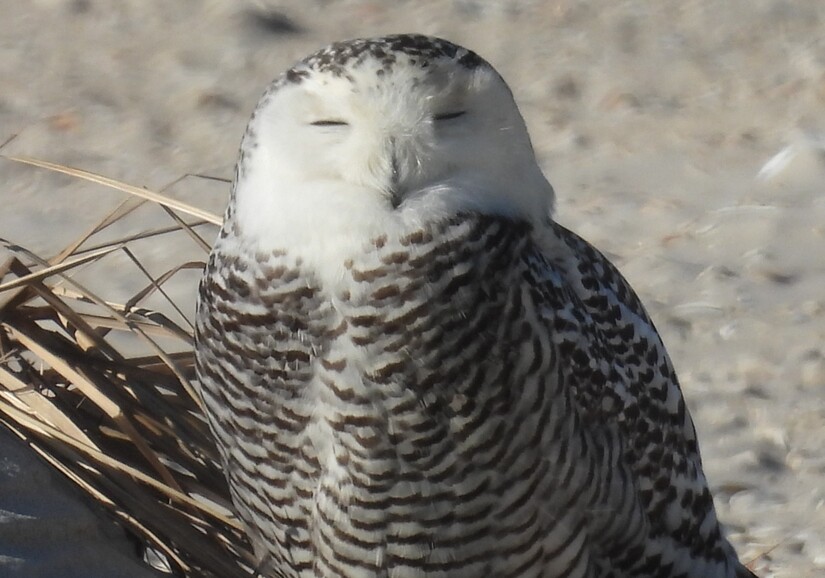
Most species of owls hide in trees or hidden nooks during the day. They are rarely seen. Snowy owls are different. Their camouflage is their color. As tundra birds, their pure white appearance makes them virtually invisible to predators when sitting still in large fields of ice and snow. Snowy owls that venture south into our area spend their days sitting still on the sand, often in dune areas, or in expansive grassy fields (hence, the airports).
Snowy owls show up occasionally at the Philadelphia International Airport. There was one recently at the Ronald Reagan Airport in Washington, D.C. The Boston Logan International Airport takes the prize for most snowy owl visits, though. They have a team specifically detailed to the removal of snowy owls from airport grounds for safety reasons (for both owl and humans). Since 1981, their team has removed over 1,000 snowy owls from the airport grounds.
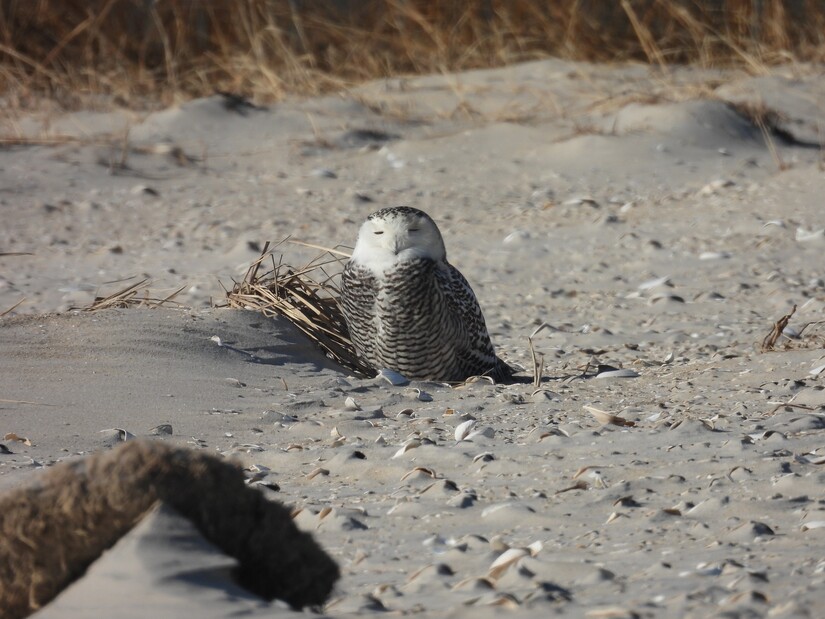
It is inappropriate to provide the current location of owls on social media, particularly in Facebook groups, since snowy owls are a vulnerable species. This is to protect the birds from paparazzi photographers and curious onlookers who often do not provide the perched owls with enough comfort space. This places unnecessary stresses on the young, first-year owls. They are often forced to fly around more and expend precious energy to avoid the encroaching humans.
The snowy owl pictures above were taken in mid-January at a location along the New Jersey shore. There were a handful of spectators at the snowy owl when these pictures were taken and all were respectful and provided the owl with ample space. It dozed the entire time.
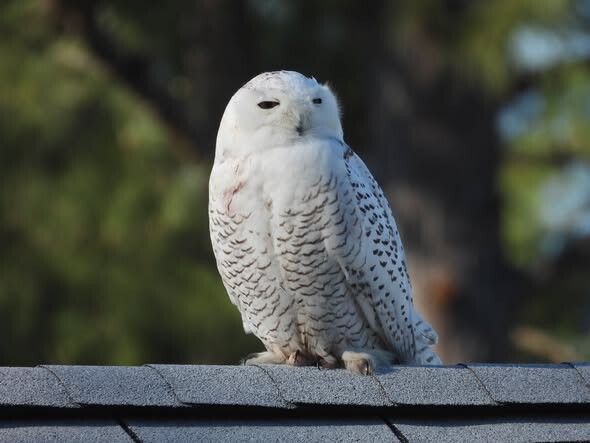
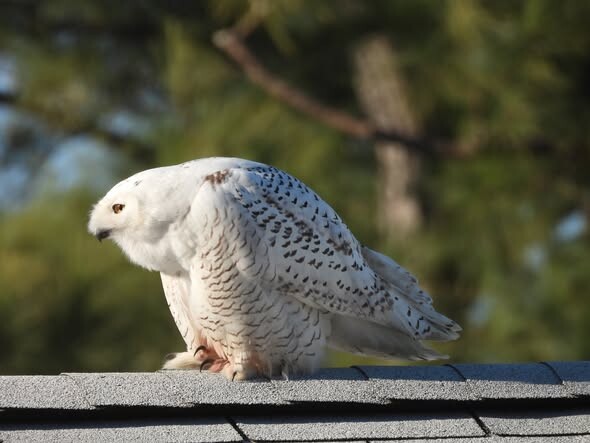
The previous irruption year for snowy owls was in 2022. A snowy owl showed up unexpectedly in a small town on Maryland’s eastern shore that winter and, for a few months, spent its days perched on rooftops. Here are a few pictures from that irruption year.
* Mike Strzelecki is a freelance travel and outdoor writer, and 1981 graduate of Boyertown Area Senior High School. He writes from his house in Baltimore, Maryland. In his spare time, he joins his wife on adventures around the country observing and photographing birds.



Overcast, with a high of 69 and low of 51 degrees. Overcast for the morning,